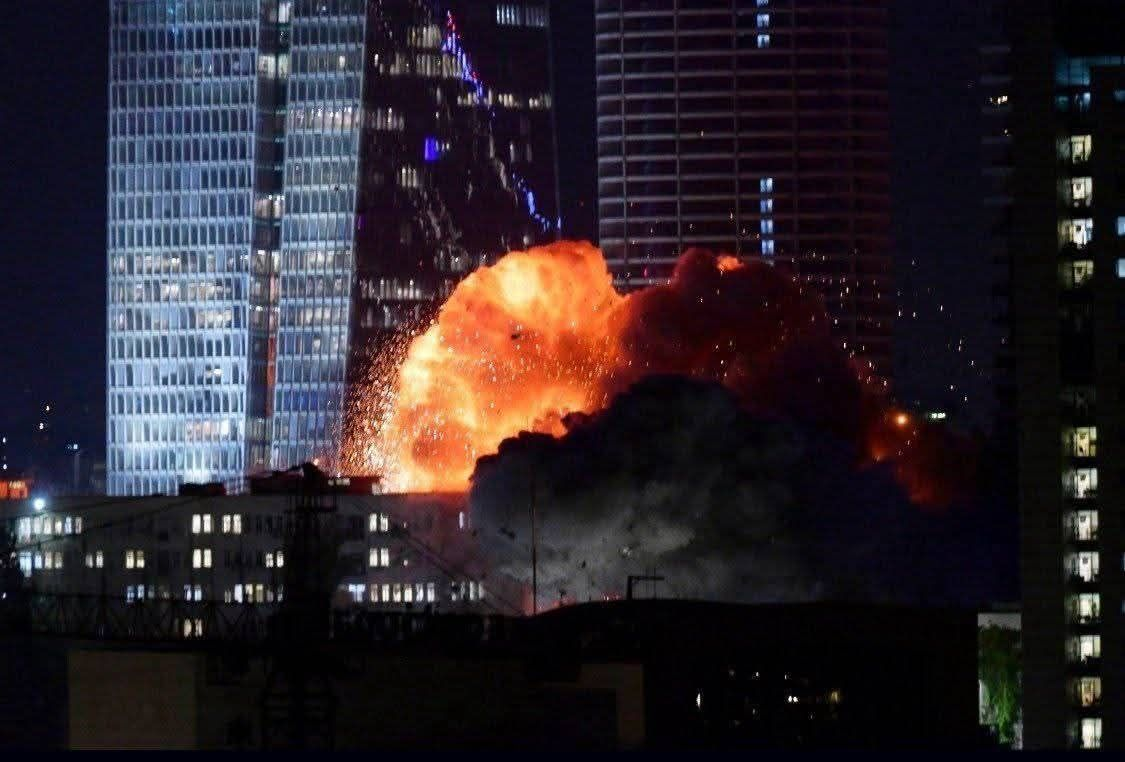

For the first time in modern conflict, missiles fired from Iran have penetrated deep into Israeli territory, exposing critical vulnerabilities in Israel’s highly regarded air defense systems and marking a new phase in the regional power struggle.
In a coordinated and sustained barrage launched over the past few hours, Iran unleashed a wave of ballistic and possibly hypersonic missiles at key Israeli sites, including areas near Tel Aviv and strategic military facilities. While Israel’s multi-layered air defense system—featuring the Iron Dome, David’s Sling, and Arrow 2/3—intercepted many of the projectiles, several still managed to break through, triggering explosions and widespread alarm across the country.

A new level of threat
Unlike previous skirmishes involving rockets from Hezbollah or Hamas, this latest attack introduced a higher level of sophistication. According to military analysts and open-source defense reports, Iran employed a mixed arsenal that may have included:
- Hypersonic missiles such as the Fattah-1, capable of traveling at speeds over Mach 5 and performing evasive maneuvers in mid-flight.
- Ballistic missiles with maneuverable re-entry vehicles (MaRVs) designed to evade interception during their descent phase.
- Mass saturation tactics—firing in large waves to overwhelm the intercept systems.
This potent mix of volume, velocity, and evasion overwhelmed Israel’s air defenses in ways previously unseen.
Cracks in the shield
Israel’s Iron Dome has long been celebrated for its success in intercepting short-range rockets, boasting a success rate of over 90% in most conflicts. But it was never designed to deal with faster, longer-range, and maneuverable missiles in bulk. For that, Israel relies on David’s Sling and the Arrow systems, with support from U.S.-deployed Patriot missiles.
However, Iranian strategy seems to have anticipated this.
“The sheer number and complexity of the incoming threats exceeded what any single defense layer could handle,” a retired Israeli Air Force commander told local media. “This was a stress test of our entire network—and some got through.”
Reports confirm that at least a handful of Iranian missiles hit their targets, marking the first time in over a decade that missiles originating directly from Iran—not proxies—struck inside Israel’s borders with this level of precision.
Strategic implications
The attack has major implications for Israel’s defense posture moving forward. In the short term, Israeli defense officials say they are reassessing interceptor stockpiles, bolstering radar coverage, and accelerating the deployment of Iron Beam, a laser-based missile defense system currently in development.
“This attack shows that no system is 100% foolproof,” an Israeli Defense Ministry statement read. “But it also reinforces our commitment to staying ahead of evolving threats.”
Meanwhile, analysts point out that the Iranian barrage was as much a psychological message as a military one: Iran now has the capacity to directly challenge Israeli defenses and potentially strike high-value targets at will.
A new chapter in the conflict
This escalation signals a dangerous new chapter in the long-running Iran-Israel shadow war. By launching missiles directly from Iranian soil and scoring hits despite Israel’s sophisticated defense grid, Tehran has changed the rules of engagement—and forced Israel to reckon with a more volatile future.
As the dust settles, Israel must not only repair damaged infrastructure but also rebuild the perception of invincibility its air defenses once commanded.
“This is no longer just about defending against rockets from Gaza,” one military analyst said. “This is about preparing for the age of hypersonic warfare.”