Resolutions of online transaction-related complaints filed with the Bangko Sentral ng Pilipinas (BSP) have been on the rise, authorities reported on Wednesday.
During a briefing at the BSP office, lawyer Charina de Vera-Yap, Managing Director of the BSP’s Financial Inclusion and Consumer Empowerment Sub-Sector, shared that there were 322 cases for mediation in 2023, achieving a success rate of 69 percent in favor of the complainants. In 2024, mediation cases surged to 703, with the success rate increasing to 83 percent.
In the first five months of this year, mediation cases have already reached 400, although Yap did not provide details on how many of these cases have been resolved thus far. She emphasized that these figures pertain only to complaints filed with the central bank.
“Because, as mentioned by Deputy Governor Elmore Capule, the first level of recourse, if ever making a complaint, is your financial institution,” Yap explained. “So we assume that at that point, the cases have been resolved at the level of the financial institution.”
Measures Against Online Financial Scams
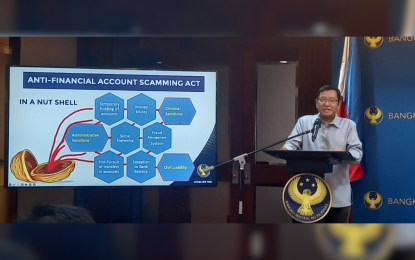
The rising number of financial transaction-related complaints has prompted central bank officials to advocate for the passage of the Anti-Financial Account Scamming Act (AFASA), which was signed into law in July 2024. This law aims to prevent the use of financial accounts in fraud and scams, such as phishing and vishing (voice phishing), which target account owners to obtain their personal information and login credentials.
The implementing rules and regulations (IRR) for the law have been published and will take effect on June 25, 2025, according to Capule during the briefing. The IRR provides institutions with a year to comply with the new regulations, which include updating security systems and implementing improved or additional account authentication methods beyond the one-time password (OTP) to enhance the security of clients’ accounts.
“Pag di nila ma-meet yun, maraming consequence(s). One, administrative sanctions. Number 2, if somebody gets defrauded and their system is not ready, they can be held civilly liable,” Capule added, highlighting the potential repercussions for institutions that fail to meet the new requirements.