
The Middle East veered dangerously closer to the brink of all-out war on Wednesday, as Iran launched a volley of hypersonic missiles at Israel following a bold Israeli airstrike on Tehran’s nuclear and military infrastructure. The tit-for-tat barrage, now entering its sixth day, has transformed the region into a battlefield of cutting-edge weaponry and deepening civilian desperation.
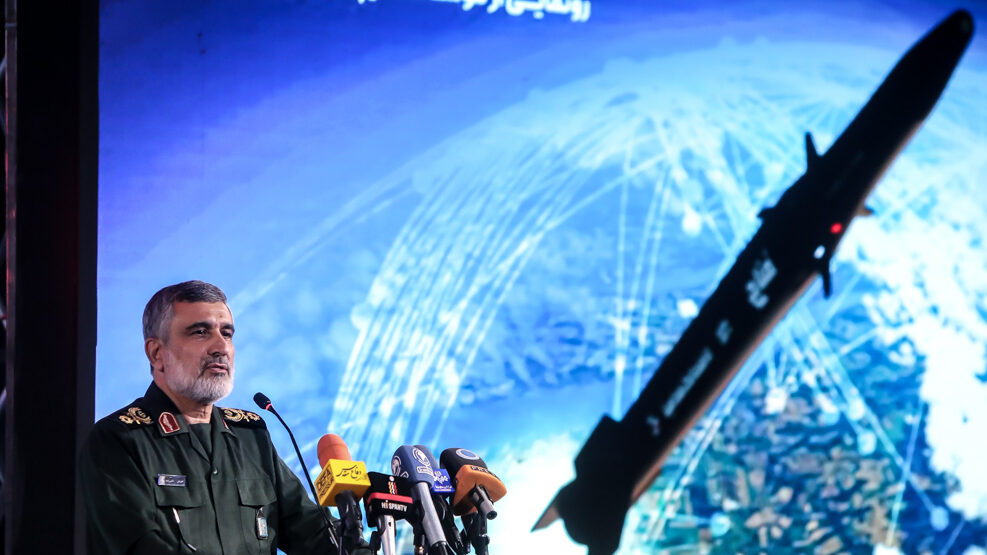
The Iranian Revolutionary Guard Corps confirmed its “Fattah-1” hypersonic missiles—capable of traveling over Mach 5 with mid-air maneuverability—were launched in what it declared the “11th wave” of Operation Honest Promise 3. The missiles reportedly targeted key Israeli military installations and sent shockwaves through the heart of Tel Aviv, forcing thousands into shelters overnight.
State media in Iran hailed the strikes as a response to “Zionist aggression,” after Israeli warplanes pounded Tehran’s defense sector just hours prior, including a centrifuge plant believed to be tied to uranium enrichment.
As explosions lit up both capitals, international anxiety skyrocketed.
Trump rattles the cage, demands Iran’s ‘unconditional surrender’
The conflict’s global implications deepened after U.S. President Donald Trump, fresh from an abrupt departure from the G7 Summit, called for Iran’s “unconditional surrender,” intensifying speculation of American military involvement. While denying direct U.S. participation in Israel’s air raids, Trump warned Tehran that his patience was wearing thin.
“Let me be very clear—we know where their ‘Supreme Leader’ is hiding. He’s not untouchable,” Trump posted on Truth Social. “We could eliminate him. But not yet.”
Despite his words, no formal declaration of U.S. intervention has been made. However, the deployment of the USS Nimitz carrier group and U.S. Air Force bombers to the Persian Gulf signals Washington’s readiness to escalate.
A tense National Security Council meeting Tuesday night ended without resolution, but U.S. officials emphasized that “all options remain on the table.”
Diplomats race against time to prevent all-out war
With Tehran and Tel Aviv reeling, diplomats are scrambling to prevent a wider catastrophe.
Egyptian Foreign Minister Badr Abdelatty placed urgent calls to both U.S. and Iranian leaders, pleading for a return to diplomacy. French President Emmanuel Macron echoed the appeal, warning that any attempt to topple Iran’s regime would ignite “decades of chaos.”
However, hope for peace seems faint. Tehran has ruled out further nuclear talks with Washington “while under attack,” effectively freezing efforts to revive the JCPOA agreement. Israeli officials maintain that their campaign is a preemptive strike to block Iran’s nuclear ambitions, a charge Iran adamantly denies.
Civilians flee, infrastructure collapses, and nations evacuate
As military forces clash, civilians are caught in the crossfire. Tehran is gripped by panic. Long queues snake outside gas stations, grocery stores, and bakeries as residents flee the capital or prepare for siege-like conditions. Many fear another round of Israeli missiles after Iran reported 224 deaths from earlier strikes, including top scientists and generals.
Israel, too, has suffered. Since Friday, at least 24 have been killed, and hundreds more injured as Iran’s drones and missiles hammer civilian neighborhoods.
International evacuations are underway. Over 700 foreign nationals have already crossed into Armenia and Azerbaijan from Iran, while European governments issue urgent travel advisories. The U.S. temporarily closed its embassy in Jerusalem but has yet to announce civilian extraction plans.
Meanwhile, a cyberattack crippled Iran’s Sepah Bank, one of its largest financial institutions, adding digital warfare to the growing list of threats.
Nuclear nightmare looms
Concerns over nuclear escalation are now front and center. Israeli airstrikes reportedly struck enrichment facilities in Isfahan and Natanz, raising red flags at the International Atomic Energy Agency (IAEA), which confirmed “direct impacts” on underground uranium halls.
While Iran’s nuclear ambitions remain a global point of contention, Israel’s own capabilities are shrouded in secrecy. SIPRI estimates it holds at least 90 nuclear warheads, a figure neither confirmed nor denied by Jerusalem.
Conclusion: A flashpoint with global consequences
What began as a shadow war has erupted into one of the most technologically advanced conflicts in modern times. Hypersonic missiles, cyberwarfare, and nuclear brinkmanship are no longer theoretical—they are live elements in a spiraling conflict that threatens to engulf the entire region.
As both sides dig in, and global powers weigh their options, one thing is clear: the next 48 hours could determine whether the Middle East sees a ceasefire—or a conflagration that could reshape the world.
Sidebar: What are hypersonic missiles?
Hypersonic missiles like Iran’s Fattah-1 can exceed speeds of Mach 5 (3,800+ mph), and unlike traditional ballistic missiles, they can maneuver mid-flight, making them nearly impossible to intercept with existing missile defense systems. Their deployment marks a dangerous escalation in modern warfare.