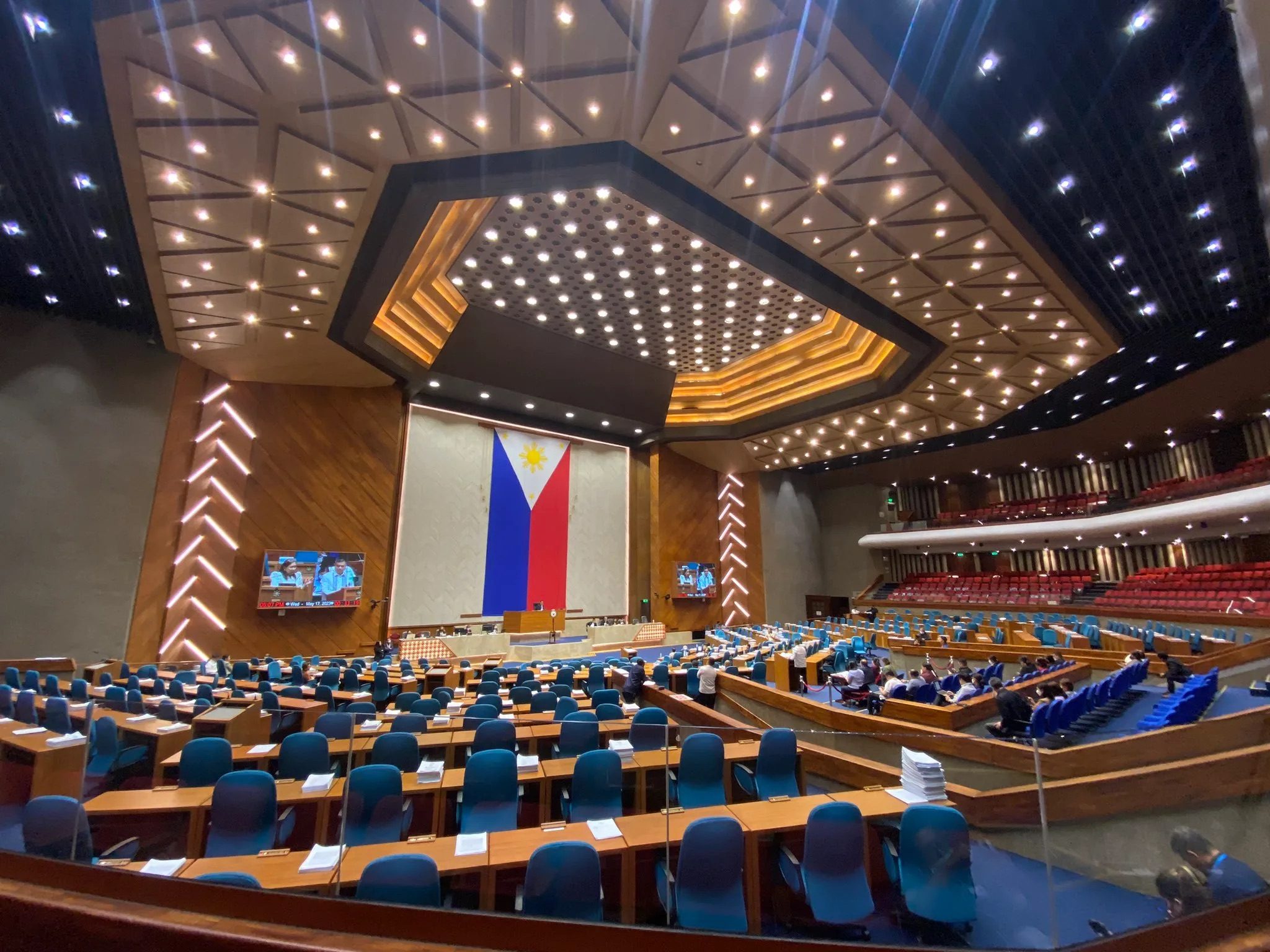

(Photo courtesy of House of Representatives)
MANILA — The House of Representatives on Monday, November 9, disputed allegations that it introduced Php 1 trillion in amendments to the proposed 2027 national budget, maintaining that the actual adjustments amounted to only Php 115 billion.
Camarines Sur 4th District Rep. Arnie Fuentebella said the amendments processed by the House Budget Amendments Review Subcommittee (BARSc) totaled Php 115 billion, significantly lower than the amount being cited by critics.
“It’s only PHP115 billion. Just to clarify lang po. ‘Yung amendment na ginawa ng BARSc is only PHP115 billion,” Fuentebella said during a press conference attended by representatives of major political parties.
Bataan 2nd District Rep. Albert Garcia, senior vice chair of the House Committee on Appropriations, explained that many of the amendments originated from government agencies or involved projects that were not included in the original budget proposal.
“And most of the amendments came from the agencies or ‘yung mga na-miss out doon sa bottom-up budgeting. So needs-based po ‘yan on the ground,” Garcia said.
He challenged those claiming that the House introduced Php 1 trillion in amendments to identify the specific projects involved rather than making general accusations.
Surigao del Sur 1st District Rep. Romeo Momo Sr. also clarified that not all amendments involved transferring funds between government agencies.
“So ang akala nila na ‘yung whole amount na iyan ay binawas at dinagdag sa iba. Hindi,” Momo said.
He explained that some changes were administrative corrections, including duplicate project entries, inaccurate descriptions and other errors within the same agency’s proposed allocations.
Negros Oriental 3rd District Rep. Janice Degamo cited three water infrastructure projects in her district that were incorrectly listed under another province despite having the correct municipalities and barangays.
According to Degamo, correcting the provincial information was necessary to prevent delays or possible cancellation of the projects.
“Amending the province is necessary. Otherwise, hindi matutuloy ‘yung project at mawawala ‘yung public service na kinakailangan ng aking area of responsibility naman namin pag hindi namin iyon kinorek,” she said.
Garcia emphasized that lawmakers must consider both community-level projects and major regional infrastructure requirements when reviewing the national spending plan.
“Remember, we are representatives and it is our role to take care of the micro, the local needs and the macro. ’Yun ’yung regional and national needs na parehong importante,” he said.
The lawmakers urged the public to examine the purpose and nature of individual budget amendments before drawing conclusions about their legitimacy.
House vows to reject projects lacking documents
Meanwhile, House leaders pledged to reject infrastructure projects without complete documentation or accurate location information during bicameral deliberations on the proposed 2027 budget.
FPJ Panday Bayanihan party-list Rep. Brian Poe said projects without proper supporting documents or verified geographic coordinates should not be included in the final spending measure.
“No papers, no geotag or maling geotag,” Poe said.
“We will not accept projects that do not have proper papers or proper coordinates because that is unfair to the constituents,” he added.
Fuentebella supported the position, saying it reflected the commitment of House leadership.
“Yes, and that is the stand of the leadership of the House,” he said.
Garcia also encouraged budget watchdogs and critics to identify projects with questionable documentation so lawmakers and concerned government agencies could review and correct deficiencies.
“At kung may kakulangan, let us rectify it,” Garcia said.
Asked about approximately Php 266 billion worth of infrastructure projects reportedly flagged for Senate scrutiny, Garcia said his discussions with Sen. JV Ejercito had not covered the specific projects included in that amount.
He said the House and Senate would need to reconcile their respective figures during bicameral deliberations.
Poe, meanwhile, cautioned against citing large budget figures without explaining their scope or the basis of the calculations.
“We have to be careful when throwing around these numbers,” he said.
He emphasized that lawmakers must ensure the accuracy of budget information and take responsibility for every project included in the national spending plan.
“Every time we put an item in the budget, it carries responsibility,” Poe said.
“So same thing, when we talk about the budget, let’s get our numbers right,” he added.
The House-approved 2027 national budget is currently undergoing Senate review before lawmakers from both chambers meet to reconcile differences in their respective versions of the spending measure.