
MANILA – The House of Representatives on Wednesday called on government agencies to ensure that PHP6.2 billion in El Niño assistance reaches affected farmers and fisherfolk as worsening droughts threaten agricultural production and the country’s food security.
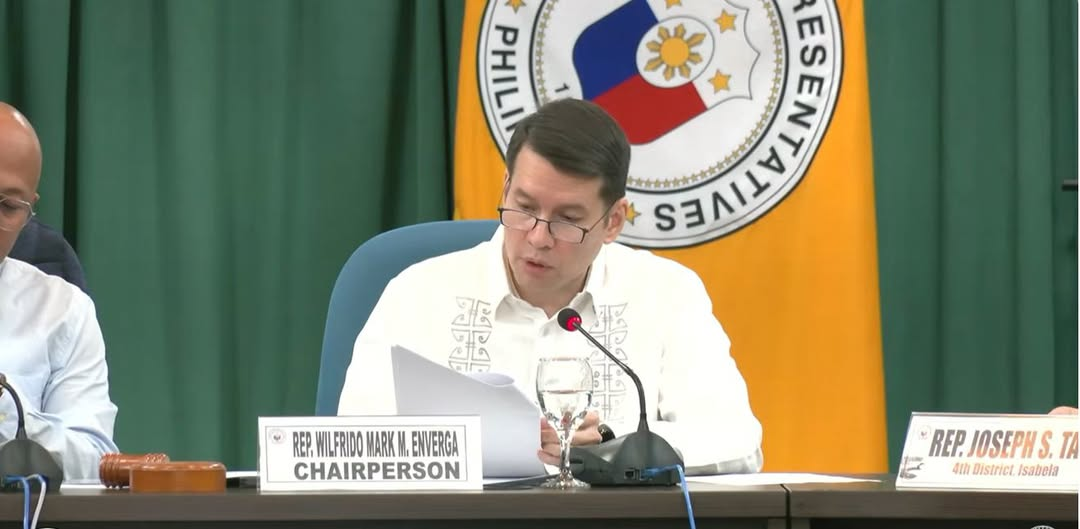
The House Committee on Agriculture and Food, chaired by Quezon 1st District Rep. Mark Enverga, continued its inquiry under House Resolution 967, introduced by Sultan Kudarat Rep. Bella Vanessa Suansing, to review government preparedness, funding, and measures to protect agricultural livelihoods.
The inquiry follows a briefing conducted by Enverga’s committee in June, during which the Department of Agriculture (DA) and Task Force El Niño presented government preparations and planned interventions to address the weather phenomenon.
“I wish to emphasize that this inquiry is conducted upon the personal instruction of the Honorable Speaker Faustino Bojie Dy III to ensure that allocated public funds and relief budgets are fully, transparently, and directly implemented for our severely hit beneficiaries,” Enverga said, highlighting the need for funds to be properly used and delivered directly to affected communities.
He said Congress wants to determine whether the initial PHP6.2 billion released under the government’s Unified Package for Livelihoods, Industry, Food, and Transport or UPLIFT program for fuel, fertilizer, and direct assistance is reaching more than 310,000 targeted small farmers and fisherfolk.
“We must verify whether field disbursements in hit regions are reaching intended beneficiaries,” he said.
The committee is also examining a PHP371 million funding gap for critical interventions, including specialized cloud seeding and measures against pests threatening sugarcane production.
Enverga said the DA’s proposed PHP61.99 billion consolidated action plan must produce concrete results for agricultural communities.
“Our duty in Congress is to ensure that strategy translates directly into protection on the ground,” he said.
Enverga emphasized the need for stronger coordination among government agencies, transparent distribution of assistance, and immediate action to address funding shortages.
He stressed that farmers and fisherfolk could no longer afford delays as their crops and livelihoods face growing threats.
“Hindi na kayang maghintay ang ating mga magsasaka at mangingisda. Hinihingi natin sa lahat ng ahensya na dumalo ngayon ang mga tiyak at tapat na kasagutan upang agad tayong makapaghatid ng mabilis at nakatutok na tulong sa ating sektor ng agrikultura (Our farmers and fisherfolk can no longer afford to wait. We demand clear, direct, and honest answers from all the agencies present today so that we can immediately deliver swift and targeted assistance to our agricultural sector),” Enverga said.
Suansing, meanwhile, said the latest hearing provides an opportunity to assess what government agencies have accomplished since the June briefing and what additional measures are needed to protect farmers, fisherfolk, and consumers.
She said the government must also prepare for the broader effects of El Niño on water security, energy, health, livelihoods, and social protection.
Suansing sought updates on the implementation of Republic Act 12287, or the Declaration of State of Imminent Disaster Act, particularly whether disaster declarations have resulted in the release of funds for preventive measures.
She also urged the DA to expand drought-resistant farming technologies and alternative livelihood programs, especially for rice farmers.
“We hope to hear from the DA on the updates of their commitments on upscaling these efforts from last June as well as their commitments and their mandate to provide for alternative sources of income and livelihood for our farmers and our fisherfolk,” Suansing said.
The lawmaker warned that prolonged droughts could also trigger conflicts among communities competing for limited water supplies and fertile land.
She said government preparedness must extend beyond agriculture and address the long-term effects of climate change.
“Because really this issue, the issue of how we prepare, the issue of how we respond, and how we plan for El Niño, for climate change is not just, it’s not an issue of industry. It’s really an issue of human and national security,” Suansing said.