
By Jose Cielito Reganit
MANILA – Three leaders of the House of Representatives on Tuesday expressed confidence that the House-approved 2027 national budget reflects the needs and interests of the Filipino people.
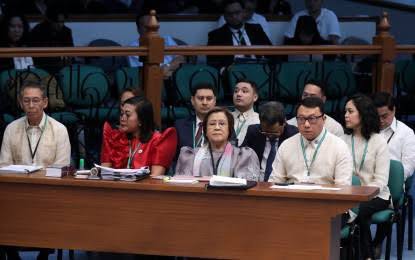
At a press briefing, Batangas 2nd District Rep. Gerville “Jinky Bitrics” Luistro, Bicol Saro Party-list Rep. Terry Ridon and Manila 3rd District Rep. Joel Chua — chairperson of the House Committees on Justice, Public Accounts and Good Government and Public Accountability, respectively — said they trust the House leadership and their fellow lawmakers in preparing the House General Appropriations Bill (HGAB).
They made the remarks amid calls by the People’s Budget Coalition for the Senate to remove questionable infrastructure allocations from the proposed PHP7.2-trillion national budget.
The coalition has questioned some PHP170 billion in additional allocations for multipurpose buildings and local roads, citing concerns over the necessity of the projects and possible irregularities.
“Tayo po’y naniniwala sa ating mga kasama dito sa (We trust our colleagues here in the) House of Representatives, headed by the House leaders, na kung anuman ang nasa (that whatever is in the) HGAB, it represents the concerns and interests of the Filipino people,” Luistro said.
She urged the public to allow the budget process to proceed before drawing conclusions about the proposed spending measure.
“I think it is too early. Too early to preempt, to say na may problema sa budget. Because as a matter of fact, halfway pa lang po tayo,” she said.
Luistro pointed out that the Senate still has the authority to review and amend the House-approved budget, while any differences between the two chambers could be settled through a bicameral conference committee.
She also stressed that infrastructure projects should be assessed based on whether they address actual community needs.
“Kung merong (If there are) actual need for those projects, there is nothing wrong about that, so long as it will serve the interest of the Filipino people,” she said.
“What I take offense is, ’yung talagang mga (those that are absolute) ghost projects,” she added.
Ridon agreed that the Senate should examine the questioned infrastructure allocations individually rather than reject entire categories of projects.
“Ang very important basic question ay: ’Yun po bang mga inilagay po na mga line items po roon ay may actual na pangangailangan? Meron po bang maseserbisyuhan na mga komunidad (The very important, basic question is: Is there an actual need for the line items that were included there? Are there communities that will be served)?” Ridon said.
He cited senior citizens’ centers, barangay facilities and municipal buildings as examples of projects that could benefit communities.
Ridon said unnecessary projects should be rejected, but those serving legitimate public needs should be considered on their merits.
Chua, likewise, cautioned against automatically removing funding for multipurpose buildings, noting that some could serve as evacuation centers during floods and other disasters.
“Halimbawa po ’yung mga evacuation center, bawal din po ba ’yun (For example, the evacuation centers, are they also prohibited)?” Chua said.
“So paano ’yung mga ganitong klase na multipurpose at makikinabang naman ’yung mga kababayan natin (So how about these kinds of multipurpose projects that will actually benefit our countrymen)?” he added.
Chua stressed that communities have different needs and that lawmakers should consider the actual benefits of each proposed project.
The House-approved budget remains subject to Senate review and possible amendments before Congress finalizes the 2027 spending measure.