
By Che Palicte
DAVAO CITY – The Department of Health-Davao Region (DOH-11) on Tuesday urged the public to take preventive measures against illnesses commonly associated with the El Niño phenomenon and rising temperatures.
In an advisory, DOH-11 said prolonged hot weather increases the risk of dehydration, heat-related illnesses, and other health concerns, particularly among children, senior citizens, outdoor workers, and individuals with existing medical conditions.
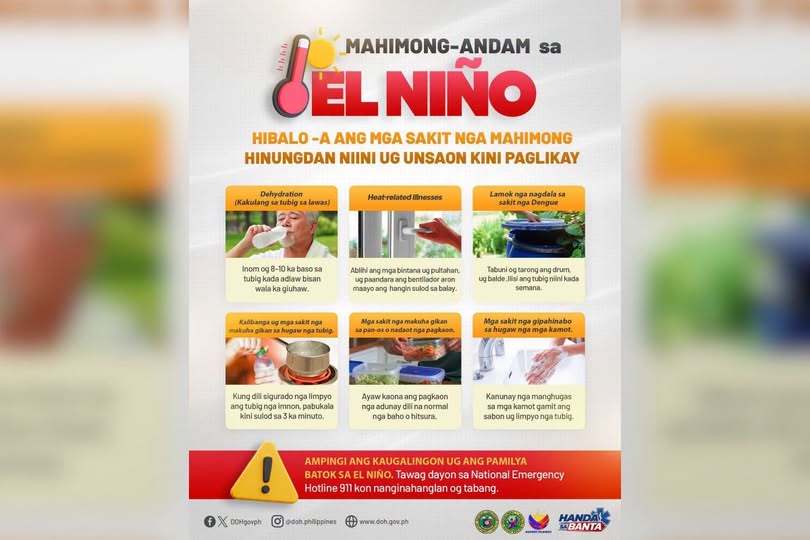
The health agency advised the public to drink eight to 10 glasses of water daily, even when not feeling thirsty, to prevent dehydration.
Households were also encouraged to keep windows and doors open whenever feasible and use electric fans to promote indoor air circulation and minimize heat exposure.
The department likewise emphasized the importance of safe drinking water, advising residents to boil water for at least three minutes before consumption if its quality is uncertain to reduce the risk of waterborne diseases.
To avoid food-borne illnesses, the public was reminded to properly store food and avoid consuming items with unusual odor or appearance, as high temperatures can accelerate food spoilage.
Regular handwashing with soap and clean water was also highlighted as an effective measure in preventing the spread of diseases.
DOH-11 further warned that prolonged exposure to extreme heat may lead to heat exhaustion and heat stroke.
Symptoms of heat exhaustion include excessive fatigue, weakness, dizziness, heat cramps, nausea, and heavy sweating.
Heat stroke, a medical emergency, may cause loss of consciousness, extremely high body temperature, difficulty breathing, confusion, and seizures.
The agency advised the public to wear light-colored, loose-fitting clothing, stay hydrated, and avoid strenuous outdoor activities during the hottest hours of the day to reduce the risk of heat stress.
“Take precautionary measures and monitor household members for signs of heat-related illnesses as temperatures continue to rise,” DOH-11 said.
DOH-11 emphasized that early recognition of symptoms and prompt medical intervention can help prevent serious complications and save lives during periods of extreme heat.
“Individuals needing emergency assistance may contact the National Emergency Hotline 911,” the agency added. (PNA)