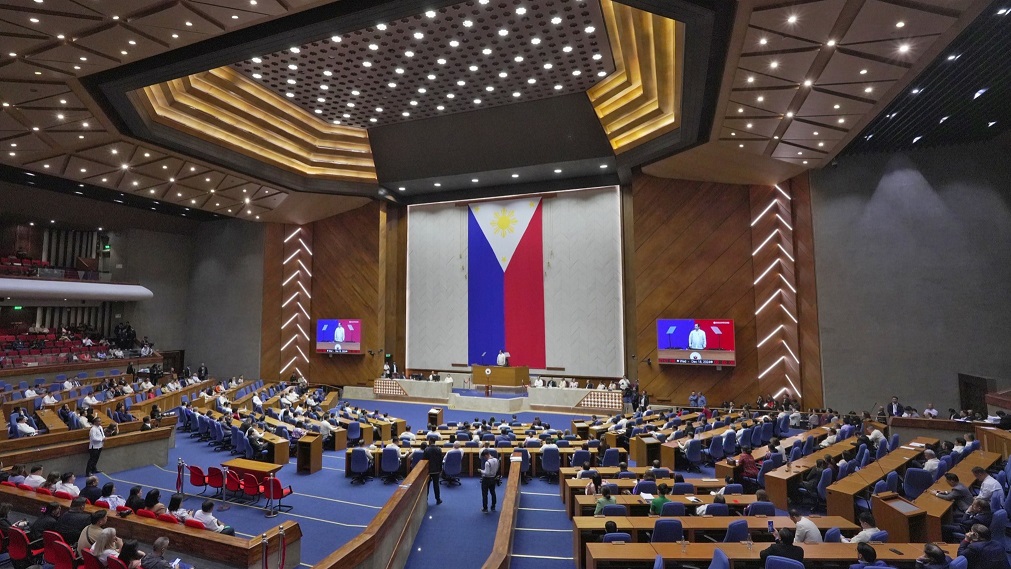
The House of Representatives on Tuesday approved the third and final reading of House Bill No. 11093, which mandates the inclusion of environmental assessments in all policies, programs, and projects.
The proposed law, known as the Philippine Environmental Assessment System Act, is a step toward sustainable development and environmental protection.
House Speaker Ferdinand Martin Romualdez emphasized the importance of the bill in balancing progress with environmental sustainability.
“This bill is a clear testament to our collective responsibility to protect our environment and ensure that development is done responsibly. It is a vital tool for balancing progress with sustainability,” Romualdez said.
The measure will establish the Philippine Environmental Assessment System (EAS), which requires Strategic Environmental Assessments (SEA) for policies, plans, and programs, as well as Environmental Impact Assessments (EIA) for projects.
Under the EAS, significant projects—including large-scale industrial activities, major infrastructure, and resource extraction—will be required to obtain a Certificate of Proponent’s Environmental Commitment (CPEC) from the Department of Environment and Natural Resources (DENR). This ensures compliance with environmental safeguards, including preventive and mitigating measures.
“With the EAS in place, we are institutionalizing a process that ensures environmental risks are mitigated before projects are implemented. We cannot afford to sacrifice the environment for the sake of progress,” Romualdez said.
The bill imposes substantial penalties on violators. Those operating without the required CPEC will face fines ranging from P5 million to P20 million and may have their operations suspended. Violators of management plans can face fines of up to P10 million for each offense.
Strategic Environmental Assessments (SEA) will ensure that national and local development plans, sectoral programs, and policies consider cumulative environmental impacts. This includes protecting biodiversity; reducing risks to indigenous communities; and preserving water, air, and land resources.
To ensure accountability, public participation will be integral in both the EIA and SEA processes. Multi-partite monitoring teams (MMTs), composed of government agencies, local government units, non-governmental organizations, and affected communities, will oversee compliance and implementation.
The bill also requires project proponents to establish a financial backup mechanism, setting aside funds for immediate cleanup or rehabilitation in case of environmental damage.
This legislation underscores the government’s commitment to holding project proponents accountable and promoting sustainable practices in development planning. It also establishes stringent penalties for noncompliance, making it clear that violators will be held responsible for any environmental harm.