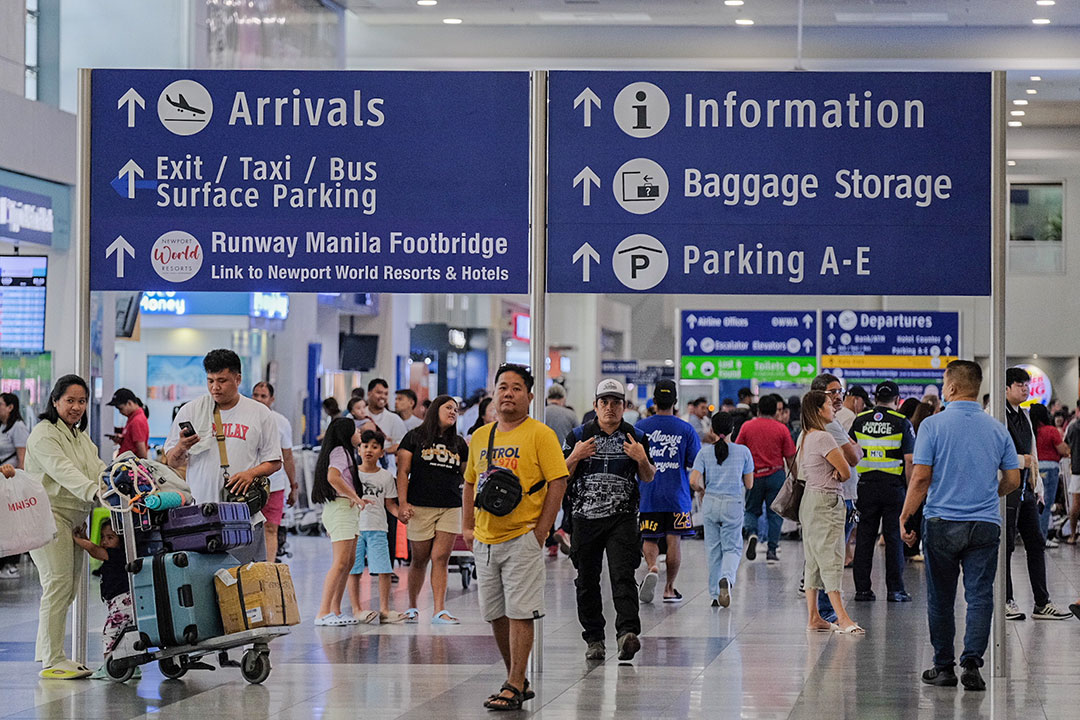

The government has launched a nationwide security surge across airports, seaports, and major transportation hubs as millions of Filipinos prepare to leave Metro Manila for the annual Christmas and New Year holiday exodus. Officials say the effort is not just routine pre-holiday preparation, but part of a broader push to modernize and synchronize transportation security at the height of the country’s busiest travel season.
The Office for Transportation Security (OTS) confirmed that technical audits and on-ground inspections are underway in all major passenger gateways, with teams deployed to verify whether screening machines, scanners, and monitoring systems are fully functional. OTS Administrator Gilbert Cruz said the goal this year is to minimize bottlenecks and eliminate equipment-related vulnerabilities before passenger volume reaches its peak.
Cruz explained that security personnel across airports and ports have undergone fresh briefings on newly identified threat indicators and updated alarm protocols. With airports already seeing increased foot traffic this early, the OTS is moving aggressively to ensure screening units and field staff are prepared for high-pressure operations.
Beyond technical checks, the agency is now training the security forces assigned to individual terminals—including private security providers—to ensure there are enough personnel to cover all entry points and critical chokepoints during the holiday period. The program aims to expand what Cruz described as a network of “force multipliers” capable of reinforcing airport and seaport teams during peak hours, emergencies, or sudden congestion.
In Metro Manila, the National Capital Region Police Office (NCRPO) has mobilized 14,000 officers across transport hubs, shopping districts, and high-density public areas as part of its Holiday Security Plan. NCRPO spokesperson PMaj. Hazel Asilo said the region is showing a mixed pattern of criminal activity, with property crimes such as theft and robbery requiring heightened attention as foot traffic surges.
Major crimes including murder, rape, and complex cases have declined, Asilo noted, a trend she attributes to sustained preventive policing and improved investigative work. Still, she emphasized that the holiday season historically introduces opportunities for opportunistic offenses.
Asilo said police visibility will intensify in the coming days, with the NCRPO prepared to raise a full alert status beginning December 16—a move expected to last through the first weeks of January. The elevated posture would place all personnel on standby for rapid deployment, particularly in transportation corridors where crowd flow is unpredictable.
With millions expected to travel by land, sea, and air in the next three weeks, officials say the coordinated efforts are designed to provide a seamless protective layer around the country’s transportation network. The message, they add, is straightforward: holiday travel should be festive, not stressful, and certainly never unsafe.