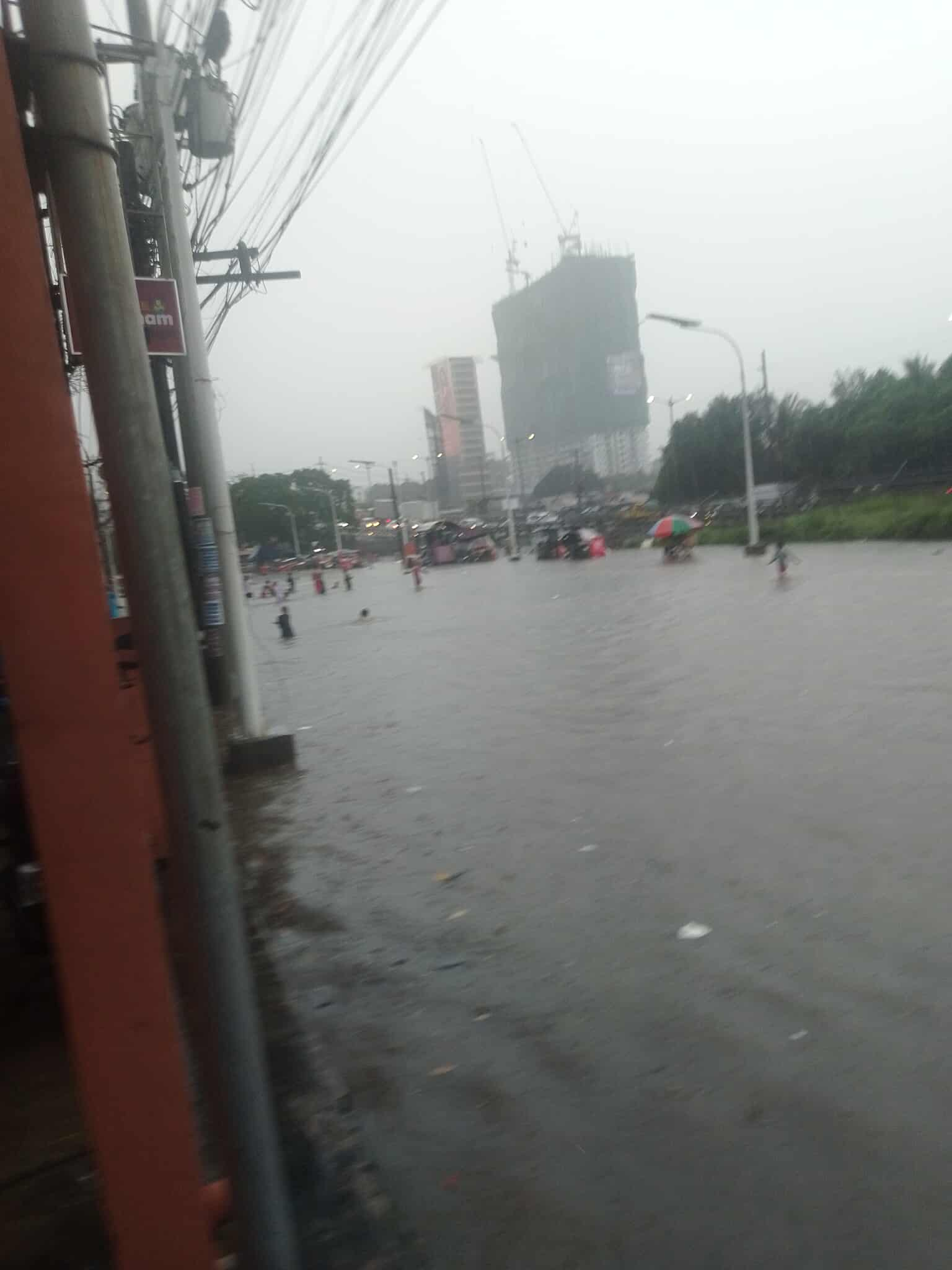

Metro Manila’s traffic nightmare worsened on Saturday afternoon, August 30, as heavy rains submerged several key roads in Quezon City, leaving both commuters and motorists stranded in bumper-to-bumper gridlock.
The Metropolitan Manila Development Authority (MMDA) flagged multiple flood-hit areas after a low-pressure area (LPA) inside the Philippine area of responsibility dumped torrents of rain over the capital.
By mid-afternoon, drivers along EDSA, Commonwealth, C5, and Katipunan were forced to inch through floodwaters ranging from gutter-deep to knee-deep. While most major roads remained technically passable, MMDA warned that lighter vehicles risked stalling, especially in the knee-deep portions of Katipunan, Aurora service road, Commonwealth Technohub, and Winston.
The most notable trouble spots included:
- EDSA Dario, Centris, and North Avenue – 8-inch flood, still manageable for all vehicles.
- EDSA Balintawak and Muñoz, Commonwealth Ever – nearing 9 inches, making smaller cars struggle.
- Katipunan near Ateneo, Commonwealth Technohub, and Winston – knee-deep waters, cutting off light vehicles.
Meanwhile, the Philippine Atmospheric, Geophysical and Astronomical Services Administration (Pagasa) reported that Quezon City and other parts of Metro Manila were experiencing intense to torrential rains with thunder and strong winds. The conditions were expected to persist for at least two more hours.
Aside from Metro Manila, downpours also battered neighboring provinces including Cavite, Rizal, Bulacan, Pampanga, and as far as Zambales and Quezon province. Pagasa added that moderate to heavy rainfall may soon spread to Bataan, Tarlac, Nueva Ecija, and Laguna.
The weather bureau noted that the combined effects of the southwest monsoon (habagat), the trough of a tropical storm outside the PAR, and another low-pressure area east of Mindanao are fueling the wet weather system.
With more rains forecasted through the weekend, authorities urged motorists to avoid flood-prone routes whenever possible and to remain vigilant for sudden water surges that could make roads impassable within minutes.