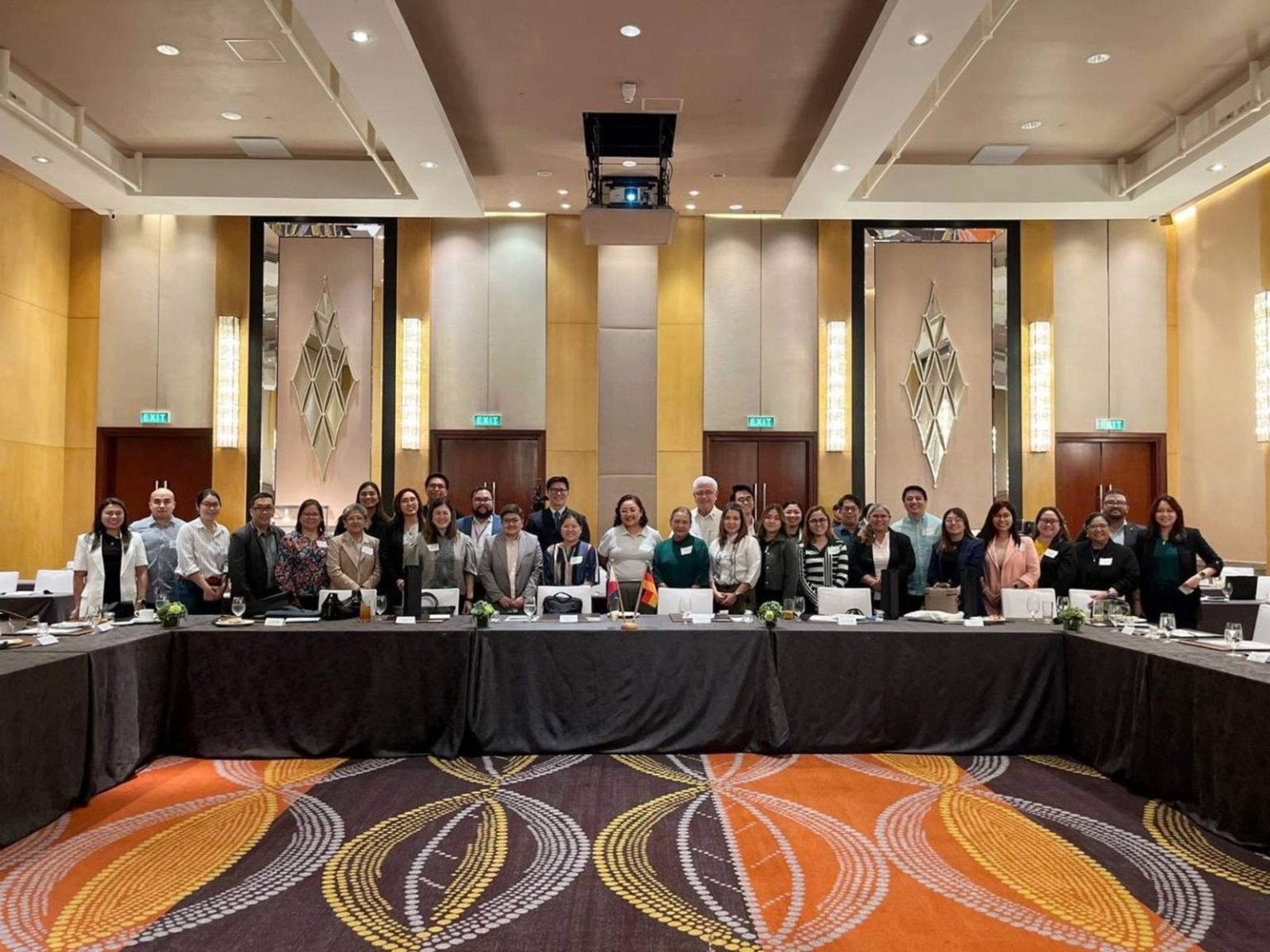

Efforts to improve stroke care delivery in the country took a significant step forward as leaders from the medical community, government agencies, patient groups, and the private sector gathered for a high-level roundtable discussion organized by the German-Philippine Chamber of Commerce and Industry, Inc. (GPCCI) on September 26, 2025.
The forum was held in partnership with the German Embassy in Manila and Boehringer Ingelheim Philippines, underscoring the growing importance of international and multisectoral collaboration in addressing one of the country’s leading health challenges.
The discussion brought together representatives from brain and spine specialty centers, patient advocacy organizations, national and local government offices, and private sector partners. Conversations focused on the urgent need to expand benefits coverage, strengthen stroke prevention and early diagnosis, improve emergency response systems, and enhance rehabilitation and long-term care for patients across the country.
Mathias Kruse, Deputy Head of Mission at the German Embassy in Manila, emphasized the importance of dialogue-driven platforms that bring diverse sectors together. He noted that whole-of-society approaches are essential to building an integrated and sustainable stroke care system that can be effectively implemented nationwide.
Government representatives echoed this view, highlighting the critical role of aligning the national stroke policy framework with the Universal Healthcare Act. Such alignment, they said, is key to ensuring that stroke patients receive efficient, accessible, and equitable care regardless of where they live.
Dr. Cristina Macrohon-Valdez, President of the Stroke Society of the Philippines, stressed that sustained support—both financial and collaborative—is vital to strengthening programs and services for stroke patients.
She underscored the society’s ongoing efforts to assist hospitals and healthcare professionals through training and certification initiatives, while reinforcing the Hub-and-Spoke model to improve stroke care capacity in medical centers nationwide.
Insights on financial protection were shared by representatives of the Philippine Health Insurance Corporation. Social Insurance Officer II Suzette Ann Sarmiento discussed expanded benefits and coverage for stroke patients, while Atty. Exequiel Sy emphasized PhilHealth’s continuing collaboration with healthcare stakeholders to broaden access, particularly beyond Metro Manila and into provincial communities.
From the private sector perspective, Dr. Giovanni Paolo Nazario, Medical Advisor at Boehringer Ingelheim Philippines, pointed to a growing shift toward coordinated initiatives that align with government policy pillars. He noted that such collaboration can help build a stroke care ecosystem that is inclusive, resilient, and prepared for future challenges.
The discussion was further grounded by the patient voice. Karen Alparce-Villanueva of the Philippine Alliance for Patient Organizations shared personal insights from patient advocacy, stressing that healthcare must be accessible, affordable, and inclusive not only for patients but also for their families.
She emphasized that fairness, dignity, and collective action are essential to ensuring that no one is left behind. With the tools and knowledge already available, she said, what remains is the shared will to act with purpose and compassion.
An open forum allowed participants to raise concerns and propose concrete improvements to strengthen the national stroke policy and its financial coverage.
Key issues included facility and personnel accreditation, capacity-building for stroke care teams, enhancement of benefits packages, clearer policy dissemination and alignment, and the need for continued research and benchmarking against global best practices. There was broad agreement that a coordinated, multisectoral approach is critical to improving outcomes for stroke patients nationwide.
In her synthesis, Dr. Lennie Lynn Chua-De Castillo of the University of the Philippines–Philippine General Hospital highlighted the multidisciplinary nature of stroke care and the shared commitment demonstrated during the discussions.
She noted that the insights gathered provide a strong basis for revisiting existing policies, benefits packages, and programs to better align them with the needs of Filipino communities. She called on stakeholders to continue supporting one another and to contribute, in their respective capacities, to advancing quality stroke care across the Philippines.