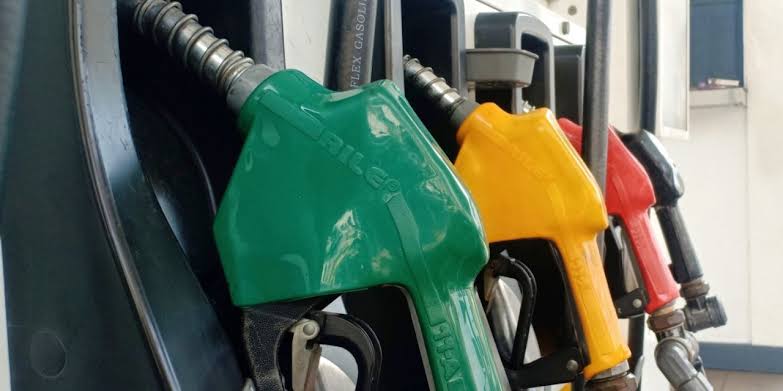

(DC file photo)
MANILA — Motorists will see a significant reduction in fuel prices starting Tuesday, November 10, with gasoline prices dropping by Php 16.80 per liter and diesel by Php 4.10 per liter, following a sharp decline in international oil prices.
The Department of Energy (DOE) announced Monday, November 9, that kerosene prices would also decrease by Php 3.70 per liter for the November 10 to 16 adjustment period.
The latest rollback marks the second consecutive week of lower diesel prices, while gasoline and kerosene prices will reverse their previous upward trend.
According to the DOE’s Oil Industry Management Bureau (OIMB), the substantial reduction was driven by growing expectations of a diplomatic resolution to the conflict between the United States and Iran.
The agency said easing geopolitical tensions have reduced concerns over possible disruptions to oil shipments from the Middle East.
“Ongoing mediation efforts by Qatar, coupled with recent political developments in the United States, have strengthened market expectations of reduced military escalation. These developments have lowered the geopolitical risk premium previously reflected in international oil prices, contributing to the sharp decline,” the DOE said.
Meanwhile, DOE Undersecretary Alessandro Sales assured the public that the country’s petroleum supply remains sufficient despite uncertainties in the global energy market.
Based on the agency’s latest inventory, gasoline reserves are sufficient for 51.64 days, diesel for 53.95 days, kerosene for 143.07 days, jet fuel for 55.62 days, fuel oil for 55.97 days and liquefied petroleum gas for 29.84 days.
Sales said the Philippine National Oil Company (PNOC) continues to pursue its Strategic Petroleum Program to strengthen the country’s fuel reserves and ensure supply during international emergencies.
The program includes a proposed one-million-barrel storage facility consisting of six large tanks at PNOC’s industrial park in Bataan.
“The target is to build the first 180,000 barrels before the end of 2027. It’s a long process. In the meantime, DOE and PNOC will also invest in other ways to ensure our supply,” Sales said.
DOE warns of El Niño impact on power supply
During the same briefing, Energy Secretary Sharon Garin warned that the ongoing El Niño could significantly affect electricity generation as prolonged dry conditions are expected to persist until mid-2027.
Garin said hydropower generation could decline by at least 60 percent, while solar power output could decrease by approximately 20 percent.
Extreme heat could also disrupt operations at some power plants, further tightening electricity supply.
“The impact of El Niño, (in) our estimate, is (a reduction of) about 60 percent, at least, in the generation of our hydropower plants. And then there’s a 20 percent reduction on solar, and possible disruption to some of our plants because of the heat,” Garin said.
She added that higher temperatures are expected to increase electricity consumption, particularly as households and businesses rely more heavily on cooling systems.
“For every degree of increase in heat, there will be a 100 megawatts increase (in demand). So, our supply will go down, but our demand will increase,” she explained.
To address the projected supply challenges, the DOE is accelerating the implementation of 200 energy projects scheduled to begin operations or construction within the Marcos administration.
Garin said 55 projects are already operational, with additional facilities expected to come online next year.
The energy chief also emphasized the importance of backup power systems in hospitals, clinics and other facilities providing essential public services.
She urged households and businesses to practice electricity conservation to help reduce pressure on the country’s power supply.
“Every kilowatt hour we save is one less kilowatt-hour that has to be generated,” Garin said.
The DOE maintained that energy conservation, additional generation capacity and stronger petroleum reserves remain essential to ensuring the country’s energy security amid global uncertainties and the continuing effects of El Niño.