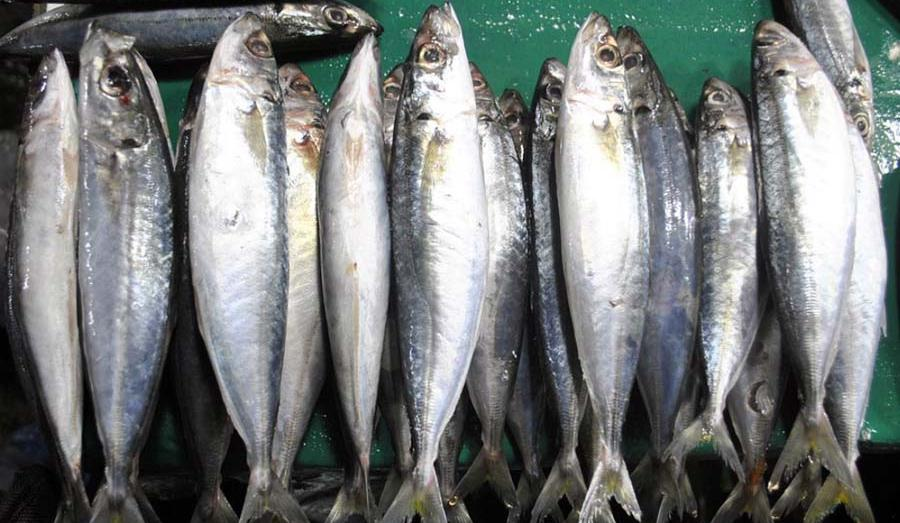

After months of punishing prices, relief may finally be in sight for Filipino households as galunggong, long regarded as the country’s most accessible fish, is expected to become significantly cheaper starting March.
Fish traders say the anticipated price drop will be driven by the return of local commercial fishing operations following the end of the annual closed fishing season, a regulatory pause designed to allow fish stocks to recover. With boats now returning to sea and catches expected to pick up, market supply is projected to improve sharply in the coming weeks.
The Association of Fresh Fish Traders of the Philippines said retail prices of galunggong, which climbed beyond P400 per kilo in some wet markets during the supply crunch, could fall by half or even more once domestic production normalizes.
Based on historical trading patterns, wholesale prices typically ease to around P60 to P80 per kilo between March and May, translating to wet market prices of roughly P150 to P200 per kilo.
For consumers, this seasonal shift could mark a turning point after months of strained food budgets. Galunggong’s surge in price late last year was so pronounced that even policymakers acknowledged the pressure on household spending. In December, Agriculture Secretary Francisco Tiu Laurel Jr. publicly urged consumers to consider alternative protein sources, including chicken, as low fish supply pushed prices higher.
The price spike was largely a consequence of policy and weather colliding. Under Joint Administrative Order No. 01, series of 2015, issued by the Department of Agriculture and the Department of the Interior and Local Government, commercial fishing in key galunggong grounds is suspended annually from November 1 to January 31. The measure covers waters off Northern Palawan, stretching from the West Philippine Sea to the northern Sulu Sea, and aims to protect spawning and rebuild fish populations.
During the closure, domestic catches dry up and markets rely heavily on imports to plug the gap. Traders noted that most of the galunggong sold in recent months came from abroad, adding cost pressures to already tight supply conditions.
Weather further complicated the situation. The northeast monsoon, or Amihan, brought colder seas that delayed the return of fishing vessels even after the formal lifting of the ban. Many commercial boats only began sailing again in February, pushing the supply recovery deeper into the first quarter.
Industry players point out that the current pattern is cyclical. Local galunggong supply typically starts thinning by October each year, gradually driving prices higher until fishing resumes at scale in the first quarter.
What made this season unusual was the severity of the price surge, which exposed how vulnerable staple food items remain to a mix of environmental conditions, regulatory pauses, and import dependence.
As March approaches, traders are betting that calmer seas and a full return of commercial fishing will restore balance to the market. If catches rebound as expected, galunggong may once again reclaim its place as an affordable staple on Filipino tables, easing both inflation anxieties and daily food costs just as households head into the summer months.