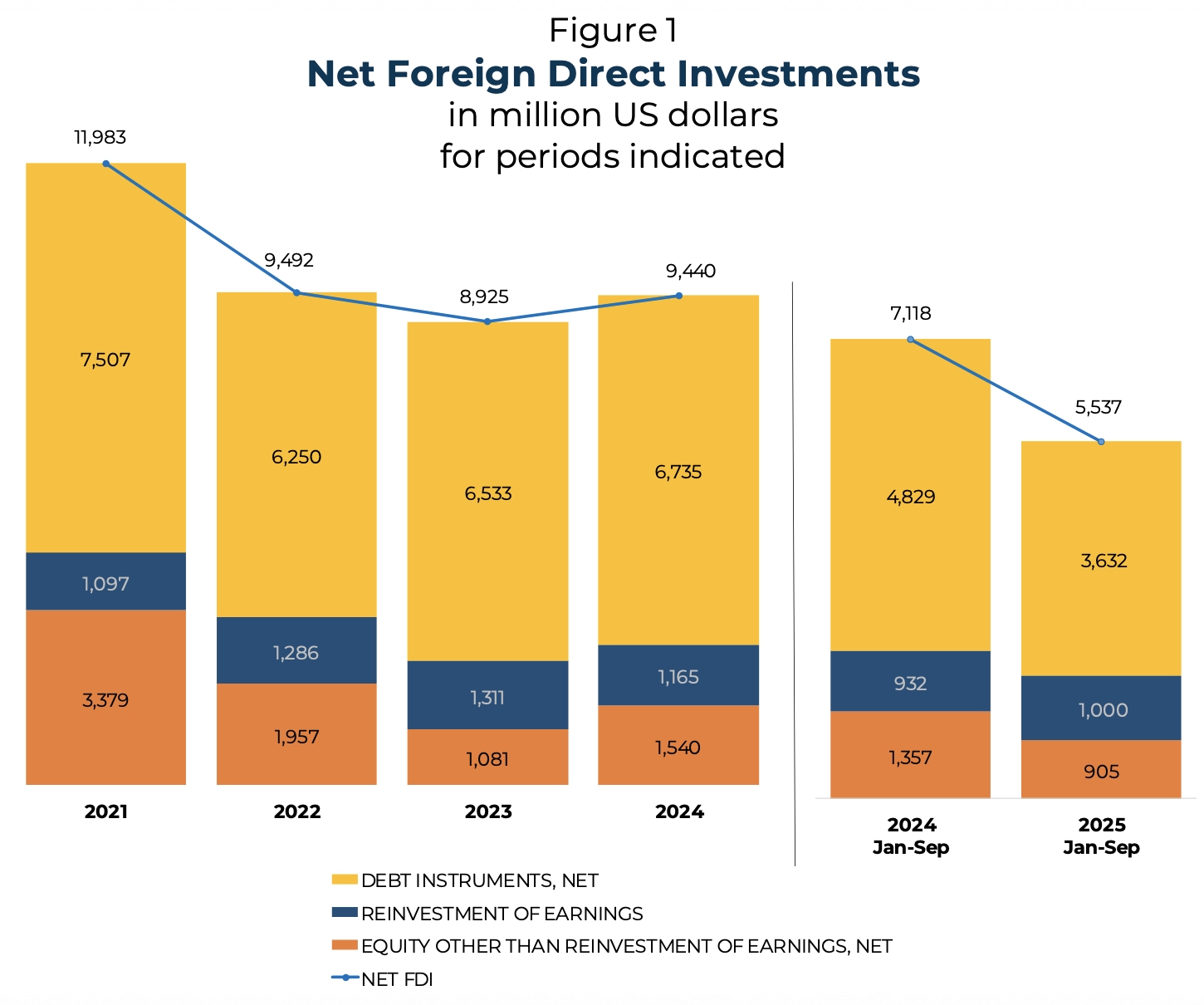

Foreign direct investment activity picked up in September 2025 as the Philippines booked $320 million in net inflows, reflecting renewed investor interest driven largely by strong participation from Japan. The month’s performance provided a welcome lift to the country’s investment landscape, with manufacturing emerging as the biggest beneficiary of foreign capital during the period.
From January to September, net FDI inflows reached $5.5 billion, underscoring a steady nine-month trend of foreign investors positioning themselves in key segments of the Philippine economy.
Central bank data showed that equity capital placements during the first three quarters came mostly from Japan, the United States, and Singapore, three long-standing economic partners that continue to deepen their footprint in the local market.
Manufacturing, wholesale and retail trade, and real estate captured the bulk of these inflows, signaling continued confidence in sectors tied to domestic demand, supply chain expansion, and long-term property development. Analysts noted that the diversified spread of investments reflects both short-term opportunities in consumer-driven industries and long-view commitments to industrial growth.
The latest numbers also highlight the scale of foreign capital relative to the broader economy. FDI net inflows for January to September amounted to 1.6 percent of the country’s gross domestic product during the period, a level that economists say remains healthy despite global uncertainties and competition for capital across emerging markets.
With major economies maintaining strong interest in the Philippines, business groups expect the final quarter to hinge on policy stability, infrastructure rollout, and continued efforts to streamline investment processes. For now, the September results offer a clear signal that foreign investors continue to see value—and long-term potential—in the Philippine growth story.