Taking notice of the huge budget allocated for Infrastructure projects in next year’s national budget, the Samahang Industriya ng Agrikultura (SINAg) is urging President Ferdinand ‘Bongbong’ Marcos Jr. to prioritize domestic food production and help farmers recover from losses caused by persistent rains and recent tropical cyclones.
The call was also prompted by the recent trend of addressing the lack of food supplies through importation by the Department of Agriculture and other concerned agencies.
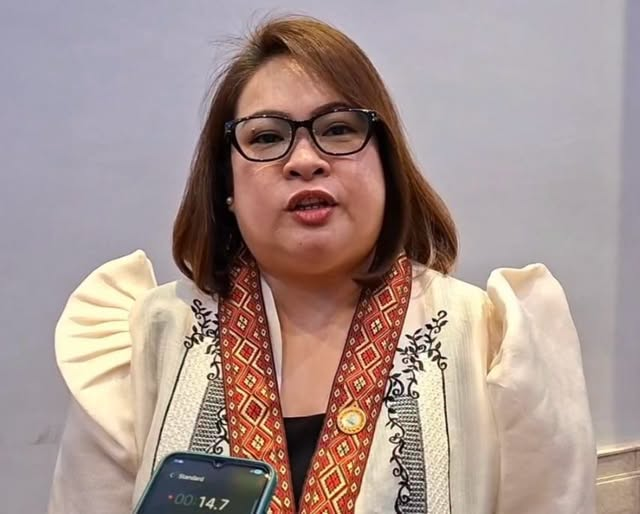
According to SINAg executive director Jayson Cainglet, temporary supply and logistics disruptions should not automatically be used to justify increased agricultural imports.
“When our farmers suffer production losses, the appropriate policy response should first be to restore their capacity to produce—not replace their production with imports,” Cainglet pointed out.
Rather than look to importation as the solution, he called for measures to address the wide gap between farmgate and retail prices, saying prices paid by consumers have risen sharply even as those received by farmers remain low.
“Retail prices of some agricultural products have increased by as much as 300 percent despite depressed farmgate prices, indicating problems in the supply chain rather than necessarily a shortage in production,” he cited while asking the government to address excessive trading margins, market concentration, hoarding, speculative trading and other practices that contribute to the disparity between farmgate and retail prices.
“Government agencies should serve as direct markets for local producers,” he added.
In view of the Sagip Saka Act, Cainglet stressed that the Departments of Agriculture (DA), Social Welfare and Development (DSWD) and Education (DepEd), Bureau of Jail Management and Penology (BJMP) and local government units (LGUs) should prioritize direct purchases from accredited farmers, cooperatives and producer organizations.
Direct procurement, he said, would provide immediate support to small farmers, backyard livestock raisers and fisherfolk, while supplying government programs with locally produced food.
Aside from this, he also pushed for a ‘local production first’ policy under which the government would provide seeds, fertilizer, credit and other assistance to help farmers resume production before considering imports.
“Imports should not be the first response to temporary shortages resulting from weather disturbances,” he emphasized as he pointed to importation only as a last resort.
In ending, Cainglet reminded the Marcos Jr. administration that food security begins with food production (and) food production begins with viable and supported Filipino farmers.