
(Photo courtesy of PIA)
TACLOBAN CITY, Philippines — Government agencies and stakeholders in Eastern Visayas are stepping up efforts to combat child labor and strengthen protection for vulnerable children as the region works toward the national goal of eliminating child labor by 2028.
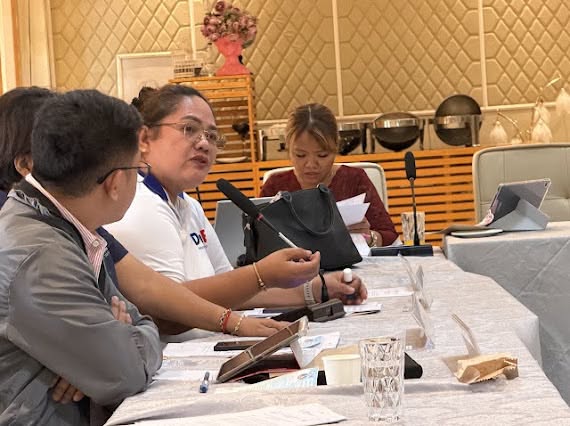
The Regional Council Against Child Labor (RCACL) convened on November 18 in Tacloban City to assess the region’s child labor situation, identify gaps in existing programs and improve coordination among government agencies and partner organizations.
Department of Labor and Employment (DOLE) Regional Director Imelda Romanillos presided over the meeting, emphasizing the need for sustained cooperation to address child exploitation.
DOLE-8 Planning Officer Allenia Nina Chua presented updated profiling data showing a decline in the number of identified child laborers across the region.
Despite the downward trend, Leyte continued to record the highest number of profiled child laborers, with boys accounting for 66 percent and girls comprising 34 percent.
The data also showed changes in the age distribution of child laborers.
In 2025, children aged 5 to 14 accounted for 36 percent of those profiled, while those aged 15 to 17 represented 64 percent. By 2026, both age groups accounted for 50 percent each.
Fishing remained the sector with the highest number of identified child laborers, followed by construction, storage, mining, forestry and waste management.
In terms of educational attainment, 68 percent of profiled children in 2026 were in secondary education, while 29 percent were in primary education. Those without formal schooling represented the smallest proportion.
DOLE-8 also reported that its monitoring initiative, which began in 2023 using children profiled in 2022, initially covered 9,000 children.
The number increased to 10,000 in 2024 before declining to 6,515 in 2025. The latest monitoring covered approximately 6,000 children.
Of those monitored, 848 received assistance from DOLE-8, highlighting the need for stronger coordination and additional support to reach more children engaged in or at risk of child labor.
Chua stressed that eliminating child labor requires the collective efforts of government agencies and other stakeholders.
“We need your mandates, your resources, your data, your programs and most importantly, your commitment because every child we protect is an investment in the country’s future,” she said.
To strengthen the campaign, council members agreed to pursue a memorandum of agreement among participating agencies and stakeholders.
The proposed agreement seeks to formalize partnerships and establish a sustainable mechanism for preventing and progressively eliminating child labor in Eastern Visayas.
Romanillos reiterated that achieving the government’s 2028 vision of a “Batang Malaya, Child Labor-Free Philippines” would require sustained commitment, coordinated interventions and stronger cooperation among concerned agencies.
Under Philippine law, child labor refers to work or economic activities that exploit children or expose them to conditions harmful to their health, safety and physical, mental or psychosocial development.