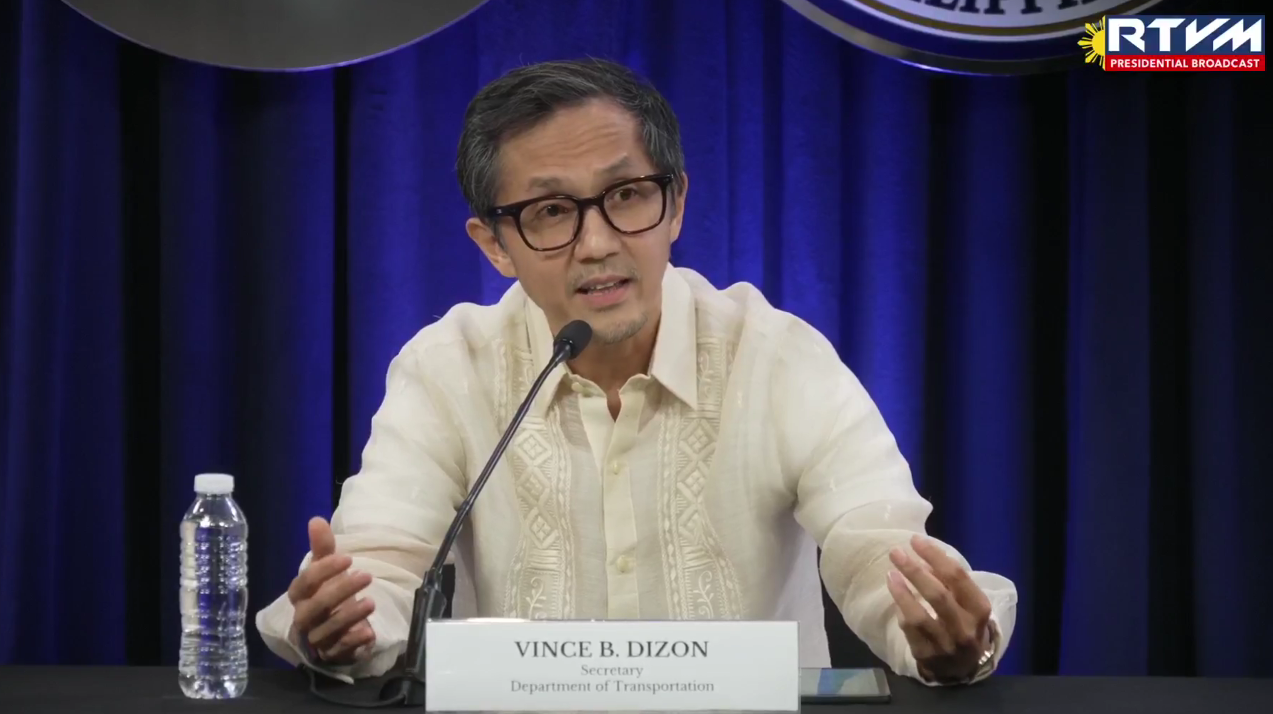

Public Works and Highways Secretary Vince Dizon revealed before the Senate blue ribbon committee that the government may have lost up to trillions of pesos to anomalous and possibly fraudulent flood control projects spanning the past decade.
During Thursday’s hearing, Senator Bam Aquino pressed Dizon on whether the suspected losses—previously pegged in the tens or hundreds of billions—could actually reach the trillion-peso mark.
“May posibilidad po,” Dizon admitted, noting the scale of the alleged corruption.
Aquino underscored the staggering impact of such losses, stressing that just P3 billion would be enough to expand feeding programs for malnourished Filipino children.
“We are talking about possibly trillions stolen from us. That is why this investigation is so important,” he said.
10-year review under new infrastructure watchdog
Dizon said the newly formed Independent Commission for Infrastructure (ICI)—created under Executive Order No. 94—has been ordered to review all flood control projects implemented over the last ten years.
“It will really depend… we do not know yet how big. Malaki po e,” Dizon admitted, saying the full extent of anomalies is still being documented.
He revealed that the irregularities uncovered so far involve “ghost projects” that were never built and substandard works that were falsely certified as completed. Falsification charges have already been filed against several individuals involved.
Transparency portal to go public
To assure the public, Dizon announced that the DPWH will soon launch a transparency portal to publish the commission’s initial findings within one to two weeks.
“We want to build a transparency portal similar to the President’s Sumbong sa Pangulo website, where we can post our reports and the actions being taken by DPWH to hold people accountable,” Dizon said.
The first batch of disclosures will focus on ghost projects and defective constructions, with additional entries to follow as the probe progresses.
Dizon confirmed that the portal will also name all individuals involved, including contractors, project proponents, and DPWH personnel.
Public wants accountability—and the money back
Aquino said the probe must move quickly given the enormous implications for public funds.
“Mahalaga sa taong bayan na malaman nating lahat kailan ba ito mapa-publish, kailan ba ito matatapos,” he said.
Dizon, however, cautioned that the reporting will take time because of the sheer number of cases:
“Napakarami po at tuloy-tuloy pa rin po ang pagrereport sa amin.”
Aquino also raised the specter of bid rigging, asking if collusion tainted the procurement process.
“Absolutely, Mr. Chair,” Dizon replied, saying such massive anomalies would not have happened if bidding were clean and transparent at both district and regional levels.
Aquino noted that under the Philippine Competition Act, entities proven guilty of bid rigging face fines of P100 million to P250 million per offense.
“It’s important for the public not just that people go to jail, but also that the money is returned,” Aquino said.
Dizon agreed: “Lahat po ng pwedeng ibatong kaso sa kanila, gawin po natin—para hindi lang mapanagot pero maibalik din ang pera.”