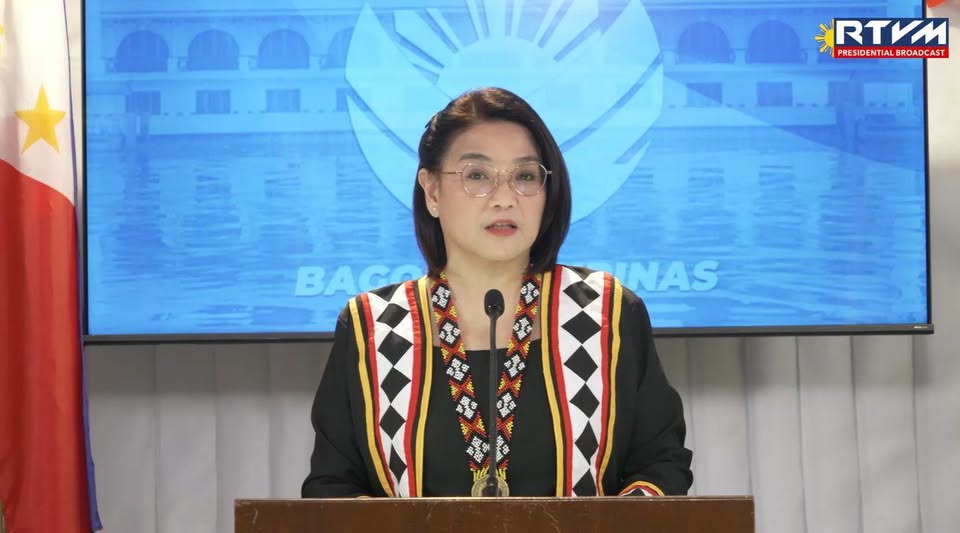

Energy secretary Sharon Garin (Photo from the Philippine News Agency)
SINGAPORE — With the Philippines set to assume chairmanship ff the Association of Southeast Asian Nations (ASEAN) chairmanship next year, the Department of Energy (DoE) has expressed readiness to contribute to the vision of an interconnected Southeast Asia.
Speaking at the Singapore-International Energy Agency Forum, energy secretary Sharon Garin enthused that “across the ASEAN region, member states are united in efforts to ensure reliable and affordable energy while accelerating transition to cleaner and more sustainable energy sources.”
Garin cited that as the region envisions a fully integrated regional power system capable of meeting growing energy demand while preserving reliability and affordability, the interconnectivity of the country’s three major island grids have “demonstrated how greater connectivity enhances system reliability and flexibility.”
“This experience, though on a national scale, reflects the same principles of the ASEAN power grid, wherein by linking our systems, we can prioritize our various resources and contribute to stability of supply,” she pointed out.
In this score, the energy chief underscored that an ASEAN interconnected system would drive the transition toward a cleaner, resilient and sustainable energy future where progress and prosperity are shared equitably across the Association’s member countries.
“The development of our vast renewable energy resources will not reach the scale needed to meet regional targets if each ASEAN member state continues to plan and balance its system independently within its own borders,” she expounded.
Accordingly, she described that interconnectivity in the region would also reduce reserve requirements, which without cooperation will be costlier, even as she also optimized that even if the transition phase moves slower, efforts would lead to greater system reliability.
“The vision of an interconnected ASEAN energy system stands not merely as a longstanding aspiration but as a strategic enabler for the next phase of our collective energy transition,” Garin optimized.
“Under the Asean Power Grid framework, the region has already made substantial progress in strengthening cross-border interconnections and advancing multilateral power trade,” she further claimed.
In ending Garin emphasized that with half of the priority projects identified under the ASEAN Interconnection Masterplan Study Phase III now operational, “focus must now be given on key challenges in technical harmonization, market design and investment mobilization” in order to sustain momentum.
“To unlock the full potential of regional interconnection, cooperation must go beyond building physical links. We must align our national policies to ensure systems can operate seamlessly across borders,” she concluded.