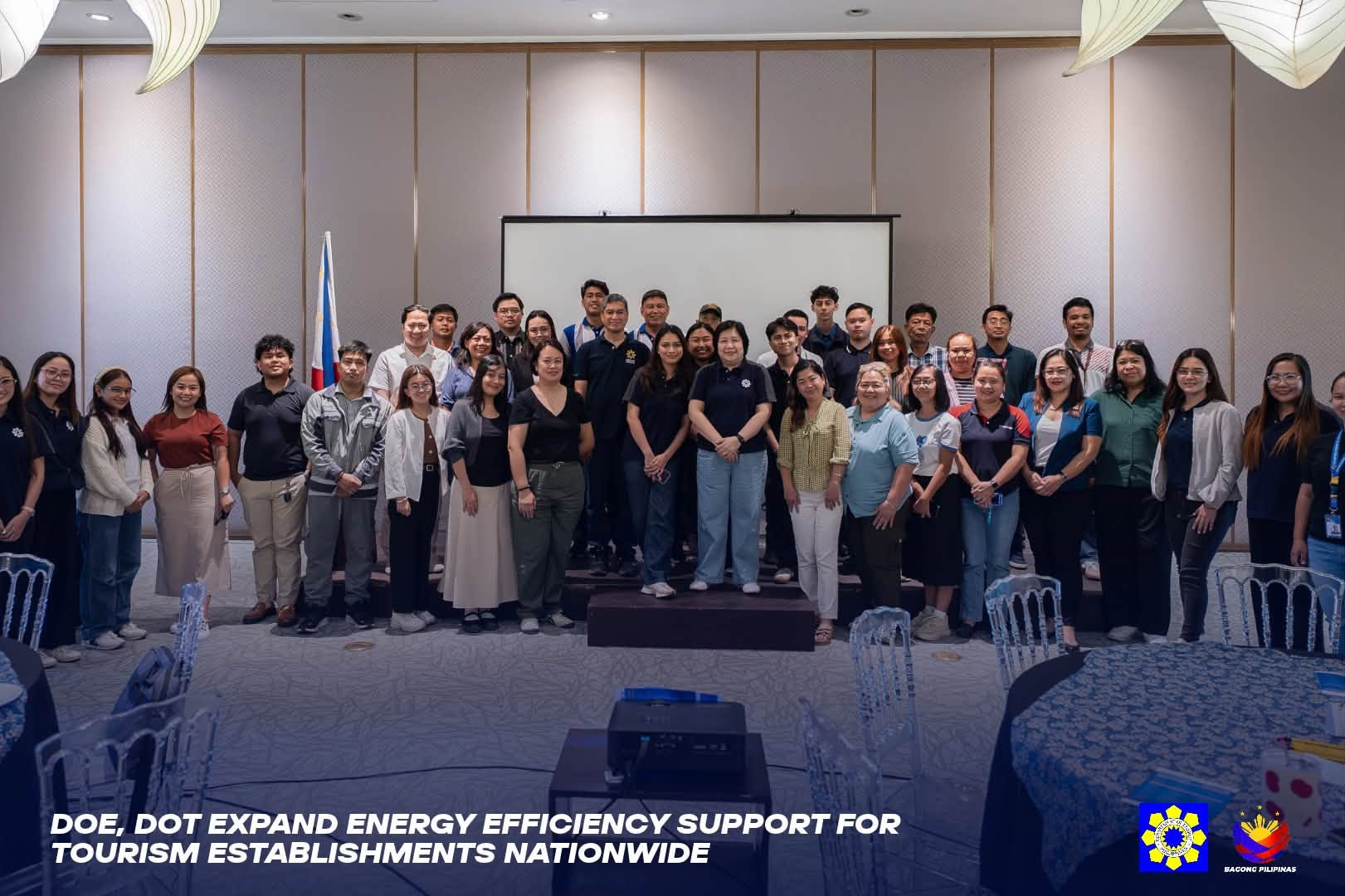

The Department of Energy (DOE), in partnership with the Department of Tourism (DOT), has completed a nationwide series of consultations aimed at helping hotels, resorts, and other tourism establishments reduce electricity costs and improve energy efficiency.
The consultations, held in Metro Manila, Malay in Aklan, Cagayan de Oro City, and La Union, provided tourism operators with guidance on adopting energy-saving measures, complying with government regulations, and accessing financing for energy-efficient technologies.
According to the DOE, the sessions covered compliance with Republic Act No. 11285, or the Energy Efficiency and Conservation Act, including reporting requirements through the Designated Establishments Online Submission (DEOS) Portal.
Participants were also briefed on relevant provisions of the Electric Vehicle Industry Development Act (EVIDA), which promotes the adoption of electric vehicles and supporting infrastructure.
Financing opportunities offered by the Land Bank of the Philippines and Small Business Corporation were presented to help tourism businesses explore funding options for eligible improvements, including energy-efficient equipment and technologies.
The consultations sought to address the operational challenges faced by tourism establishments, particularly energy expenses, while encouraging the adoption of more sustainable business practices.
Following the nationwide discussions, the DOE said it would review the concerns and recommendations raised by participating establishments to develop a work program providing additional technical assistance, regulatory compliance support, and financing information.
The department said these measures are intended to help tourism businesses manage operating costs, strengthen resilience, and maintain service quality for guests.
The collaboration between the DOE and DOT forms part of government efforts to promote energy conservation and sustainable operations across the country’s tourism industry.