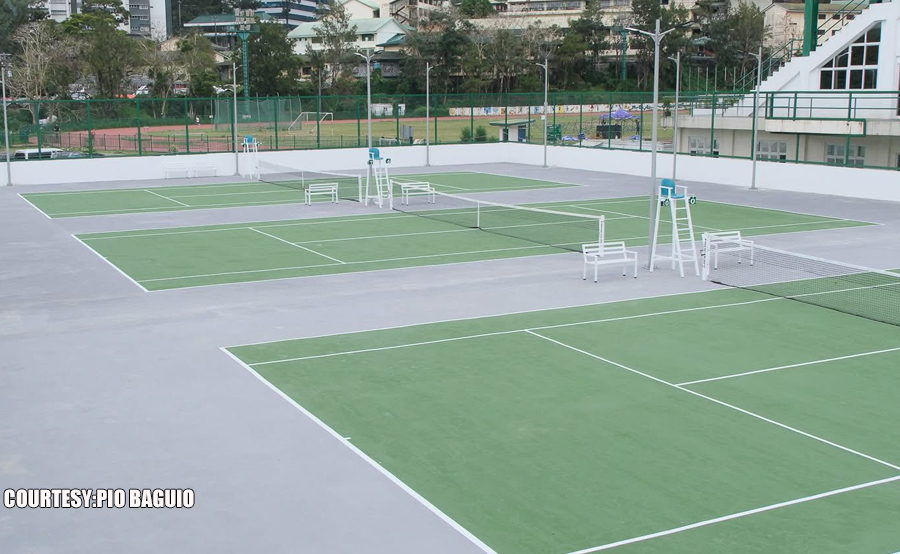

What was supposed to be a showcase sports facility in Baguio City has instead turned into yet another cautionary tale of public works gone wrong. The P110-million renovation of the Burnham Park Tennis Court and its adjoining parking area—touted as a modern upgrade for athletes and visitors—now sits unusable, plagued by flooding just months after completion.
At the center of the controversy is St. Gerrard Construction, the firm owned by Curlee and Sarah Discaya. The company, already a familiar name in government projects, landed the contract in October 2022. A groundbreaking followed in March 2023, with the usual optimism and ribbon-cutting fanfare. But by September this year, less than five months after being “finished,” the courts and parking lot were declared off-limits, their drainage system unable to cope with even moderate rainfall.
The embarrassment prompted the Baguio City Council to summon the Discayas for an explanation. While the project’s delays had initially been attributed to bad weather and construction defects discovered along the way, officials now admit the problem runs deeper: shoddy design, flawed drainage, and questionable oversight.
City Mayor Benjamin Magalong has stood firm that the bidding process was conducted properly and that St. Gerrard emerged as the “most qualified” bidder at the time. Former Bids and Awards Committee chair Engr. Boni dela Peña echoed this, insisting the procurement followed due process. Yet those assurances now ring hollow against the sight of flooded tennis courts—a glaring mismatch between paper qualifications and ground reality.
Magalong, known for his zero-tolerance stance on accountability, has pledged to hold the contractor to task. “Procedures were followed, but that doesn’t excuse poor execution,” he said, hinting that penalties or sanctions could follow if the Discayas fail to justify the failure.
For many Baguio residents, the fiasco is part of a disturbing pattern: multimillion-peso infrastructure projects that look impressive on blueprints but falter in real-world performance. The city’s sporting community, once excited about finally having an upgraded venue, now feels shortchanged. Athletes who should be training are back to square one, while taxpayers are left wondering why a P110-million facility can’t even stay dry.
The bigger question looms: will the Discayas’ latest “unfinished business” become another entry in the long list of white elephants scattered across the country, or will Baguio finally enforce accountability and demand the standards its citizens deserve?