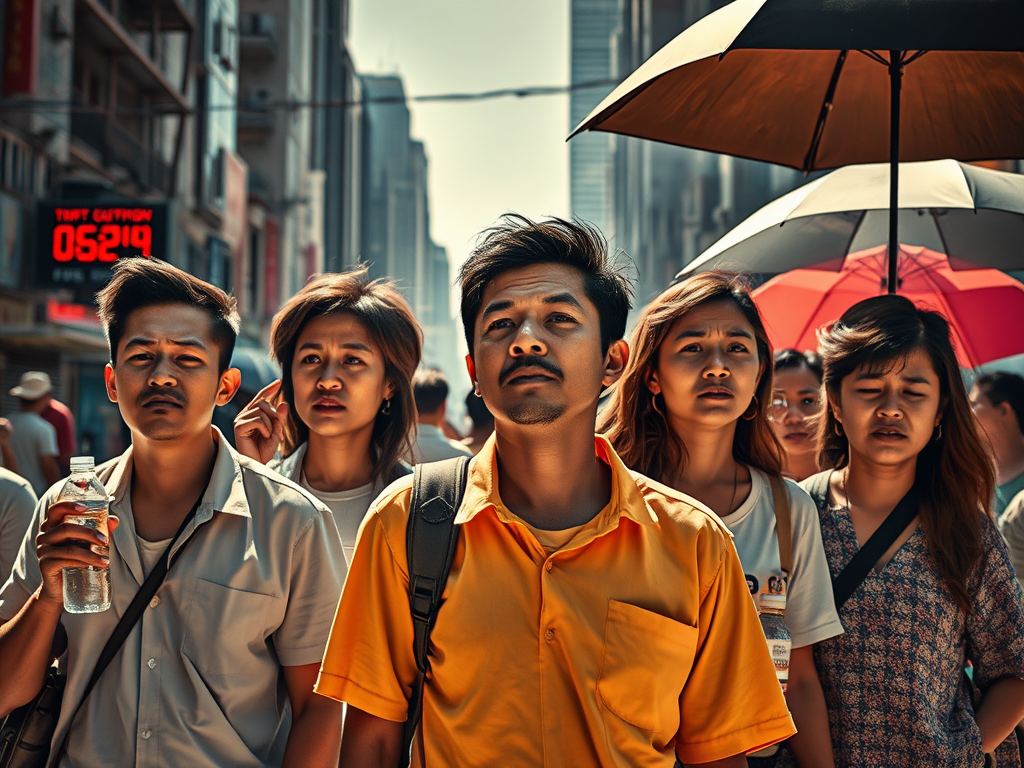
The Department of Education has announced measures to mitigate the effects of rising temperatures on students as the dry season approaches and the heat index increases.
In a statement to ABS-CBN News, Education Secretary Sonny Angara explained that adjustments included shifting class hours from 6:00 a.m. to 10:00 a.m. for morning sessions and 2:00 p.m. to 6:00 p.m. for afternoon sessions.
Additionally, extra water and rest breaks will be provided, especially in classrooms without air conditioning.
Previously, state weather bureau PAGASA warned that the heat index could reach dangerous levels in some areas, including Metro Manila, leading several local government units to suspend classes at various levels.
To reduce disruptions to learning, Angara said that schools would adopt alternative delivery modalities (ADMs) during class suspensions.
“Transition to remote or asynchronous learning if the heat index reaches 42 degrees Celsius or higher or based on directives from the Local Government Unit,” he said.
Angara further emphasized that schools must ensure access to learning resources and create self-learning modules.
The DepEd also directed schools to enhance ventilation by clearing airflow blockages and supplying fans in classrooms. Schools are also required to set up hydration stations, provide insulated water containers, and have first aid kits that include cooling packs and emergency thermometers.
“School medical personnel will monitor and prevent heat-related issues such as cramps, exhaustion, and stroke. This means limiting outdoor activities during peak heat hours. If necessary, use covered areas like school courts,” Angara said.
The agency also instructed regular dissemination of information about the health risks of extreme heat.
PAGASA stated that although the northeast monsoon season has not yet fully ended, the warm and dry season is approaching. The bureau has warned that temperatures are expected to rise in the coming days.
Although temperatures this year may be slightly lower than the extreme heat of 2024, PAGASA advises the public to continue taking precautions by wearing light, breathable clothing and staying hydrated.