The Department of Education (DepEd) announced on Thursday that it is actively addressing the ongoing issue of classroom shortages in the Philippines with a sense of urgency and flexibility. This assurance follows concerns raised by several lawmakers during a Senate Committee on Basic Education hearing on Tuesday, where Senate Bill No. 121, related to the proposed Classroom Building Acceleration Program (CAP) Act, was discussed.
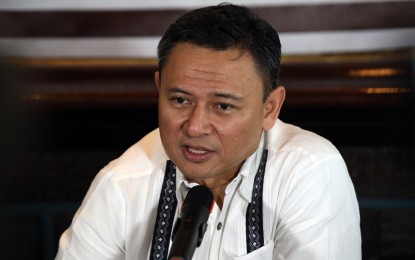
Education Secretary Sonny Angara stated that the Department of Budget and Management (DBM) has included a “special provision” for the DepEd in the 2026 National Expenditure Program (NEP).
“Nagpasok tayo ng Special Provision on flexibility sa 2026 NEP dahil madalas ding tumutugon ang DPWH (Department of Public Works and Highways) sa mga kalamidad (We placed a special provision on flexibility in the 2026 NEP because the DPWH has also been a responder during calamities),” he explained.
Angara emphasized that the DepEd is committed to resolving the classroom shortage efficiently. This provision allows the DepEd to form partnerships with other agencies or a pool of multiple implementing actors to ensure that classroom construction projects can proceed without delays starting next year.
Under the current framework, the DepEd is responsible for determining classroom needs, designs, and safety standards, as well as programming funds. In contrast, the Department of Public Works and Highways directly receives the funds and manages cost estimates, procurement, and actual construction.
Currently, the country faces a backlog of nearly 165,000 classrooms, amounting to approximately PHP413 billion.
All-Sector Approach
Angara highlighted the potential for local government units (LGUs) and the private sector to be involved as project implementers to help address classroom shortages, particularly in remote areas. This could be facilitated through the LGU’s Special Education Fund (SEF), Public-Private Partnerships (PPP), and the Adopt-a-School program for private stakeholders.
“Kailangan nating buksan ang pinto para makasali ang LGU, NGO (non-government organization), at iba pang handang tumulong para mapabilis ang pagpapatayo (We need to open the doors to allow the LGUs, NGOs, and others who are ready to help expedite our constructions),” Angara stated.
“Ang mahalaga, kung saan may pondo, dapat may marunong at mabilis na tagapagpatayo (What’s important is, wherever there is a fund, there should be able and fast builders).”
The education chief expressed support for the proposed CAP, noting that it will be based on a national classroom master plan, clarify roles among national agencies, LGUs, and private partners, prioritize targeted actions, and establish a centralized monitoring system.
He also mentioned that the DepEd is adopting designs for classrooms that are resilient against natural hazards such as typhoons and flooding.