
TACLOBAN CITY – The Department of Economy, Planning, and Development (DEPDev) is working to formulate a regional catch-up plan to accelerate Eastern Visayas’ progress toward achieving the United Nations Sustainable Development Goals (SDGs) by 2030.
DEPDev Eastern Visayas Regional Director Meylene Rosales said Thursday that the proposed Eastern Visayas Regional SDG Catch-Up Plan for 2026–2030 would focus on addressing development gaps, overcoming implementation challenges and prioritizing areas requiring immediate government intervention.
Rosales said the agency conducted workshops on October 7 and 26 to assess the region’s performance in meeting the global development targets and identify strategies to improve progress over the remaining four years.
The first workshop evaluated the region’s SDG performance, identified development gaps and implementation bottlenecks, and explored possible measures to accelerate progress.
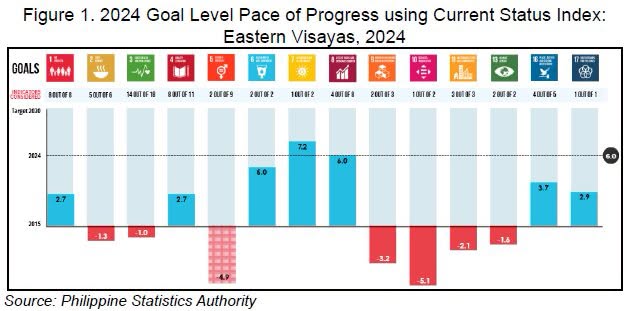
The assessment was based on the 2024 Pace of Progress report, which identified 17 indicators showing declining performance across 10 of the 17 SDGs.
The second workshop focused on validating the preliminary findings and identifying priority development goals based on the number of people affected, the pace of progress, urgency of intervention and potential benefits across multiple SDGs.
“The workshop outputs will serve as inputs for further consultations with concerned government agencies and institutions to refine proposed interventions, identify measures that could accelerate progress across multiple goals and clarify implementation responsibilities and requirements,” Rosales said.
The proposed catch-up plan is expected to serve as a roadmap for coordinated action among national government agencies, local government units, academic institutions and other development stakeholders.
It will also identify priority programs and interventions aimed at addressing persistent development challenges and improving the region’s performance before the 2030 deadline.
According to the Philippine Statistics Authority, the Philippines recorded declining progress in five of the 17 SDGs in 2024.
These include Goal 5 on Gender Equality, Goal 9 on Industry, Innovation and Infrastructure, Goal 10 on Reduced Inequalities, Goal 11 on Sustainable Cities and Communities, and Goal 13 on Climate Action.
The SDGs were adopted by United Nations member states, including the Philippines, in 2015 as a global framework for promoting sustainable and inclusive development through 2030.
The framework consists of 17 goals, 169 targets and 232 unique indicators covering major development concerns such as poverty, inequality, climate change, environmental protection, peace and justice.
DEPDev said the planned regional strategy would help align government programs and resources with priority development needs, allowing Eastern Visayas to accelerate progress toward the remaining SDG targets.