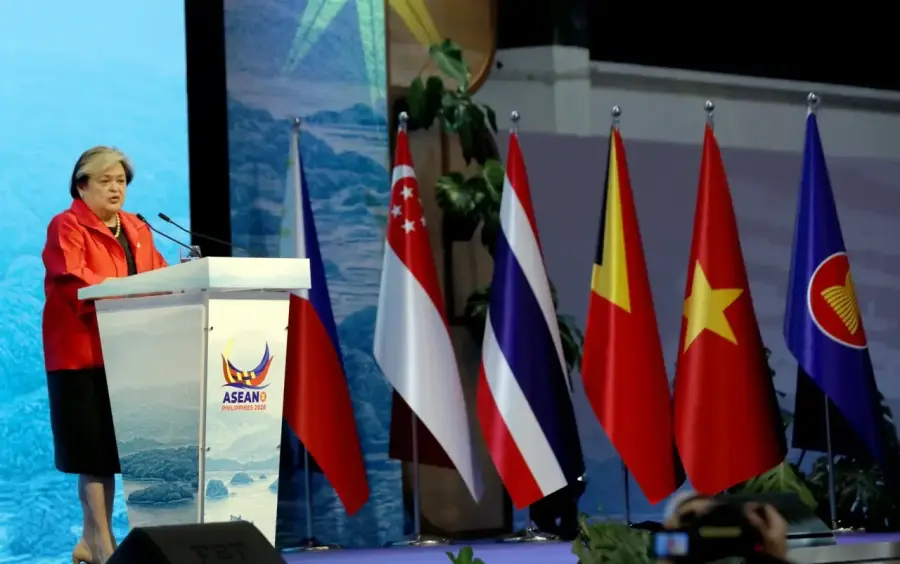

(Photo courtesy of PNA)
MANILA, Philippines – The Association of Southeast Asian Nations (ASEAN) has taken a major step toward strengthening regional digital integration following the signing of the ASEAN Digital Economy Framework Agreement (DEFA), which aims to unlock new business opportunities and accelerate the region’s digital economy toward $2 trillion by 2030.
Trade and Industry Secretary Ma. Cristina Roque said Monday that the agreement, signed by ASEAN economic ministers on November 14, was among the key achievements of the 28th ASEAN Economic Community (AEC) Council meetings held alongside the 49th ASEAN Summit and Related Summits in Pasay City.
Roque said DEFA would strengthen cross-border digital trade, improve electronic payment systems, and expand market access for micro, small and medium enterprises (MSMEs).
The agreement is expected to help ASEAN’s integrated digital economy grow from an estimated $1 trillion to $2 trillion by 2030.
“Under the leadership of President Ferdinand R. Marcos Jr., the Philippines is honored to have championed DEFA as a major economic priority of our 2026 ASEAN Chairship,” Roque said.
She described DEFA as the world’s first region-wide digital economy agreement of its kind, positioning Southeast Asia at the forefront of efforts to establish a more connected, secure, and inclusive digital marketplace.
The framework seeks to harmonize digital trade policies, facilitate cross-border e-commerce, and promote secure and efficient electronic transactions among ASEAN member states.
For businesses, particularly MSMEs, the agreement is expected to reduce barriers to entering regional markets while improving the security and reliability of digital transactions.
Workers could also benefit from expanded employment and business opportunities in e-commerce, digital services, and creative industries.
Roque emphasized that the agreement goes beyond economic expansion by establishing common rules, systems, and mechanisms to ensure broader participation in the digital economy.
She also called for stronger cooperation between governments and the private sector to translate the agreement into tangible economic benefits.
“Government must work together to put the necessary policies, infrastructures, and systems in place,” Roque said.
She stressed that private sector investments, technological innovation, and entrepreneurship would be essential to implementing the framework.
The trade chief said the agreement represents a major milestone in the Philippines’ 2026 ASEAN chairmanship, particularly as the region navigates global economic uncertainties and rapid technological transformation.
“Today, we have signed the foundation of a more integrated ASEAN digital economy. Tomorrow, we must work together to make it a reality for every business, every worker, and every citizen,” Roque said.
She added that ASEAN must ensure digital transformation delivers opportunities across the region without leaving smaller businesses and vulnerable sectors behind.