
BAGUIO CITY – Cordillera officials are pushing for stronger protection of indigenous weaving patterns and designs as the region seeks to help local enterprises benefit from trade and tourism opportunities under the Association of Southeast Asian Nations (ASEAN).
Department of Trade and Industry (DTI) – Cordillera Director Raymond Panjon said the agency has begun working on geographical indications to identify the origins of woven fabrics and help protect them from unauthorized use.
Some local government units, including those in Kalinga and Mountain Province, have passed ordinances prohibiting the sale of products that use indigenous textile designs reproduced through sublimation printing, he said.
DTI-Cordillera Assistant Director Samuel Gallardo said the agency is exploring additional measures to protect local weavers whose patterns and designs are being copied by sublimation printers.
“We are working with the Philippine Textile Research Institute and, hopefully, we can soon adopt some measures for the protection of the local weavers,” Gallardo said.
He acknowledged that sublimation printing is often preferred because it costs less than traditional woven fabric, which is made by interlacing threads.
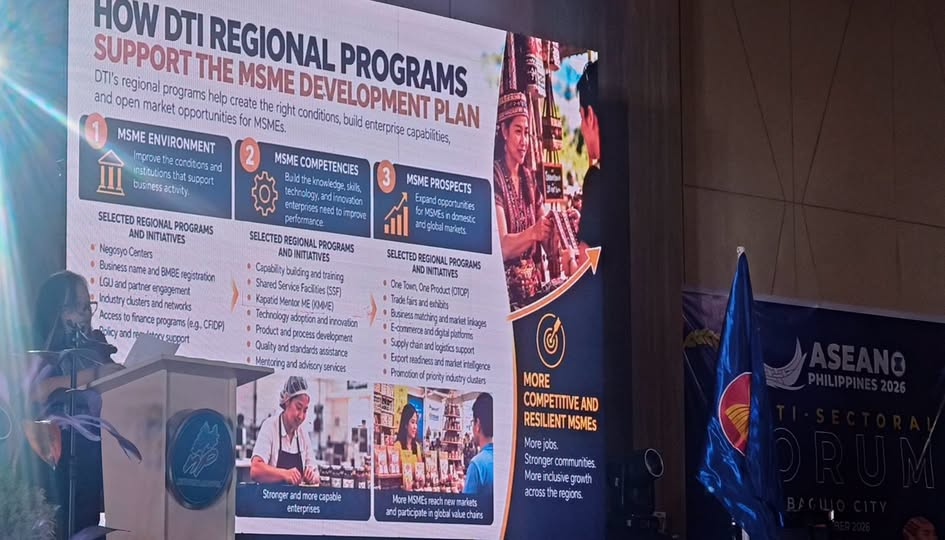
The issue was discussed during the ASEAN Forum: Weaving Heritage, Creativity and Enterprise for Sustainable Regional Growth, organized by the Philippine Information Agency – Cordillera in Baguio on Wednesday. The event gathered tourism industry representatives, micro, small and medium enterprises (MSMEs), tourist police, academics, and government agencies.
Philippine Information Agency Director General Katherine De Castro said the government wants communities to feel the benefits of ASEAN cooperation by bringing information and opportunities closer to the public.
This includes promoting MSMEs and responsible tourism while ensuring that local culture and traditions thrive alongside technological advances, she said.
“The Cordillera is rich in culture, creativity, and tradition. These are not only part of our identity but also valuable resources that create jobs, support local businesses, and improve the lives of MSMEs,” she said.
De Castro urged stakeholders to ensure that ASEAN cooperation benefits artists, cultural workers, farmers, and tourism workers. (Liza Agoot/PNA)