
(Photo courtesy of Anadolu)
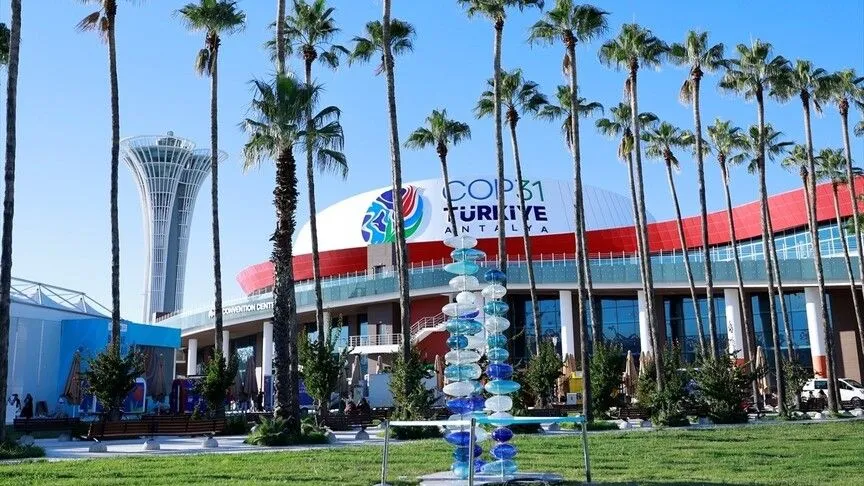
ANTALYA, Türkiye — The United Nations climate summit COP31 opened Monday, November 9, in Türkiye’s Mediterranean city of Antalya, bringing together world leaders and climate negotiators amid mounting pressure to accelerate emissions reductions and increase financial support for countries vulnerable to climate change.
The conference, scheduled from November 9 to 20, gathers government officials, scientists, environmental advocates and civil society representatives to discuss climate mitigation, adaptation and financing.
Türkiye is serving as president of the conference, while Australian Climate Change and Energy Minister Chris Bowen is leading negotiations.
A World Leaders’ Summit is scheduled for November 11 and 12, during which heads of state and government are expected to outline their climate priorities and commitments.
Held under the theme “COP of the Future – COP of Implementation,” this year’s gathering focuses on translating existing climate pledges into measurable actions and results.
The COP31 presidency has identified several priorities, including accelerating the transition to clean energy, expanding electrification, reducing methane emissions and promoting zero-waste initiatives.
Other key areas include developing climate-resilient cities, advancing green industrialization, strengthening food security and protecting oceans and marine ecosystems.
The conference will also address climate education, youth participation, resilient healthcare systems and cooperation on biodiversity protection and land restoration.
Among the proposed global targets for 2035 are increasing electricity’s share of final energy consumption to 35 percent, reducing energy-use intensity in buildings by at least 25 percent and raising the global circular material use rate to at least 15 percent.
However, major disagreements remain over climate financing for developing countries and the pace of the transition away from fossil fuels.
Negotiators are expected to revisit these issues after COP30 failed to reach an agreement on a roadmap for reducing dependence on fossil fuels.
The urgency of the discussions has been reinforced by findings from the United Nations Environment Programme’s 2026 Emissions Gap Report.
According to the report, global temperatures could rise by approximately 2.6 degrees Celsius this century even if countries fully implement their existing climate commitments.
Such an increase would exceed the Paris Agreement’s goal of keeping global warming well below 2 degrees Celsius while pursuing efforts to limit the increase to 1.5 degrees Celsius above pre-industrial levels.
Climate financing is also expected to dominate negotiations as developing nations seek greater financial assistance to address the effects of rising temperatures and extreme weather.
The UN report estimates that developing countries will require approximately USD 305 billion annually for climate adaptation by 2035.
However, international public financing for adaptation stood at only USD 28.2 billion to USD 31.7 billion in 2024, highlighting the gap between available resources and projected needs.
The summit follows a year marked by destructive flooding, extreme heat waves and prolonged droughts across several regions, adding pressure on governments to strengthen their climate commitments.
Delegates are expected to negotiate measures aimed at accelerating the implementation of climate agreements, mobilizing additional financing and improving international cooperation.
COP31 will run until November 20, with participating countries seeking agreements that could advance global efforts to reduce greenhouse gas emissions and strengthen resilience against climate-related disasters.