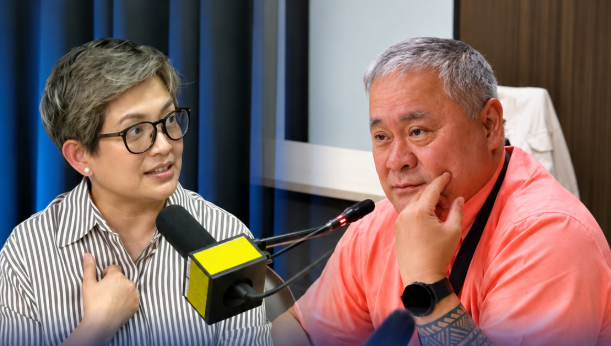

(DC file photo)
University of the Philippines (UP) Professor Antonio Contreras expressed disappointment over fellow UP professor Cielo Magno’s criticism of the Marcos administration’s measures to address the effects of El Niño in the country.
In a Facebook post titled “Fact Checking Cielo Magno,” Contreras challenged Magno’s portrayal of the government’s response as being largely limited to distributing buckets and water filtration systems.
Contreras said he expected Magno to exercise greater caution and fairness in evaluating government programs, particularly since both are academics who teach students the importance of examining all available evidence before drawing conclusions.
He argued that President Ferdinand Marcos Jr. had outlined a much broader set of measures than those highlighted by Magno.
Contreras cited the President’s October 11 briefing in Singapore, where Marcos reportedly discussed hospital preparedness, food security, cloud seeding operations, assistance to farmers, and measures to ensure the continuity of education amid extreme heat.
The preparations also included ensuring adequate electricity supplies, generator fuel, medicines, and other medical supplies for hospitals.
For the agricultural sector, Contreras said the administration had considered alternative livelihood opportunities for farmers unable to plant crops due to water shortages, with the involvement of the Technical Education and Skills Development Authority (TESDA).
He also emphasized that the government’s water supply initiatives extended beyond the distribution of buckets and filtration kits.
According to Contreras, these measures included dam management, water treatment plants, water tankers, and plans to reactivate 61 decommissioned deep wells across Metro Manila.
The professor also highlighted approximately 5,000 small water impounding projects under the Department of Social Welfare and Development’s (DSWD) Project LAWA and BINHI initiatives.
These projects are intended to store water, support food production, and provide temporary employment opportunities for communities affected by drought.
Contreras further clarified that the use of water filtration kits was not a new government initiative.
Citing DSWD Secretary Rex Gatchalian, he said similar equipment had already been deployed in Batanes in 2024 and Davao Oriental in 2025, alongside larger community water filtration installations.
Contreras maintained that government programs should be assessed in their entirety before criticism is made, warning that selective presentation of information could create an incomplete picture of the administration’s efforts to address El Niño.
However, the measures cited by Contreras do not, by themselves, establish the effectiveness of the government’s response. The actual implementation and outcomes of these programs remain separate matters requiring assessment.
The statements were based on Contreras’ Facebook post. Magno’s response to his criticisms was not included in the available information.

