North Korea’s back-to-back criticism of the Lee Jae Myung administration’s peace overtures may stem from concerns that the campaign, if it gains international traction, could be accompanied by a call for denuclearization, experts said Wednesday.
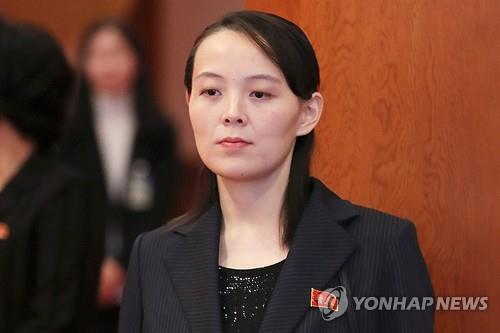
North Korea’s state-run Korean Central News Agency (KCNA) on Wednesday carried remarks by Kim Yo-jong, the high-profile sister of leader Kim Jong-un, criticizing Lee’s conciliatory overtures toward Pyongyang as well as the ongoing Ulchi Freedom Shield military exercise between South Korea and the United States.
No matter how desperately South Korea tries to hide it, the true confrontational nature will never be covered up, Kim said, calling Lee’s efforts to build peace with North Korea “a fancy and a pipe dream.”
She also said Seoul “cannot be a diplomatic partner” of North Korea, adding that it will “not have even a subordinate work in the regional diplomatic arena centered on” Pyongyang.
A day earlier, the KCNA also carried a report on Kim Jong-un’s on-site inspection of a naval destroyer test, quoting him as saying that the joint South Korea-U.S. military exercise was aimed at igniting a war and was ordering a “rapid expansion” of the country’s nuclear arms.
The back-to-back criticism deals a blow to the Lee government, which has promptly made a series of overtures to improve frayed ties with Pyongyang since taking office in June.
In his Liberation Day speech last week, Lee declared South Korea’s respect for North Korea’s current political system, stressing that Seoul will not pursue unification by absorption or engage in hostile acts against the regime.
Experts assessed that Pyongyang’s recent statements may be intended to avert the potential consequences of Seoul’s continuing peace overtures, including a possible increase in international attention to calls for its denuclearization.
“North Korea appears to feel burdened by South Korea’s emphasis on its principle of seeking North Korean denuclearization in demonstrating its commitment to building peace on the international stage,” said Hong Min, a senior researcher at South Korea’s Korea Institute for National Unification.
Hong also cited North Korea’s concerns that Seoul may leverage the peace campaign to intervene in Washington-Pyongyang relations as another reason for the country’s latest response.
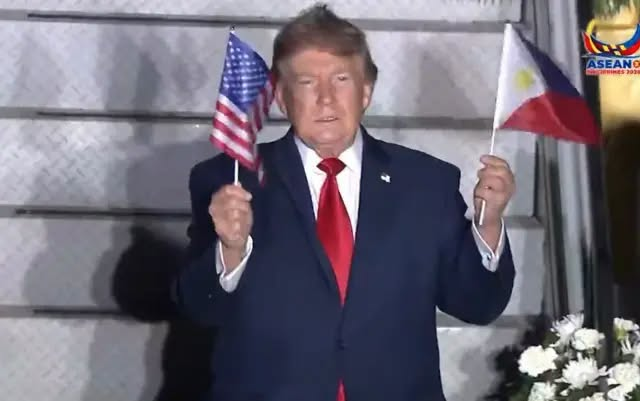
On Monday, Lee is scheduled to meet U.S. President Donald Trump for a summit in Washington, amid expectations that the meeting may commit to cooperation on North Korean issues and underscore once again the necessity of North Korea’s denuclearization.
Shortly after Kim Yo-jong’s remarks, Lee’s office expressed “regret” over North Korea’s “distorted representation of our sincere efforts.”
The presidential office once again reaffirmed that the Lee government’s peace overtures do not serve the unilateral interests of any particular party, but seek the stability and prosperity of both South and North Korea, pledging continued efforts.
“The government will put the era of confrontation and hostility behind us and will definitely open a new era of peaceful coexistence and mutual growth on the Korean Peninsula,” the office said.
The unification ministry also echoed this position, adding that mutual respect from both Seoul and Pyongyang is needed to build peace on the peninsula.