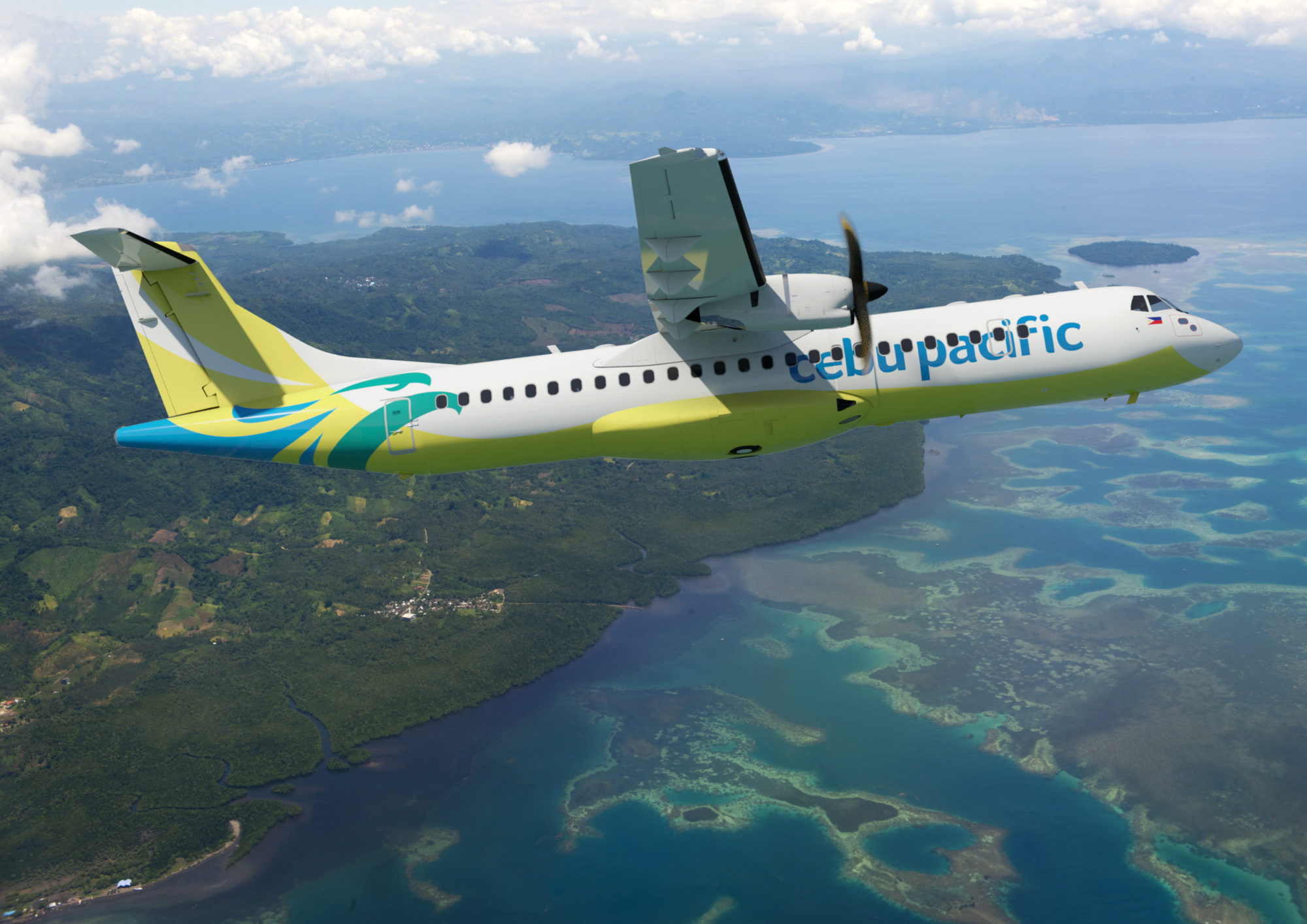

Cebu Pacific is entering a new operational chapter as it completes the final phase of transferring all turboprop flights from Ninoy Aquino International Airport Terminal 2 to Clark International Airport, a move that will take effect on March 29, 2026.
The shift, carried out through its regional unit Cebgo and subsidiary AirSwift, reflects a broader restructuring of air traffic flows in the country and marks a decisive step in decongesting Metro Manila’s primary gateway while strengthening Clark’s role as a growing aviation hub.
The transfer is anchored on a resolution issued by the Department of Transportation’s Manila Slot Coordination Committee, which ordered the gradual phaseout of turboprop operations at NAIA as part of a long-term congestion management strategy.
Turboprop services to Coron (Busuanga), Naga, and El Nido will now operate out of Clark, effectively shifting short-haul regional connectivity north of Metro Manila and redistributing passenger traffic away from one of Southeast Asia’s most congested airports.
For Cebu Pacific, the move is more than a regulatory compliance exercise. It is a strategic realignment that allows the airline to optimize runway capacity at NAIA for jet operations while positioning Clark as a dedicated gateway for regional and leisure destinations traditionally served by turboprops.
This dual-hub configuration creates clearer functional roles for both airports: NAIA as a high-density trunk route hub, and Clark as a growth platform for domestic tourism, emerging regional markets, and point-to-point leisure travel.
The airline has also structured the transition with consumer flexibility in mind. Affected passengers are being automatically rebooked to Clark-based flights, with options for free rebooking within a 30-day window, conversion of ticket value into a travel fund, or full refunds.
This approach reflects an operational model that balances regulatory change with customer retention, minimizing disruption while preserving traveler confidence in the brand.
Crucially, the turboprop transfer unlocks additional capacity at NAIA, which Cebu Pacific is already redeploying to high-demand routes. The airline is scaling up frequencies across key domestic corridors such as Manila–Cebu, Manila–Davao, Manila–Cagayan de Oro, and Manila–Bacolod, reinforcing its dominance on core inter-island links that underpin business travel, logistics, and tourism flows.
, increased services to Hong Kong and Kaohsiung signal a calibrated expansion strategy focused on high-yield, high-demand regional markets.
At a policy level, the transition highlights the evolving governance of Philippine aviation infrastructure. The Manila Slot Coordinating Committee—composed of transport regulators, aviation authorities, and NAIA’s private operator—has framed the turboprop phaseout as a structural solution to systemic congestion rather than a short-term traffic management fix.
By extending the original deadline to March 2026, regulators created a phased transition window that allowed airlines, airports, and passengers to adapt without destabilizing schedules or networks.
From a business perspective, the Clark shift positions Cebu Pacific to extract long-term operational efficiencies. Concentrating turboprop fleets at Clark simplifies maintenance logistics, improves turnaround predictability, and aligns aircraft utilization with route economics better suited to regional demand profiles.
At the same time, higher jet frequencies at NAIA strengthen revenue performance on dense routes where demand elasticity and load factors are structurally stronger.
In effect, the transfer represents a structural rebalancing of the country’s aviation ecosystem. Clark is no longer simply an overflow airport; it is becoming an integrated node in the national network, while NAIA is being recalibrated toward higher-capacity, higher-throughput operations.
For Cebu Pacific, the strategy reflects a disciplined, systems-level approach to growth—one that aligns regulatory reform, infrastructure planning, and commercial network optimization into a single operational framework that supports both profitability and long-term market leadership.