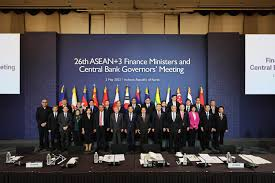

SINGAPORE – As global trade faces its most disruptive shock in recent years, ASEAN+3 is signaling a strong, united front. The region, encompassing ASEAN’s 10 member states along with China, Japan, and South Korea, is leaning into its resilience and policy arsenal to confront the fallout from sweeping U.S. tariffs announced on April 2.
In its 2025 ASEAN+3 Regional Economic Outlook (AREO), the ASEAN+3 Macroeconomic Research Office (AMRO) underscores a pivotal message: while the storm is real, the region is not only weathering it—it’s adapting, diversifying, and preparing to come out stronger.
“This isn’t the first global shock the region has faced—but it may be the most complex,” said AMRO Chief Economist Hoe Ee Khor. “Fortunately, ASEAN+3 economies today are far more diversified and resilient than in the past. This gives us a clear edge in navigating the current turbulence.”
The U.S. tariff hike, dubbed the “Liberation Day” measures, delivers a direct blow: 13 out of 14 ASEAN+3 economies are affected, facing a trade-weighted average tariff of 26 percent (excluding China). The tariffs—and the policy uncertainty that surrounds them—threaten to upend trade flows, shake supply chains, and rattle financial markets.
But here’s the twist: ASEAN+3 isn’t backing down.
Before the tariffs, the region was projected to grow above 4% through 2025–2026, thanks to strong domestic demand, investment recovery, and steady inflation. With the tariff shock factored in, growth may dip below 4% in 2025 and soften further in 2026. Yet this shift, AMRO notes, doesn’t spell derailment—it marks a strategic moment to accelerate long-term transformation.
Governments across the region have room to maneuver. Many enjoy fiscal space to support vulnerable sectors. Central banks, cushioned by low inflation, can ease policy to sustain momentum. More importantly, the region has already been pivoting toward deeper domestic and intraregional economic engines.
“Exports to the U.S. now make up just 15% of gross exports—down from 24% in 2000,” the report notes. “Trade within the region and rising consumer markets are increasingly taking the lead.”
The bigger story here is resilience by design. ASEAN+3 economies have spent years diversifying—not just where they trade, but what drives their growth. Now, with new pressures emerging, the urgency to deepen integration, invest in digital and green sectors, and close investment gaps has only intensified.
Allen Ng, AMRO’s Group Head for Regional Surveillance, emphasized that this is a chance for a long-term pivot:
“Accelerating digital transformation, advancing green transitions, and boosting productivity aren’t just policy goals—they are the key to unlocking untapped growth potential and future-proofing the region.”
Among the report’s core strategies:
- Upgrading industrial capabilities for a more competitive edge
- Investing in renewable energy and digital infrastructure
- Strengthening service sector productivity
- Advancing regional cooperation in services and digital trade
While short-term headwinds may slow momentum, the underlying fundamentals remain intact. ASEAN+3’s commitment to reforms, regional cooperation, and strategic investment lays a strong foundation for sustained, high-quality growth.
Khor summed it up with cautious optimism:
“No one wins in a trade war. But ASEAN+3 has shown time and again that resilience, unity, and coordinated action can turn challenges into catalysts for transformation.”
