
(Photo courtesy of Asean 2026)
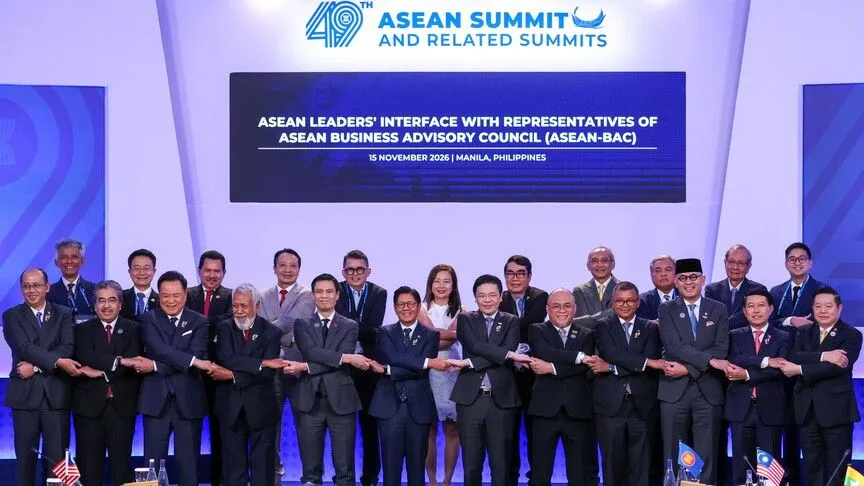
MANILA, Philippines — The Association of Southeast Asian Nations (ASEAN) has signed a memorandum of understanding (MoU) to advance the ASEAN Power Grid initiative, while several countries have expressed interest in a regional oil stockpiling arrangement to strengthen energy security amid global uncertainties.
Trade Secretary Cristina Roque announced the developments Monday following the 28th ASEAN Economic Community Council meeting, highlighting efforts to improve energy connectivity, protect supply chains and strengthen regional economic cooperation.
Roque said the ASEAN Power Grid initiative seeks to connect electricity networks across member states, allowing countries to share power supplies and reduce vulnerability to energy disruptions.
The agreement is expected to support cross-border electricity trade and improve the region’s ability to respond to changing energy demands.
Meanwhile, the Philippines, as ASEAN chair for 2026, led discussions on establishing a regional oil stockpiling arrangement to help participating countries address potential supply shortages.
Roque identified Singapore, Indonesia, Malaysia, the Philippines and the United Arab Emirates, an ASEAN sectoral dialogue partner, as countries that have expressed interest in the initiative.
Under the proposed arrangement, participating countries could store petroleum reserves in locations with suitable facilities, allowing them to access supplies from nearby storage sites during emergencies or market disruptions.
Roque said the arrangement could also reduce transportation and logistics costs while helping protect businesses and consumers from global supply uncertainties.
Participation would remain voluntary, with interested countries able to join based on their energy security requirements.
Beyond energy cooperation, ASEAN also agreed to pursue practical measures aimed at improving agricultural productivity and strengthening regional food security.
Roque said these initiatives would help stabilize food supplies and improve the region’s resilience against agricultural disruptions.
The regional bloc also signed the ASEAN Digital Economy Framework Agreement (DEFA), which Roque described as the world’s first region-wide digital economy framework agreement.
“We are building a more integrated digital economy for nearly 680 million people, with the potential to double its value from an estimated $1 trillion to $2 trillion by 2030,” Roque said.
The agreement establishes a common framework for a more seamless, secure and interconnected digital marketplace across ASEAN.
It covers key areas such as digital trade and cross-border e-commerce, making it easier for businesses to offer products and services throughout the regional market.
Roque said the initiatives reflect ASEAN’s efforts to deepen economic integration while strengthening energy security, food resilience and digital competitiveness.