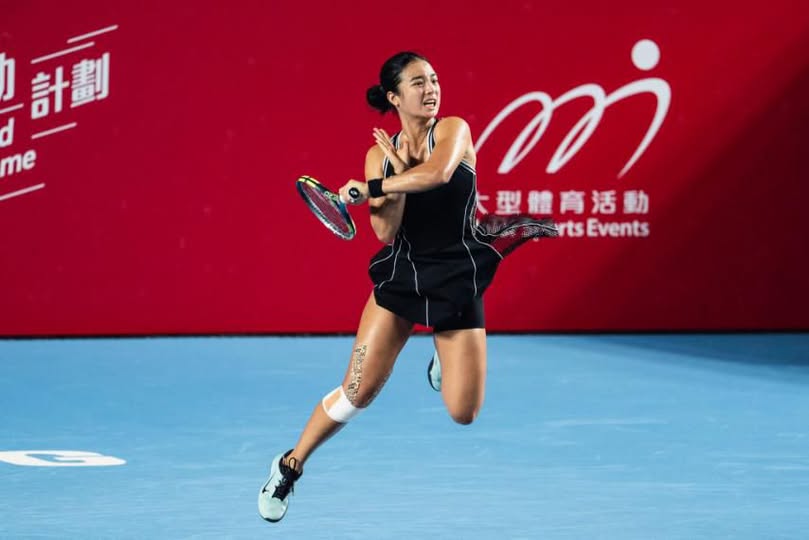
For decades, tennis in the Philippines lived in the shadows of basketball arenas and boxing rings. But as Alex Eala storms through the international circuit, something unexpected is happening: a new generation of Filipino fans is discovering the sport—many for the very first time.
At just 20 years old, Eala has become one of the most recognizable young athletes in the country, not only because of her steady climb in the world rankings but also because of the energy and attention she brings wherever she plays. Her matches abroad are increasingly filled with Filipino supporters waving flags, cheering loudly, and creating an atmosphere rarely seen in women’s tennis tournaments.
For Eala, that growing support doesn’t feel like pressure. Instead, she says it’s something she carries with pride.
“It’s more pride than pressure. It’s a blessing to have this support behind me,” Eala said in an earlier interview during her Australian Open debut.
The Filipina star has quickly turned into one of the most talked-about players on the women’s tour, recently rising to world No. 32 and securing a seeded spot at the prestigious BNP Paribas Open in Indian Wells—often dubbed the “fifth Grand Slam” because of its scale and star-studded field.
But statistics alone do not explain the impact she’s making.
Every time Eala pulls off an upset against a higher-ranked opponent or pushes a top player to the limit, social media in the Philippines erupts. Clips of her rallies circulate widely, sports bars begin showing her matches, and casual sports fans who rarely follow tennis suddenly start tracking her results.
In a nation long dominated by basketball culture, that kind of shift is remarkable.
Eala herself recognizes that her success is doing more than building her own career—it is quietly transforming the visibility of tennis in the Philippines.
“I’ve only dreamed of making tennis grow in the Philippines, and now I’m bringing a whole new audience to tennis around the world,” she said.
She credits the strong sense of national pride among Filipinos for the surge of support she receives overseas.
“The Filipinos have such a strong sense of community. When one of us succeeds, we all feel that shared pride,” Eala added.
That connection has become one of the defining features of her journey. At tournaments across Europe, the United States, and Asia, Filipino fans have turned into a familiar presence—often traveling long distances just to watch her compete.
Their cheers have become a signature backdrop to her matches.
Yet behind the growing spotlight, Eala remains focused on the work required to stay competitive at the highest level. Nearly a year removed from her breakthrough run in Miami—an experience she still considers a major turning point in her career—she says every tournament since has brought new lessons.
“Everything after Miami was a new experience. My eyes are wide open now, and I’m eager to compete at this level,” she said.
While she continues to chase her first WTA tour title, the young Filipina believes her recent performances have strengthened her belief in what she can achieve.
“I learned a lot about my capabilities and improved a lot. I’ve always believed in myself, but being able to execute it at this level gives you a new layer of confidence,” she explained.
For now, Eala’s journey is still unfolding. But whether she is playing on the sport’s biggest stages or battling through early-round matches, one thing has already become clear: she is not only chasing victories for herself.
She is helping introduce tennis to a country that is only just beginning to realize it might have a star capable of changing the game.