
Filipino tennis sensation Alex Eala made history this week at Roland Garros—not just with a win, but with a message.
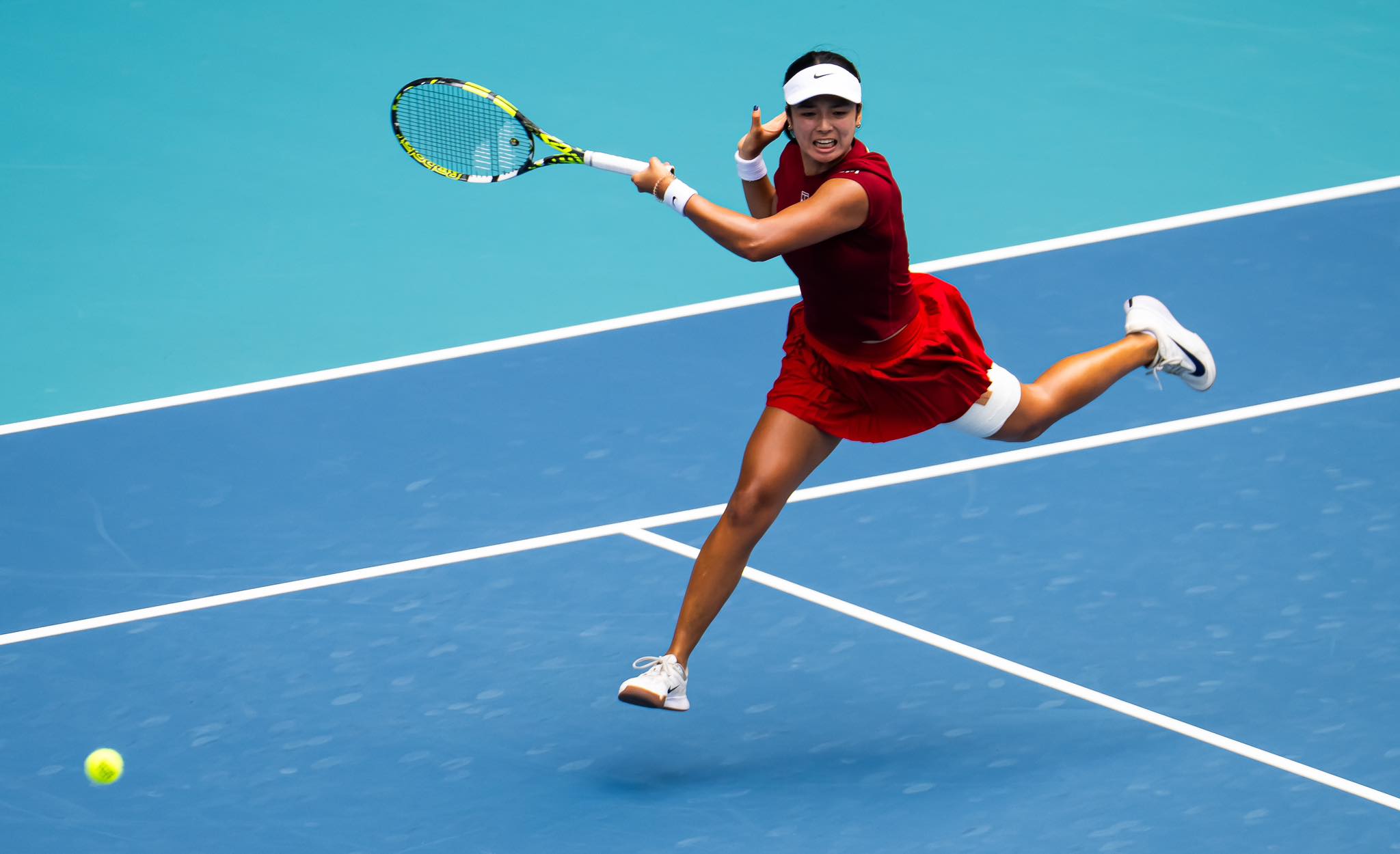
The 20-year-old athlete became the first Filipino woman to secure a match victory in a Grand Slam tournament, partnering with Mexico’s Renata Zarazua to defeat Britain’s Emily Appleton and Spain’s Yvonne Cavalle-Reimers in straight sets, 7-5, 6-4. The victory, which came in the opening round of the women’s doubles at the French Open, marked a major milestone not only for Eala’s personal career but also for the broader landscape of Philippine sports.
“It’s more than just a win—it’s a symbol,” said Eala, beaming after the match. “Coming off a tough singles loss, to bounce back like this means a lot. It shows resilience, and I hope it inspires others back home.”
Just days earlier, Eala was narrowly defeated in the singles draw by Colombia’s Emiliana Arango in a grueling three-set match, 6-0, 2-6, 6-3. But rather than dwell on the disappointment, she turned her focus to doubles and made the most of her Grand Slam debut in that format.
The response from the Philippines has been overwhelming, according to Eala. “People are excited. Seeing a Filipino name on the main draw in Paris—that’s not something we’ve seen often. It makes them proud,” she shared.
Eala, who has been training since age 13 at the prestigious Rafa Nadal Academy in Spain, has emerged as one of the most promising young athletes in Philippine history. She previously captured global attention by winning the 2022 US Open girls’ singles title, and earlier this year, she stunned the tennis world with a semi-final run in Miami, where she took down elite opponents including Jelena Ostapenko, Madison Keys, and world number two Iga Swiatek.
Now ranked 73rd in the world, Eala believes this is only the beginning—not just for her, but for the country she represents.
“We’re not just participants anymore,” she said. “Athletes like Carlos Yulo, who brought home double gold from the Paris Olympics, are showing that Filipinos can be contenders. We’re building momentum.”
What’s emerging, she added, is a renewed belief in what Filipino athletes can achieve. “We’re entering a different chapter—a new era where international success feels within reach,” she said. “It’s not just about talent; it’s about the work ethic, the community, and the hunger to represent something bigger than ourselves.”
As Eala advances in the doubles draw, her presence at Roland Garros continues to break barriers and elevate the profile of Philippine sports. More than a win, her performance is a statement: Filipino athletes are no longer the underdogs—they’re contenders ready to redefine the narrative.