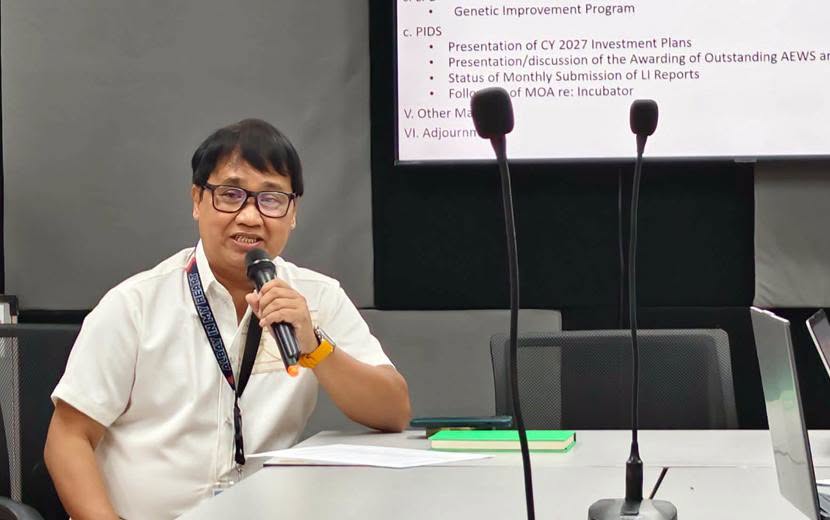

(Photo courtesy of Albay Veterinary Office)
LEGAZPI CITY – The Albay Veterinary Office is preparing measures to protect the province’s livestock from the effects of prolonged drought and a possible Super El Niño that could persist until the first half of 2027.
Provincial Veterinarian Dr. Pancho Mella said the office is focusing on four major concerns: water supply, animal feeds, shelter and the prevention of possible disease outbreaks.
“The first thing we need to do is information dissemination among farmers,” Mella said, stressing the need to educate livestock raisers on ways to reduce the impact of drought.
He said ruminants such as carabaos, cattle and goats are among the most vulnerable because they depend heavily on pasture areas for food.
Albay has nearly 92,000 carabaos, around 6,000 cattle and 48,000 goats that could be affected if grazing areas dry up.
The province’s broader livestock inventory also includes more than 2.9 million native and improved poultry, 867,000 broilers and about 87,000 swine.
Mella said water remains the primary concern, particularly if wells and other water sources begin to dry up.
Commercial and semi-commercial farms, including piggeries and poultry farms that rely on deep wells, may also face supply problems.
The veterinary office is likewise preparing for possible feed shortages as pasture areas become less productive.
Mella said lower corn production could further affect feed availability because corn is a major ingredient in animal feeds.
As part of its mitigation measures, the AVO has already started silage-making activities to preserve grasses while supply remains abundant.
“If our food, particularly grasses, is still abundant now, we can preserve them through silage-making so that when they become unavailable, we already have preserved feed that can be given to the animals,” Mella said.
The office is also advising livestock raisers to build temporary shelters for grazing animals to protect them from extreme heat.
While modern poultry and piggery facilities generally have cooling systems, Mella warned that power supply disruptions could also affect these farms.
The AVO is also preparing veterinary medical missions and possible vaccination activities to prevent disease outbreaks during the dry period.
Mella said the office will coordinate with the Albay Provincial Agriculture Office for a possible El Niño Caravan aimed at educating farmers and livestock raisers on preparedness measures.
He urged livestock owners to join information campaigns and coordinate with veterinary offices for assistance.
“El Niño is very threatening, so we need to be informed,” Mella said.
