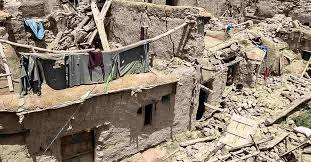

Afghanistan has been thrown into mourning after a powerful 6.0-magnitude earthquake struck late Sunday night, flattening entire villages and leaving thousands dead or injured.
The tremor, centered in Kunar province near Jalalabad, struck at 11:47 p.m. local time and was felt across a vast stretch of the region, from Kabul to Pakistan’s capital Islamabad. The shallow depth of just 13 kilometers amplified the devastation, with homes collapsing within seconds. Survivors described scenes of chaos, as families scrambled to escape falling walls while aftershocks rattled the ground.
Taliban officials initially placed the death toll at over 600, but by Monday morning that figure climbed to more than 800, with at least 2,800 injured. The majority of casualties were reported in Kunar, where whole communities were buried under rubble. In neighboring Nangarhar, at least 12 deaths and 255 injuries were confirmed.
Images from the region showed villagers clawing through the debris with bare hands, desperate to find missing relatives. With limited heavy machinery and international aid only trickling in, many fear the true death toll will rise sharply in the coming days.

The earthquake did not come in isolation. Roughly 20 minutes after the initial shock, a 4.5 tremor shook the same province, followed shortly by a 5.2 aftershock. The sequence of quakes deepened fears and sent families fleeing into the open through the night, braving the cold in makeshift camps.
Humanitarian groups have voiced concern that the disaster response is hamstrung by Afghanistan’s political climate. Oxfam said its relief work has been severely constrained, pointing to restrictions on women’s rights under Taliban rule and wider operational barriers. “Emergency relief in Afghanistan is already difficult in normal times. During crises like this, the challenges multiply,” said Hamila Begun, Oxfam’s chief executive.
International aid agencies have pledged support, but sanctions and limited engagement with the Taliban government could slow assistance. For many Afghans in the quake-hit regions, immediate relief remains uncertain, as hospitals overflow with the injured and survivors plead for food, medicine, and shelter.
Afghanistan, already grappling with poverty, food insecurity, and the lingering effects of decades of conflict, now faces yet another humanitarian disaster. Experts warn that rebuilding the affected villages could take years, while the trauma of loss may haunt communities for generations.
As rescuers continue to pull bodies from the rubble, the tragedy underscores Afghanistan’s fragility — not only against natural disasters but also against the political and social conditions that make recovery so perilous.