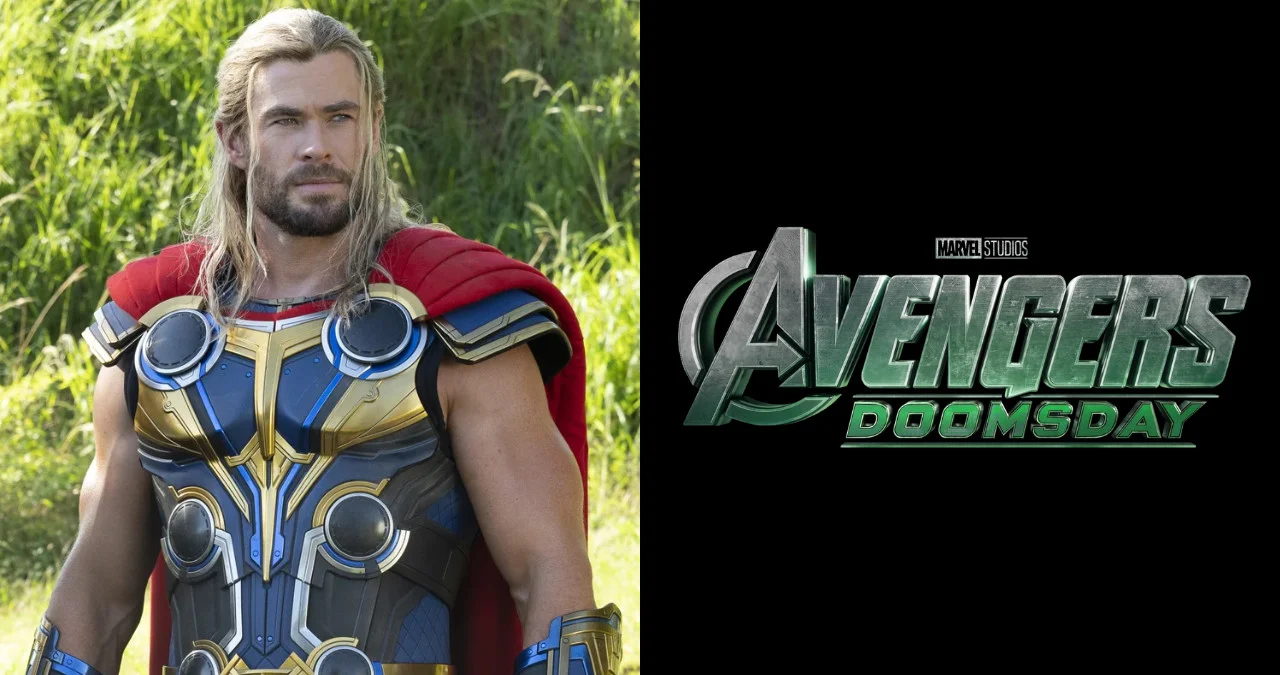

Marvel’s first glimpse of Chris Hemsworth’s return as Thor is not about lightning strikes or shattered battlefields. Instead, it opens on something far quieter: a god wrestling with the weight of fatherhood. In the newly released teaser, Thor speaks into the void, seeking guidance from Odin not as a warrior preparing for glory, but as a parent terrified of what he might lose.
The moment reframes the character audiences have followed for more than a decade. Thor’s monologue, delivered in near solitude, reflects on a lifetime of answering calls to war and honor, only to find himself unprepared for a different kind of responsibility.
Fate, he says, has given him a child, a life untouched by chaos. His plea is not for victory, but for the chance to return home, not armored and hardened, but gentle enough to teach peace instead of battle.

The emotional undercurrent connects directly to Love, the adoptive daughter introduced at the end of Thor’s last cinematic chapter, and positions her as the quiet heart of what is shaping up to be Marvel’s most consequential saga yet.
This tonal shift suggests that the next Avengers era may be less about spectacle for its own sake and more about what years of conflict have cost its heroes. Hemsworth’s Thor, once defined by bravado and mythic excess, now stands at a crossroads where the greatest challenge is no longer defeating enemies, but surviving them long enough to protect the life waiting for him at home.
Scheduled for a December 18, 2026 theatrical release, the film also signals a broader convergence within the Marvel Cinematic Universe. A separate teaser has already confirmed the return of Chris Evans as Steve Rogers, a revelation that immediately reignited speculation about timelines, legacies, and the true meaning of “endings” in Marvel storytelling.
The studio has also lined up a direct continuation with Avengers: Secret Wars, arriving in December 2027, cementing the next two films as a paired narrative event rather than standalone blockbusters.
Perhaps the most intriguing development, however, is the return of Robert Downey Jr.—not as Iron Man, but as Victor Von Doom, also known as Doctor Doom. Casting one of the MCU’s foundational figures as its next central antagonist signals a deliberate attempt to blur the line between legacy and reinvention. Doom’s arrival is widely seen as essential to elevating the stakes beyond anything the Avengers have faced before.
Guiding this ambitious arc are Joe Russo and Anthony Russo, the filmmaking duo responsible for many of Marvel’s most critically and commercially successful entries. After previously steering Captain America: The Winter Soldier, Civil War, Infinity War, and Endgame, the brothers once believed their journey with Marvel was complete. Joe Russo has since acknowledged that Endgame felt like a creative endpoint, a culmination that left them spent.
What drew them back, he explained, was the scale and significance of Secret Wars, which he has described as the biggest story Marvel Comics ever told. According to the Russos, telling that story properly requires careful groundwork, and that foundation cannot exist without a figure like Doctor Doom anchoring the conflict.
Yet for all the multiversal implications and epic confrontations promised ahead, the first emotional note Marvel chooses to strike is a quiet one. Thor, once the embodiment of thunder and spectacle, is now defined by a far more human fear: the possibility that he might not make it back.
In that tension between godhood and vulnerability, Avengers: Doomsday hints that the next phase of Marvel’s saga may be its most intimate yet.