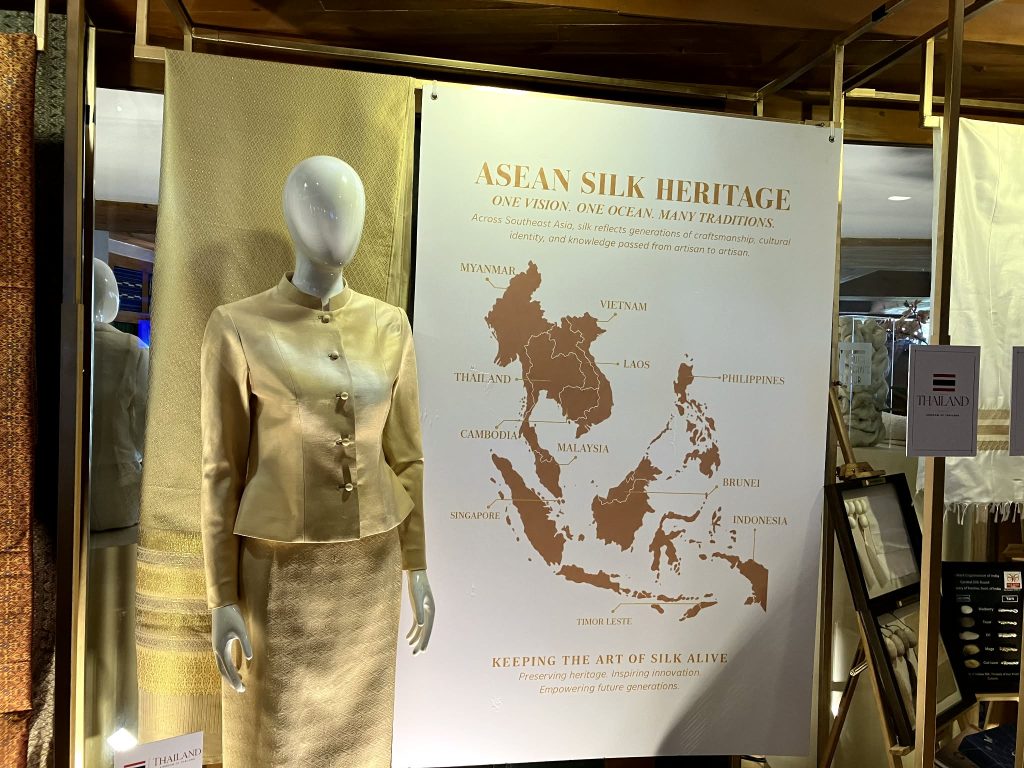

(Photo courtesy of PIA)
BAGUIO CITY – Silk and traditional textile products from the Philippines and other Asian countries were showcased during the KatHABI: ASEAN Silk Expo held at the University of the Cordilleras in Baguio City from October 21 to 22, 2026.
The exhibition formed part of the 7th Philippine Silk Summit, organized in line with the Philippines’ ASEAN Chairship in 2026, to promote cultural exchange, regional cooperation and appreciation of Southeast Asia’s weaving traditions.
The expo featured silk and textile creations from Thailand, Laos, Cambodia and India, alongside products crafted by Filipino artisans and local weaving communities.
Organizers highlighted the role of silk and traditional weaving in preserving cultural heritage, strengthening regional ties and creating economic opportunities for communities.
Department of Science and Technology-Cordillera Administrative Region (DOST-CAR) Director Nancy Bantog emphasized the potential of the silk industry to connect traditional craftsmanship with scientific innovation and livelihood development.
“May this silk become a thread that connects science to tradition, livelihood to empowerment, micro to large scale sericulture industry, and individual players to the whole ecosystem,” Bantog said.
Carrying the theme “Championing the SEDA Pilipinas Innovation Ecosystem,” the summit focused on building a self-reliant Philippine silk industry through research, technological advancement and stronger partnerships among stakeholders.
The initiative also aims to expand livelihood opportunities, empower women, promote environmental sustainability and support the country’s growing creative industries.
DOST Secretary Renato Solidum Jr. underscored the importance of combining the Philippines’ rich textile heritage with modern technology and innovation to establish a competitive and sustainable silk sector.
“This gathering brings to life the long-held vision of mainstreaming silk in the local textile sector. But while our theme invites us to honor our past, it calls us even more urgently to look ahead toward an integrated ecosystem where research responds to real needs, innovation transforms lives, and strong partnership builds true sustainability. SEDA Pilipinas champions this ecosystem approach,” Solidum said.
The summit also provided a platform for government agencies, researchers, entrepreneurs and weaving communities to explore partnerships and strengthen the local silk production value chain.
Through the SEDA Pilipinas initiative, the DOST seeks to develop an integrated silk industry that supports local producers, preserves traditional weaving practices and creates sustainable economic opportunities.