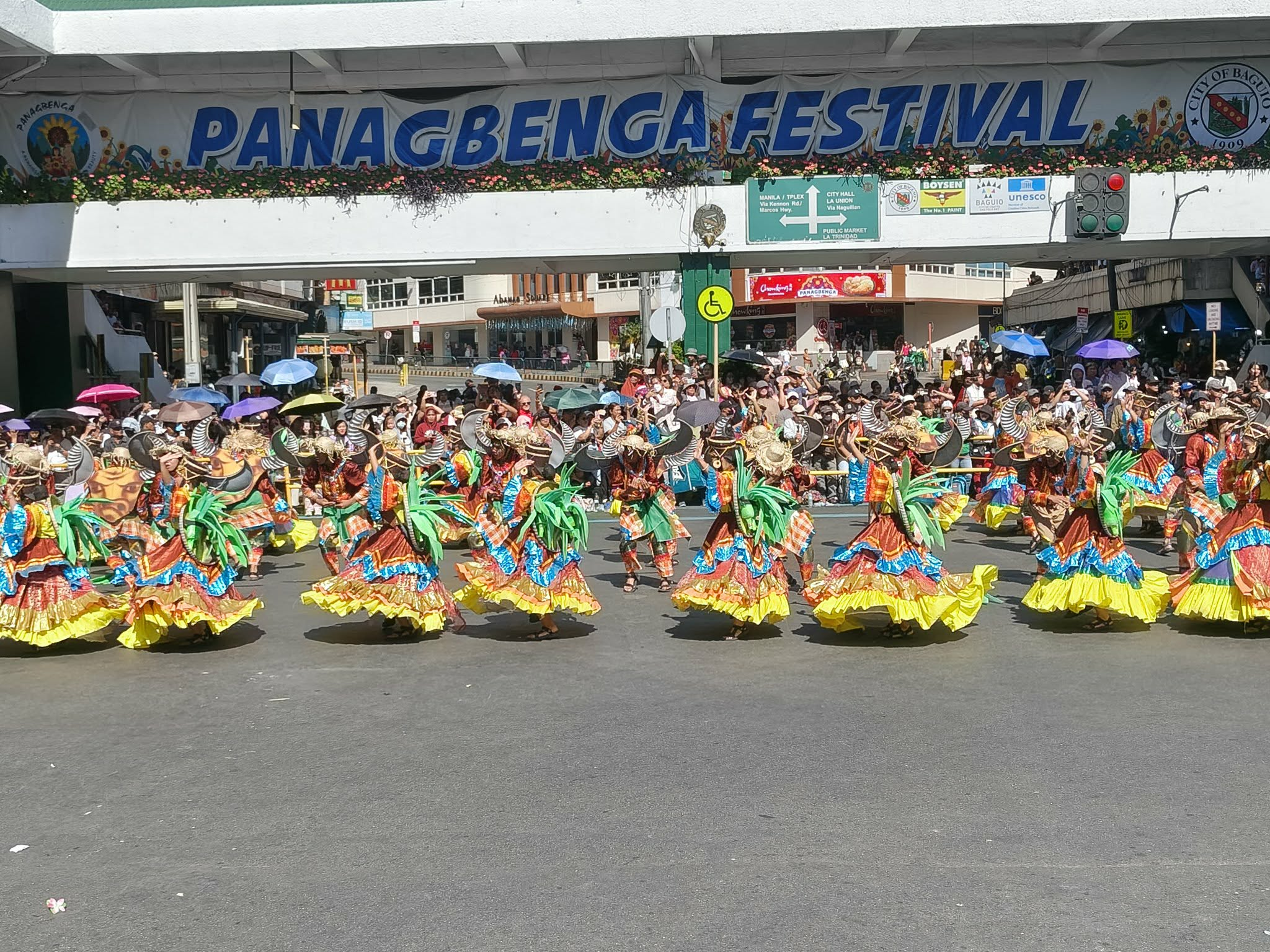

BAGUIO CITY — Long before sunrise on Saturday, thousands of locals and tourists had already taken their places along the parade route, braving the early-morning chill to secure a good view of the 30th Panagbenga Festival Grand Street Parade.
By 4 a.m., South Drive, Session Road, and Harrison Road were lined with spectators, their anticipation building in the cool mountain air. Hours later, bursts of cheers rippled through the crowd, signaling the long-awaited start of the parade.
Among those watching was a family of eight from southern Romblon, their excitement evident as they stood along the downtown route. For them, the trip to Baguio was a long-cherished dream fulfilled, with the Panagbenga Festival at the heart of their visit.
“Matagal naming hinintay ang sandaling ito para mapanood ang festival,” said Toto Santos, a fisherman-businessman from Romblon. Santos and his wife, Alma, marked the occasion by celebrating their 35th wedding anniversary in Baguio, joined by their five children and fellow fishermen.

Early segments of the parade unfolded like a living timeline, highlighting five defining eras in the city’s history: the early years of Baguio, the devastation of the 1990 earthquake, the birth of the Panagbenga Festival, the city’s recognition as a UNESCO Creative City, and the milestone 30th edition of the celebration.
These scenes were brought to life by performers from the University of Baguio, Baguio City National High School’s Special Program for the Arts, Saint Louis University Laboratory Senior High School, and the University of the Philippines Baguio.\
When the portrayal of the 1990 earthquake took center stage, the mood briefly shifted. Some spectators fell silent, others visibly moved as memories of the tragedy resurfaced.
“Thank God, we survived the earthquake. Proud to be a Baguio boy,” an elderly spectator shouted from the crowd.
The performance went on to show how the city rose from the ruins, with neighbors helping one another and communities rebuilding together. That same spirit of resilience, organizers noted, is what gave rise to the Panagbenga Festival as a symbol of hope and recovery.
By mid-morning, despite the growing heat, the energy along the streets only intensified. Drum and lyre groups, street dancers, and competition contingents filled the route with color, rhythm, and synchronized movement, drawing loud applause from the packed sidewalks.
Delegations from Baguio’s sister cities also joined the festivities, adding to the diversity and scale of the parade as the city marked three decades of its signature flower festival in full bloom.