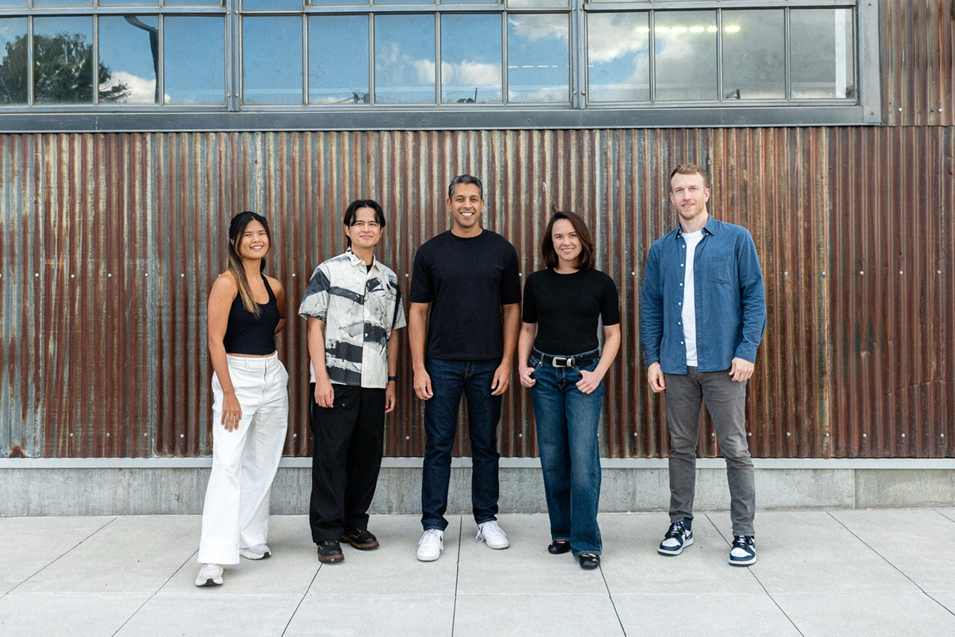

Philippines-based credit card startup Zed has raised $16.5M in a Series A round led by Silicon Valley-based investor Accel. This marks a key milestone in expanding credit access across the country and the Southeast Asian region. (L-R: Kathryn Vitug, Matthew Bernardo, Steve Abraham, Danielle Cojuangco Abraham, Matthew Steinpreis.)
Philippine credit card startup Zed has raised $16.5 million in Series A funding in a round led by Silicon Valley venture capital firm Accel, marking one of the most significant foreign-led investments in the country’s fast-growing fintech sector. The funding brings Zed’s total capital to $22.5 million and signals growing global confidence in homegrown financial technology built for Southeast Asia.
Accel, known for backing global category leaders such as Facebook, Spotify, Slack, and Dropbox, joins existing investors Valar Ventures and prominent angel investors including Immad Akhund and Dalton Caldwell. For the Philippine startup ecosystem, the investment represents a rare endorsement from one of the world’s most respected venture firms.
Zed is positioning itself as a modern alternative to legacy banks that continue to rely on outdated credit models. While millions of young Filipino professionals have stable incomes and strong earning potential, many remain excluded from traditional credit because of rigid scoring systems that penalize short credit histories rather than actual financial behavior.
Zed aims to close that gap by using artificial intelligence to assess customers based on real-time income, transaction patterns, and other data points beyond conventional credit scores.
The company’s flagship product is a premium, AI-underwritten credit card designed around how younger consumers live and spend. It offers zero foreign exchange fees for international purchases, advanced security through unlimited virtual cards with customizable limits and auto-expiry options, and peer-to-peer payment features that allow users to split bills and settle balances later through their monthly statement.
Accel partner Nafis Jamal said the firm was drawn to Zed’s vision of using AI to build a more transparent and inclusive financial system. He noted that young adults entering the banking system often face opaque fees, clunky digital experiences, and limited access to credit, all symptoms of institutions built for a different era. Zed, he said, has the ambition and technical depth to change that dynamic not only in the Philippines but globally.
Since its invite-only launch, Zed has seen demand surge without paid marketing. The company’s waitlist has grown to nearly 200,000 sign-ups through word of mouth alone, while its customer base has expanded tenfold since the start of the year. Over the same period, transaction volume has jumped by roughly 500 percent, even as most of the waitlist has yet to gain access.
The fresh capital will be used to accelerate onboarding from the waitlist, strengthen risk and operations, and expand Zed’s product and engineering capabilities. The company is hiring across operations, risk, growth, and customer support in Manila, while building its product, design, data science, and engineering teams in San Francisco.
“We’re reimagining financial tools to match the speed and ambition of this generation,” said co-founder Danielle Cojuangco Abraham, adding that access to high-quality financial services should no longer be limited by outdated systems.
Co-founder Steve Abraham said many banks in Southeast Asia are still operating on infrastructure designed decades ago. With advances in large language models and AI, he said, Zed sees an opportunity to rebuild the financial stack from the ground up and deliver proactive, personalized banking experiences once reserved for a select few.
As Zed scales its platform and prepares for broader rollout, the Accel-led investment positions the company as one of the Philippines’ most closely watched fintech challengers—one aiming to redefine how credit works for a new generation of Filipinos.