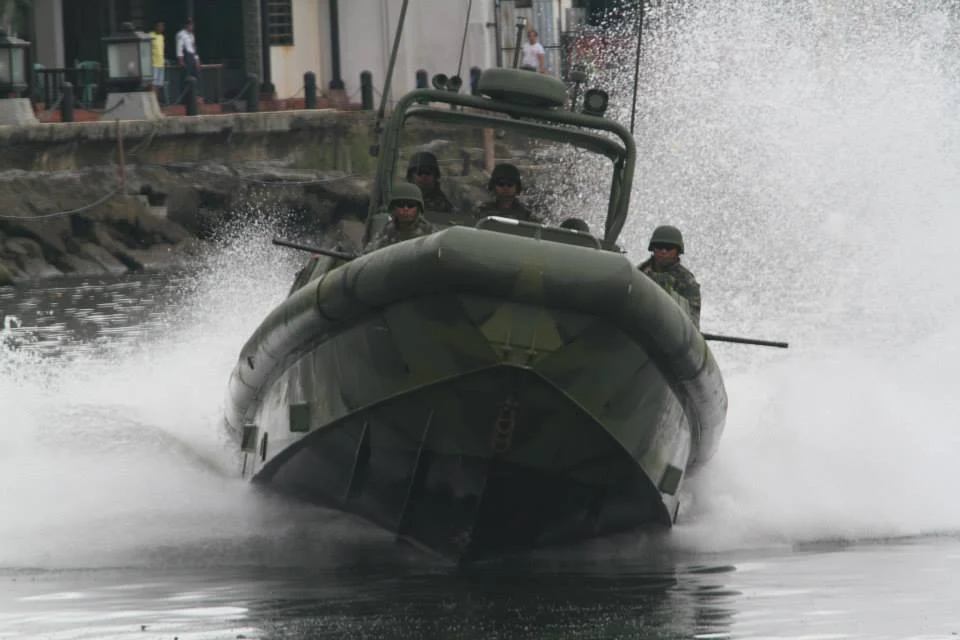

Amid simmering tensions in the West Philippine Sea, the United States Navy has announced plans to construct a boat maintenance facility in Palawan — a move seen as a gesture of alliance and practical support, rather than a provocative expansion of military presence.
The US Embassy in the Philippines confirmed that on July 7, the US Naval Facilities Engineering Systems Command issued a public call for the design and construction of the facility, which will rise at the Naval Detachment in Oyster Bay, a coastal site near the strategic maritime routes of the West Philippine Sea.
Designed to service small Philippine military watercraft, the upcoming facility will enhance the operational readiness of the Philippine Navy. The compound will also include two multipurpose rooms that can function as equipment storage or briefing centers — offering both functionality and flexibility.
“This facility will help our allies maintain and repair their vessels more efficiently,” the US Embassy said in a statement, emphasizing that it is not a US military base and will operate strictly under bilateral agreements with the Philippine government.
“This initiative underscores the enduring strength of the US-Philippine alliance rooted in the 1951 Mutual Defense Treaty,” the statement added. “Every military activity is done in full coordination with our Philippine counterparts and adheres to all local laws and bilateral agreements.”
Though framed as a logistical project, its location near contested waters gives it broader geopolitical significance. The West Philippine Sea — a portion of the South China Sea — has become a flashpoint for competing territorial claims, with China asserting control over nearly the entire region, despite overlapping claims from the Philippines, Vietnam, Malaysia, Brunei, and Indonesia.
In 2016, the Philippines won a landmark case at The Hague, when the Permanent Court of Arbitration ruled that China’s sweeping claims had “no legal basis.” Despite the verdict, Beijing has refused to acknowledge the decision, maintaining its expansive maritime ambitions and building artificial islands equipped with runways and outposts.
For Manila, renaming the waters within its exclusive economic zone as the West Philippine Sea was a symbolic assertion of sovereignty. With the establishment of the boat maintenance facility, some observers see a quiet but firm push to reinforce that sovereignty — not through direct confrontation, but through deeper international cooperation.
Palawan, already a frontline province in the country’s maritime defense, now stands to play a more crucial role in maintaining stability and asserting presence in contested waters. While the facility may seem modest in scale, its message is clear: in a region where diplomacy and deterrence go hand-in-hand, readiness is key.