
(Photo courtesy of Anadolu)
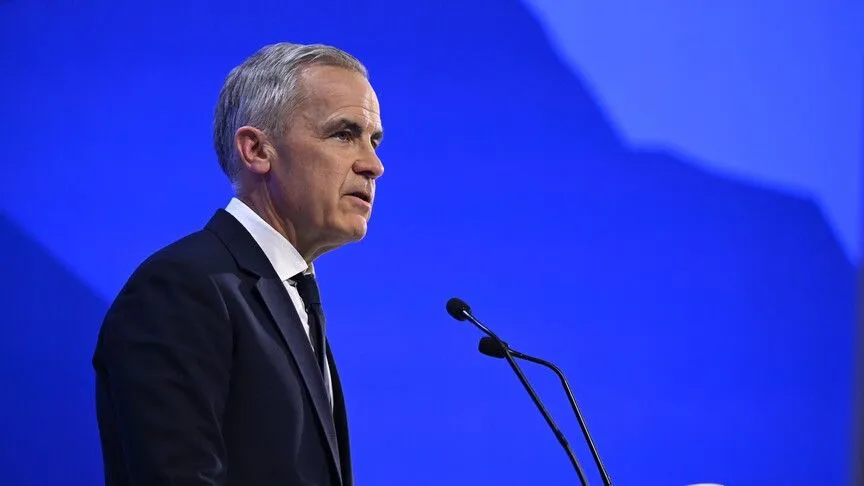
ISTANBUL — US President Donald Trump and Canadian Prime Minister Mark Carney have discussed the framework of a new bilateral trade agreement during a series of phone calls, raising prospects of resolving a months-long trade dispute between the neighboring countries.
Trump told reporters that Washington and Ottawa were making progress toward an agreement that would benefit both economies, particularly American farmers.
“We have the concept of a very good deal with Canada,” Trump said, adding that the proposed arrangement would be “great for our farmers, great for our country, and it’ll be fine for Canada too.”
The US president said the emerging agreement would eliminate Canadian agricultural trade barriers, including steep tariffs on certain American dairy products.
Trump claimed that US farmers had faced tariffs reaching as high as 400 percent on dairy exports to Canada.
“All those tariffs will be gone. There will be no tariff,” he said.
Trump also claimed that Canada had agreed to finance the Keystone oil pipeline system connecting the two countries.
“They’re going to build the Keystone Pipeline. They’re going to pay for it,” he said, adding that Washington had largely determined the proposed pipeline route.
Carney, meanwhile, confirmed Sunday that he had spoken with Trump about the framework of a possible bilateral trade agreement.
In a post on social media platform X, the Canadian leader described their exchange as a “good conversation” and expressed optimism about reaching a mutually beneficial arrangement.
“This builds on our recent constructive discussions on the outlines of a mutually beneficial trade deal that would create jobs for our workers, boost affordability for families, and fully respect Canada’s languages, culture and sovereignty,” Carney said.
He added that negotiating teams from both countries would work closely in the coming weeks to finalize the agreement.
The discussions followed Trump’s remarks last week that Washington was nearing a trade deal with Canada, although he maintained that previous trade arrangements had disproportionately benefited Ottawa.
Trade relations between the two countries have remained strained following the breakdown of earlier negotiations, which resulted in reciprocal tariffs on billions of dollars’ worth of goods.
While both leaders have expressed optimism about the latest discussions, the proposed agreement has yet to be finalized, with key provisions still subject to negotiations.