
(Photo courtesy of Anadolu)
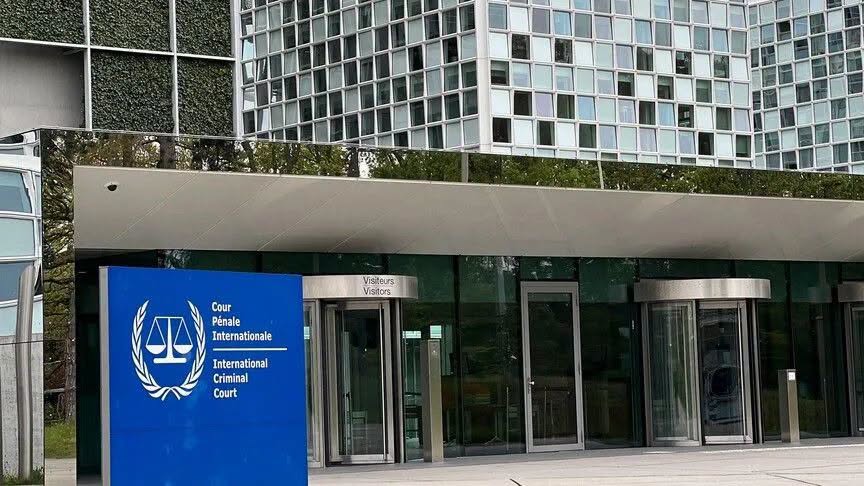
WASHINGTON – The United Nations on Thursday defended the International Criminal Court (ICC) following criticism from the leaders of the United States, China and Russia, who questioned the jurisdiction of international judicial institutions in a joint declaration issued after their summit in Shenzhen, China.
UN deputy spokesperson Farhan Haq reaffirmed the organization’s support for the ICC, emphasizing its importance in upholding international justice and the rule of law.
“The secretary-general believes that the International Criminal Court is one of the crucial bodies for international justice in the world,” Haq told reporters.
“We have a relationship agreement with the court, and we want its work to be supported by member states,” he said.
Haq stressed that strengthening international legal institutions is essential to maintaining global stability.
“The pillar of the rule of law is one of the founding pillars of the stability of the world, and it must be reinforced and not weakened,” he added.
His remarks came after US President Donald Trump, Chinese President Xi Jinping and Russian President Vladimir Putin issued a joint “Declaration Toward Peace” following their meeting on the sidelines of the Asia-Pacific Economic Cooperation (APEC) summit in Shenzhen.
In the declaration, the three leaders warned that the Hague-based ICC and other international institutions “must not abuse their jurisdiction.”
Asked how leaders could make decisions concerning the tribunal when at least one of them faces an ICC arrest warrant, Haq declined to directly address the issue.
“I would leave it to the court to discuss its own work,” he said.
“We’ve consistently called for support for the court’s work and will continue to do so.”
Russian President Vladimir Putin has been subject to an ICC arrest warrant since 2023 over allegations involving the unlawful deportation of children from Ukraine.
Meanwhile, the United States imposed sanctions on the ICC in October, following earlier sanctions against several of its judges and prosecutors.
Washington intensified its opposition to the tribunal after the ICC issued arrest warrants in November 2024 against Israeli Prime Minister Benjamin Netanyahu and former Defense Minister Yoav Gallant over alleged war crimes in Gaza, including the use of starvation as a method of warfare.
In July, Trump denied that Secretary of State Marco Rubio’s campaign against the ICC was intended to protect him personally.
“He’s trying to defend Bibi and various other people,” Trump said, referring to Netanyahu.
The United States has also opposed an earlier ICC investigation into alleged crimes committed by American personnel in Afghanistan, which the tribunal has since closed.
Separately, Haq addressed a ruling by the International Court of Justice (ICJ) in the case brought by The Gambia against Myanmar concerning the treatment of the Rohingya minority.
He described the ruling as “binding, final, and without appeal.”
The court found Myanmar responsible for genocide against the Rohingya during a military operation in 2017, marking the first time the ICJ had held a state accountable for committing genocide.
Despite the disagreement over the ICC, Haq welcomed the three leaders’ reaffirmation that “a nuclear war cannot be won and must never be fought.”
The ICC has 125 member states, although the United States, China and Russia are not parties to the tribunal.
The United Nations reiterated its call for member states to support the ICC and strengthen international legal institutions as essential mechanisms for accountability and the preservation of the rule of law.