
(Photo courtesy of PIA)
STA. ANA, Cagayan – At least 30 farmers in Sta. Ana, Cagayan, are expected to benefit from two newly inaugurated solar-powered irrigation facilities designed to provide a reliable water supply and improve rice production, particularly during prolonged dry spells.
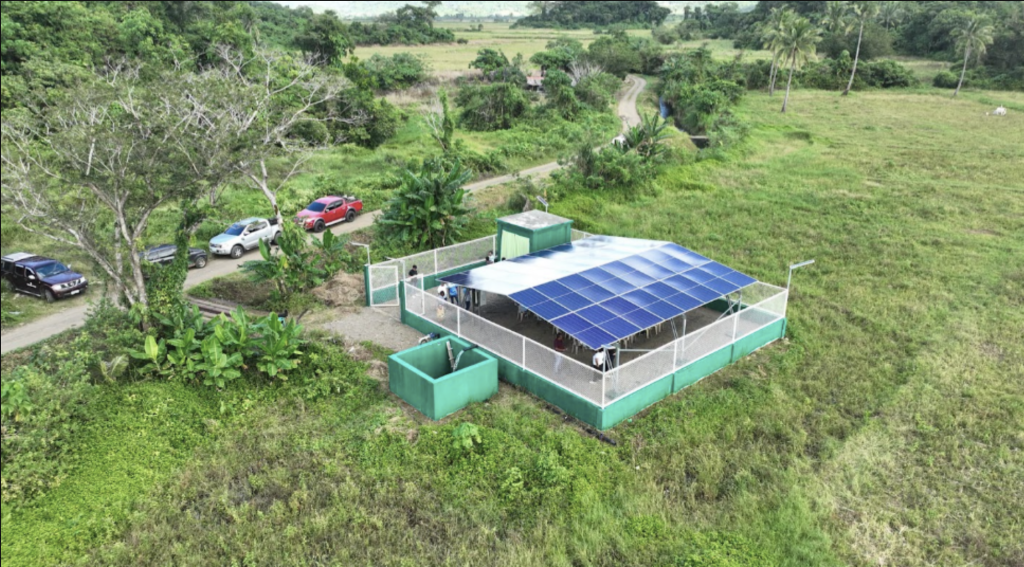
The National Irrigation Administration (NIA) inaugurated the Solar Pump Irrigation Projects (SPIPs) in Sitio Ugudan and Barangay Visitacion on November 6 as part of its efforts to promote sustainable and climate-resilient agriculture.
Each facility is equipped with 32 solar panels and can irrigate up to 15 hectares of farmland, benefiting 15 farmers per project.
The facilities are expected to reduce farmers’ dependence on rainfall and allow them to cultivate their fields beyond the traditional rainy season.
Denton Agra, treasurer of the Ugudan Sta. Maria Irrigators’ Association, said farmers previously struggled with limited planting opportunities because of inadequate irrigation.
“We could only plant rice once a year because our area depended entirely on rainfall,” Agra said.
Pablito Buyco Agra Jr., president of CAVICIA Pangkat 3, welcomed the project, saying it would provide farmers greater flexibility in scheduling their planting activities.
“Now, we no longer have to wait for the rainy season to plant rice. We can plant anytime,” he said.
During the inauguration, NIA formally turned over the facilities to their respective irrigators’ associations, which committed to maintaining the systems and ensuring fair water distribution among beneficiaries.
Sta. Ana Mayor Nelson Robinion, through his representative Jovimar Castillo, reaffirmed the local government’s commitment to supporting NIA’s irrigation programs and strengthening the municipality’s agricultural sector.
Meanwhile, NIA-Visitacion Irrigation System head Engr. Rowila Macoco emphasized the importance of proper maintenance and equitable water allocation to ensure the facilities remain operational, particularly during El Niño and other extreme weather conditions.
The projects form part of NIA’s continuing efforts to expand irrigation coverage through renewable energy technologies.
By using solar power, the irrigation systems are expected to support more consistent rice production, improve farm productivity and help farmers cope with climate-related challenges.
NIA said the initiative also aims to strengthen agricultural livelihoods by providing farmers with a more dependable and sustainable source of irrigation water.