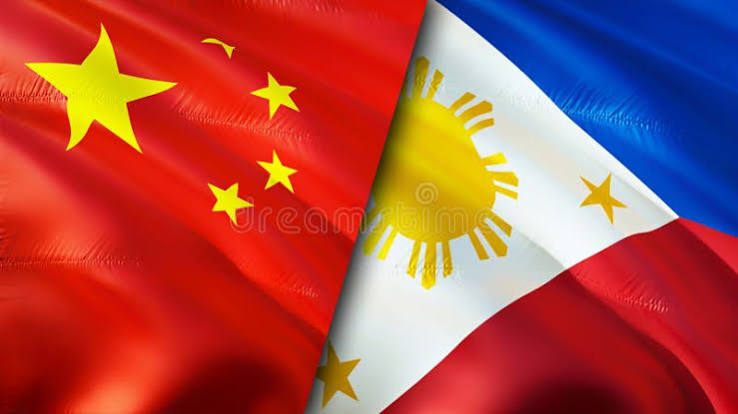
In a striking and unscripted moment during a joint appearance with Philippine President Ferdinand “Bongbong” Marcos Jr., U.S. President Donald Trump launched a scathing critique of former Philippine President Rodrigo Duterte’s foreign policy. Trump, never one to mince words, dismissed the Duterte-era approach as diplomatically reckless, saying bluntly, “They didn’t get along with anybody,” and adding, “Honestly, they didn’t know what they were doing.”
It was classic Trump — brash, undiplomatic, but not entirely wrong.
For years, Duterte charted a foreign policy that pivoted the Philippines closer to China while distancing it from traditional allies, particularly the United States. His brash rhetoric, which included telling former President Barack Obama to “go to hell” and repeatedly threatening to scrap the Visiting Forces Agreement (VFA), rattled long-standing diplomatic ties and threw Manila’s strategic alignment into question.
Trump’s remarks, made in the presence of Duterte’s successor, are not just a personal jab; they reignite a long-simmering debate over where the Philippines should stand in an increasingly tense Indo-Pacific.
A foreign policy tilt toward Beijing
Duterte’s pivot to China was framed as a pragmatic recalibration. He often said he wanted to be “friends with everyone and enemies of none.” But in practice, this approach looked more like appeasement.
Despite China’s ongoing militarization in the South China Sea and its aggressive incursions into the Philippines’ exclusive economic zone, Duterte avoided confrontation and downplayed the 2016 arbitral tribunal ruling in favor of the Philippines.
The rationale, according to Duterte and his defenders, was economic. China’s promises of infrastructure investment and loans were too tempting to ignore. Yet much of the promised aid never materialized at the scale or speed projected.
Meanwhile, Beijing’s presence in disputed waters only grew stronger, and Filipino fishermen continued to be harassed or blocked from their traditional fishing grounds.
Frayed ties with traditional allies
At the same time, Duterte’s rhetoric and policy choices alienated the Philippines’ most enduring ally — the United States. While Trump himself maintained a personal rapport with Duterte during his presidency, the broader institutional relationship suffered.
Military cooperation became uncertain.
Confidence in Manila’s commitment to mutual defense wavered. The Duterte administration’s rejection of “Western interference” in matters like human rights and drug policy came at the cost of strategic credibility and predictability.
This is the context in which Trump’s latest comments should be understood. As a former president, he remains an influential figure, and his public rebuke of Duterte’s foreign policy direction may reflect broader U.S. frustrations that were felt even during his administration.
For Marcos Jr., it was a moment of quiet validation — a subtle endorsement of his more Western-aligned, multilateral foreign policy course.
Marcos Jr.’s reset
Since taking office, President Marcos has moved quickly to repair and reinvigorate the Philippines’ ties with its long-standing allies. He reaffirmed the Mutual Defense Treaty with the United States, expanded the Enhanced Defense Cooperation Agreement (EDCA), and hosted high-level military and diplomatic dialogues.
While not overtly antagonistic toward China, Marcos has taken a firmer line on maritime disputes and stood up for Filipino sovereignty in the West Philippine Sea.
Trump’s rebuke of Duterte — even if characteristically blunt — effectively underscores the new administration’s pivot back toward strategic alignment with the U.S. and its regional partners. The contrast is becoming clearer: Marcos’s “friends to all, enemies to none” is proving less about appeasement and more about balancing — a return to diplomacy rooted in consistency and assertiveness.
A moment of reckoning
Filipinos are now left to reflect on the cost of Duterte’s “independent” foreign policy. Was it bold pragmatism or dangerous naivety? Were economic promises from Beijing worth the diplomatic isolation and strategic drift? Trump’s remarks, while hardly polished statesmanship, cut to the heart of these questions.
Critics may dismiss Trump as an erratic figure who lacks the moral authority to critique others’ diplomacy. But foreign policy is judged not by intent, but by outcomes. Under Duterte, the Philippines’ relationships weakened, while its territorial integrity continued to be undermined.
The road ahead for Philippine diplomacy demands clear-eyed realism. While maintaining cordial ties with China is a necessity given geography and trade, it must not come at the expense of national security or sovereignty. Marcos seems to grasp this. Duterte, by most measures, did not.
Trump’s comments may seem like a sideshow in the spectacle of geopolitics, but they have ripped the bandage off a wound the Philippines is still nursing — a foreign policy that wandered too far off course.