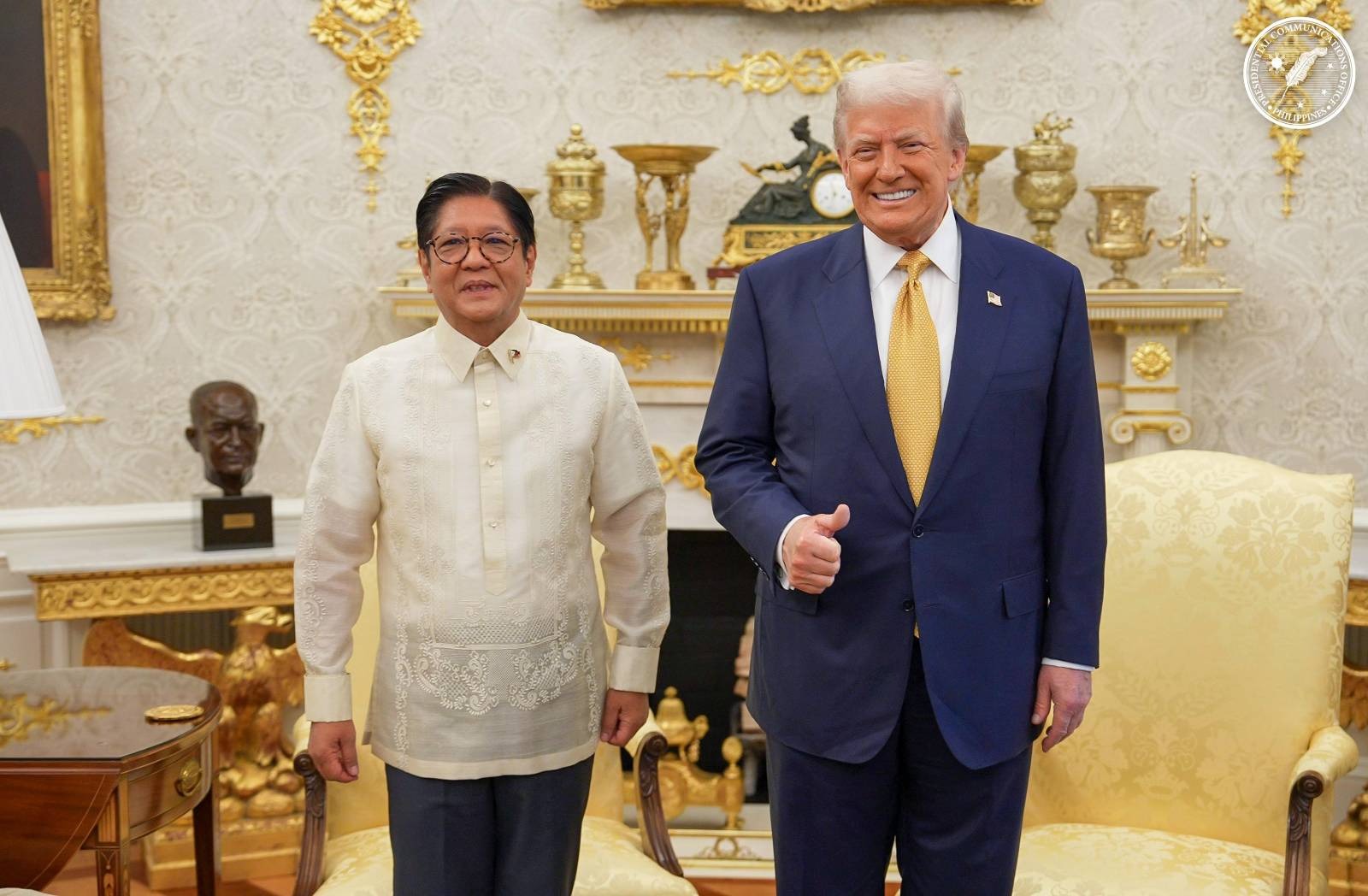

WASHINGTON, D.C. — In a pointed display of diplomatic contrast, U.S. President Donald Trump on Tuesday openly criticized the Philippines’ former administration, widely seen as a jab at ex-President Rodrigo Duterte, while showering praise on current President Ferdinand “Bongbong” Marcos Jr. during an Oval Office meeting at the White House.
Without mentioning Duterte by name, Trump took aim at the previous Philippine leadership for straining international relations and cozying up to adversaries.
“I think I can say that the last administration was not getting along with them too well. They didn’t get along with anybody,” Trump told reporters. “Honestly, they didn’t know what they’re doing.”
A clear shift in tone
The comments mark one of Trump’s most direct rebukes yet of Duterte’s controversial foreign policy pivot that distanced the Philippines from its long-time ally, the United States, and moved closer to China.
Duterte’s tenure from 2016 to 2022 was defined by anti-Western rhetoric, threats to end key security agreements like the Mutual Defense Treaty and the Visiting Forces Agreement, and a hardline anti-drug campaign that drew widespread international condemnation. When U.S. officials criticized alleged human rights abuses in the drug war, Duterte responded by aligning Manila closer with Beijing — a move Trump clearly sees as a strategic blunder.
Marcos Jr. gets a warm welcome
Trump’s tone shifted dramatically when speaking about President Marcos, whom he welcomed as a “very respectable leader.”
“It’s a great honor to have President Ferdinand Marcos Jr. of the Philippines. Great family, great family legacy, and highly respected in his country,” Trump said. “I know that because I have many friends in the Philippines. There’s great respect or I couldn’t say it, so congratulations.”
Trump also praised the revitalized U.S.-Philippine military partnership under Marcos, citing recent joint drills and defense cooperation. “We have some fantastic military relationships with the Philippines and that has been reinstituted,” he said. “We’re going to be talking about trade. We’re going to be talking about war and peace. They’re a very important nation militarily, and we’ve had some great drills lately. We’re back with them.”
A strategic realignment
Since taking office in 2022, Marcos Jr. has reversed course from Duterte’s China-leaning policies. His administration has repeatedly called out Beijing for incursions into Philippine waters, reaffirmed commitment to the U.S.-Philippine alliance, and expanded the Enhanced Defense Cooperation Agreement (EDCA), allowing more U.S. access to strategic military sites across the country.
“We must remember that the United States is our only treaty partner in the Philippines, and that has stood us in good stead over the years, certainly through the Second World War,” Marcos told Trump during the meeting. “That is something that we value, that we are grateful for, and that we will continue to foster as we go on.”
The two leaders also discussed strengthening economic cooperation, technology investments, and bolstering regional security amid rising tensions in the South China Sea.
A shadow over Duterte
While Trump avoided using Duterte’s name, the subtext was clear. The former president’s critique came just months after Duterte’s arrest by the International Criminal Court (ICC) in The Hague, where he now faces charges related to crimes against humanity over the drug war. Reports have suggested the Marcos administration cooperated — or at least did not obstruct — the ICC’s efforts, marking a further break from the Duterte era.
The political fallout from Trump’s comments could further deepen the cracks in the once-strong Marcos-Duterte alliance. Marcos ran with former Davao City Mayor Sara Duterte, the ex-president’s daughter, as his vice president in 2022. But by 2024, tensions began surfacing between the two camps — a divide that has only widened in 2025.
A defining moment
Trump’s remarks, though characteristically blunt, captured a turning point in Philippine foreign policy. Where Duterte opted for strategic ambiguity and antagonized traditional allies, Marcos has embraced a more conventional path — one anchored in historical ties, mutual defense, and regional cooperation.
For Washington, the message was clear: the U.S. values reliability, and under Marcos Jr., the Philippines is once again viewed as a trusted partner in the Indo-Pacific.
As Trump summed it up: “We’re back with them.”