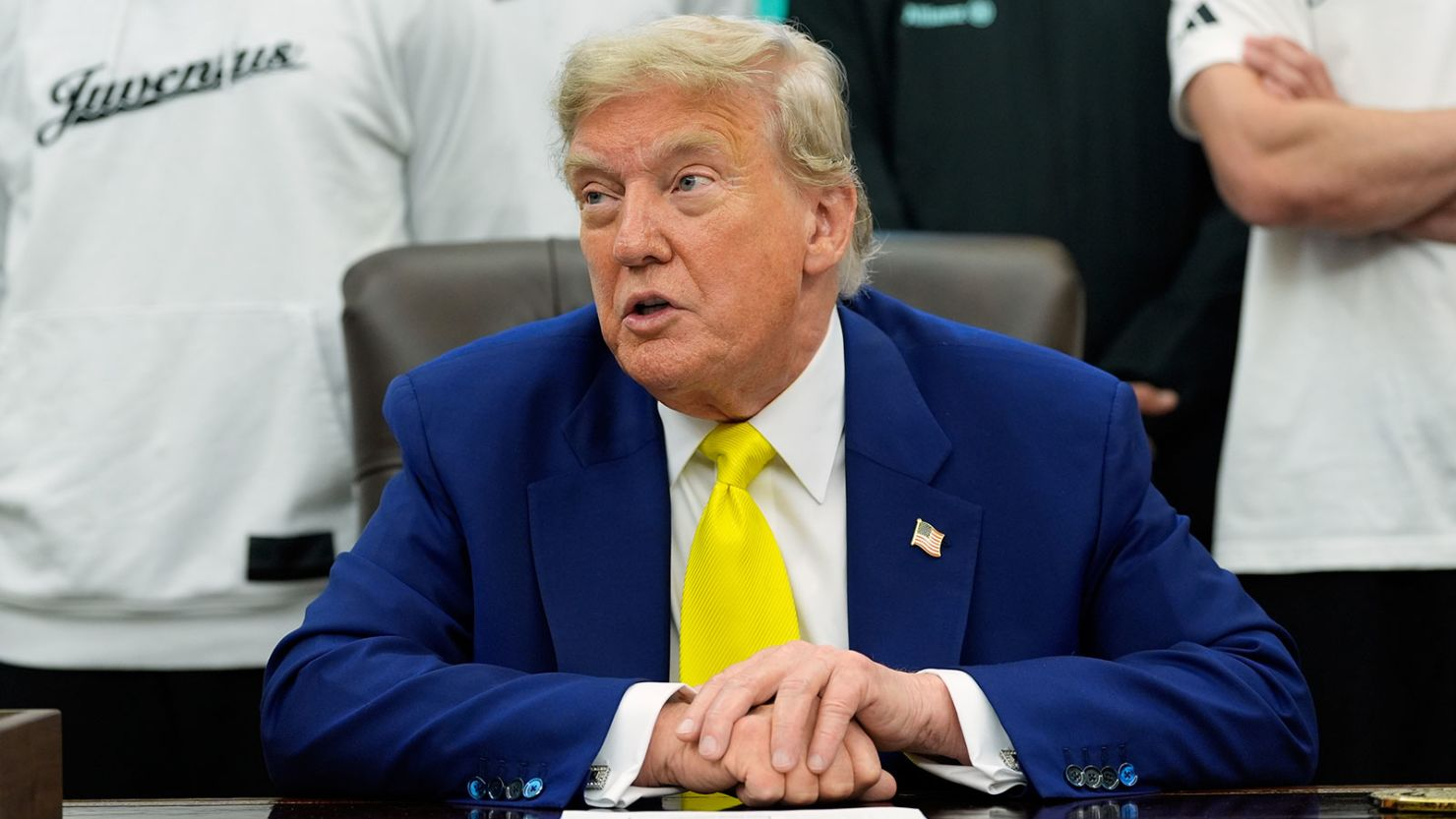

WASHINGTON, D.C. — U.S. President Donald Trump said on Wednesday that he has not yet decided whether the United States will join the escalating conflict between Iran and Israel, maintaining a deliberately vague stance as tensions in the Middle East spiral dangerously.
“I may do it, I may not do it. Nobody knows what I’m going to do,” Trump told reporters outside the White House. “I’m not looking to fight, but if we have to protect American lives and the global order, we will.”
The president’s remarks come amid a dramatic escalation in hostilities, with Iran and Israel trading missile attacks and regional proxy groups intensifying their involvement. Despite mounting pressure from key U.S. allies and hawks in Washington, Trump is signaling caution—though not ruling out military action.
Red lines for U.S. intervention
According to defense officials, several scenarios could push the United States to take direct action:
- Attacks on U.S. personnel or bases in Iraq, Syria, or the Persian Gulf could trigger a swift military response.
- An Iranian move to block the Strait of Hormuz, a critical chokepoint for global oil shipments, would likely prompt U.S. naval intervention.
- An Israeli request for direct military support could carry significant weight, especially if Israel becomes overwhelmed by missile barrages or faces a multi-front war.
- Any indication of Iran preparing to use nuclear or chemical weapons would likely be a point of no return for the Trump administration.
“We will not allow Iran to go nuclear. That’s the line,” Trump said during a press briefing earlier this week.
Military assets in the region
ven without a formal declaration of involvement, the U.S. has significantly bolstered its presence in the Middle East. The Pentagon has deployed a formidable array of assets to project power and reassure allies:
- Three aircraft carrier strike groups—USS Eisenhower, Nimitz, and Carl Vinson—are positioned in the Eastern Mediterranean and Arabian Sea.
- Strategic bombers, including B-1B Lancers and B-52s, are on standby in air bases across Qatar and Kuwait.
- Advanced missile defense systems, such as THAAD and Patriot batteries, are active in Saudi Arabia, the UAE, and Bahrain.
- Special munitions, including the Massive Ordnance Penetrator, are reportedly in-theater and capable of striking fortified Iranian nuclear sites.
Additionally, thousands of U.S. troops are stationed across the region, particularly in Iraq, Syria, and Turkey—many within range of Iranian missiles or proxy forces.
Strategic ambiguity as leverage
Analysts believe Trump’s ambiguous rhetoric is strategic, aimed at keeping both Iran and domestic critics off-balance.
“Trump is buying time, maintaining maximum pressure while avoiding premature entanglement,” said retired Lt. Gen. Mark Hanley. “He’s giving himself room to escalate—or de-escalate—depending on how the situation unfolds.”
While military advisors urge readiness, many within Trump’s political base remain opposed to another Middle Eastern war. With a pivotal 2026 election approaching, Trump must carefully balance strength with restraint.
Diplomatic openings?
Despite the tough talk, Trump has hinted at potential diplomacy. “They want to talk—we’ll see,” he said earlier this week, without elaborating.
No formal backchannel negotiations have been confirmed, but U.S. officials are reportedly in contact with regional allies to explore de-escalation options.
For now, the U.S. remains in a high-alert posture. Intelligence operations, logistical support for Israel, and joint exercises continue. The Pentagon is preparing for a range of contingencies—from limited airstrikes to coordinated cyber operations—but no orders have been issued for ground combat.
The president’s next move could hinge on any number of developments: a missile hitting a U.S. base, an Israeli request for air support, or a credible threat of Iranian nuclear action.
Until then, the world will have to wait—and watch—as President Trump keeps his cards close to the chest.
“People are always trying to guess what I’m going to do,” he said. “And that’s exactly how I like it.”