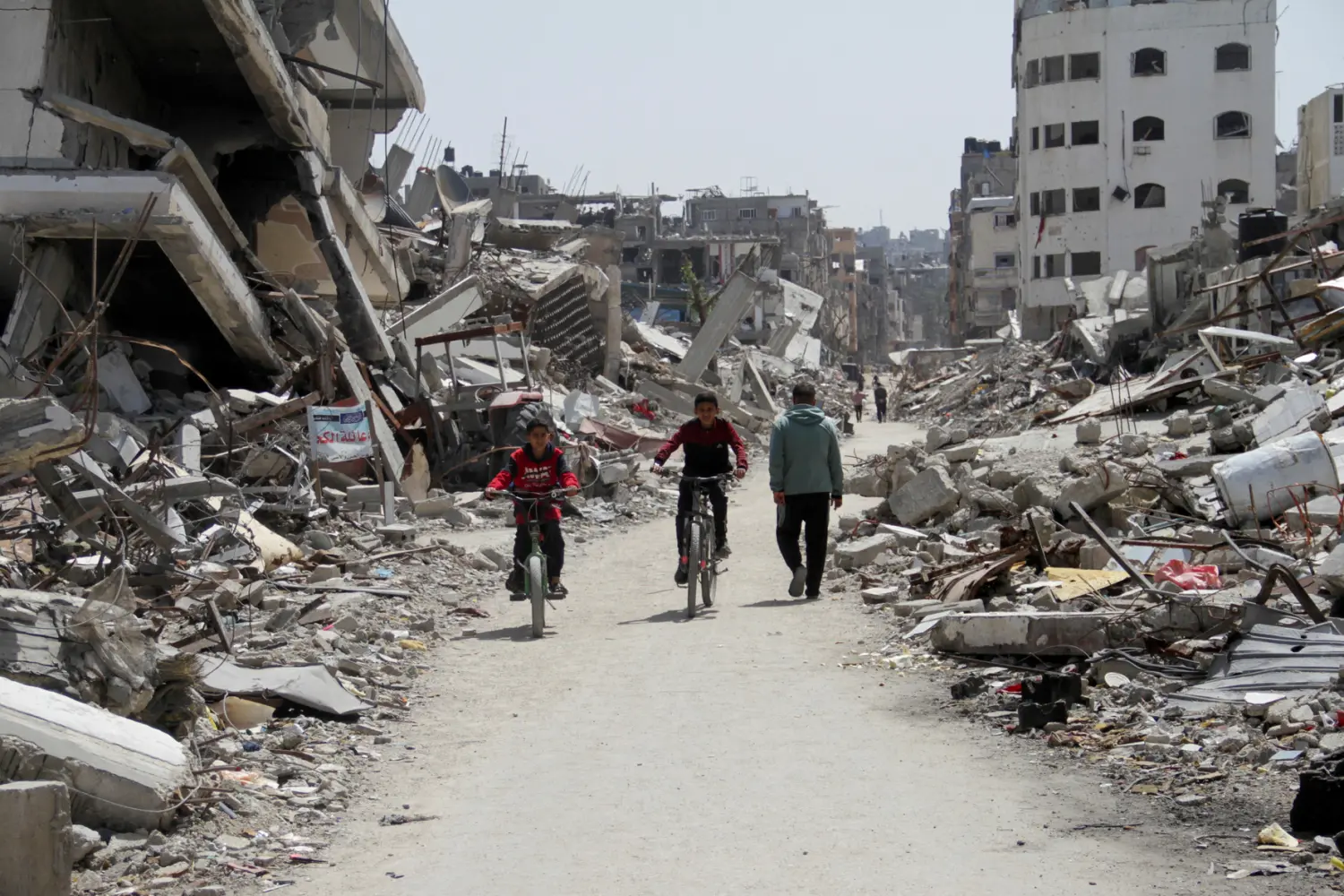

When the dust settled over Gaza’s bombed-out neighborhoods, the silence was pierced not only by grief—but by the absence of voices that once chronicled the chaos. 2024 ended as the deadliest year for journalists in more than three decades, according to a February 2025 report by the Committee to Protect Journalists (CPJ).
At least 124 journalists and media workers were killed worldwide—nearly 70 percent of them in Gaza. The CPJ called it “an unprecedented collapse of press protection,” a year when bearing a camera became as dangerous as carrying a weapon.
In the heart of Gaza, journalism became an act of survival. CPJ documented 85 journalist deaths there in 2024—82 inside the enclave and three in Lebanon—as Israel’s bombardments turned entire media offices and neighborhoods into ruins. The figure exceeded even the bloodiest years of the Iraq War and Syria’s civil conflict.
Many of the victims were veteran correspondents, others barely out of their twenties. Hamza Al Dahdouh, a 27-year-old Al Jazeera cameraman, was killed alongside freelance journalist Mustafa Thuraya when an Israeli drone targeted their car in January 2024. Both had just finished covering displaced families in southern Gaza. Al Dahdouh’s father, a senior Al Jazeera bureau chief, said his son “died doing what he believed could change the world—a belief that journalism still mattered.”
By July, another Al Jazeera team—reporter Ismail Al Ghoul and videographer Rami Al Refee—was killed after a drone strike hit their vehicle near Gaza City. The network accused Israel of systematically targeting its crews, while press-freedom groups decried the growing impunity surrounding such attacks.
While Gaza dominated the numbers, journalists also died in at least 16 other countries, including Sudan, Myanmar, Mexico, and Haiti—each case a reminder that the frontline for truth is no longer confined to war zones. In Sudan, local reporters disappeared amid the civil fighting in Khartoum. In Mexico, investigative journalists were murdered for exposing cartels. In Haiti, photographers documenting gang violence were gunned down in the streets.
Yet the Middle East remained the epicenter of risk. For the second consecutive year, it was the deadliest region for the press. CPJ’s analysis shows that most deaths occurred when reporters were clearly identified as media workers—often wearing press vests or traveling in vehicles marked “Press.”
On December 26, five journalists and a media worker—including Fadi Hassouna, Mohammed Al-Ladaa, Faisal Abu Al Qumsan, Ayman Al Gedi, and Ibrahim Sheikh Ali—were killed when an Israeli missile struck their marked van in Gaza’s Nuseirat refugee camp. The CPJ report noted that they had been covering civilians seeking refuge from earlier bombings.
The statistics tell a grim story—but behind every number is a silenced story, a lens that will never again capture truth from the rubble. The CPJ warns that unless governments and military powers enforce accountability, journalism itself risks extinction in conflict zones.
In Gaza, reporters continued to work without electricity, with communications blackouts and food shortages. “They reported until their last breath,” said CPJ’s Sherif Mansour. “If we lose the people who bear witness, we lose our ability to know the truth.”
The 2024 toll is more than a record—it is a reckoning. It reminds the world that freedom of the press is not guaranteed by declarations, but by the courage of those who face death for the right to tell what they see.