
Trust in the Philippines is no longer a given; it is conditional, earned through transparency, competence, and ethical behavior. The 2024 Philippine Trust Study (PTS) reveals that Filipinos now demand proof before extending trust to institutions.
“Trust is not built on promises but on proof,” says Junie del Mundo, Co-Founder and Chair of the EON Group. “We are witnessing an Accountability Revolution, where Filipinos expect institutions to act with integrity and deliver results.”
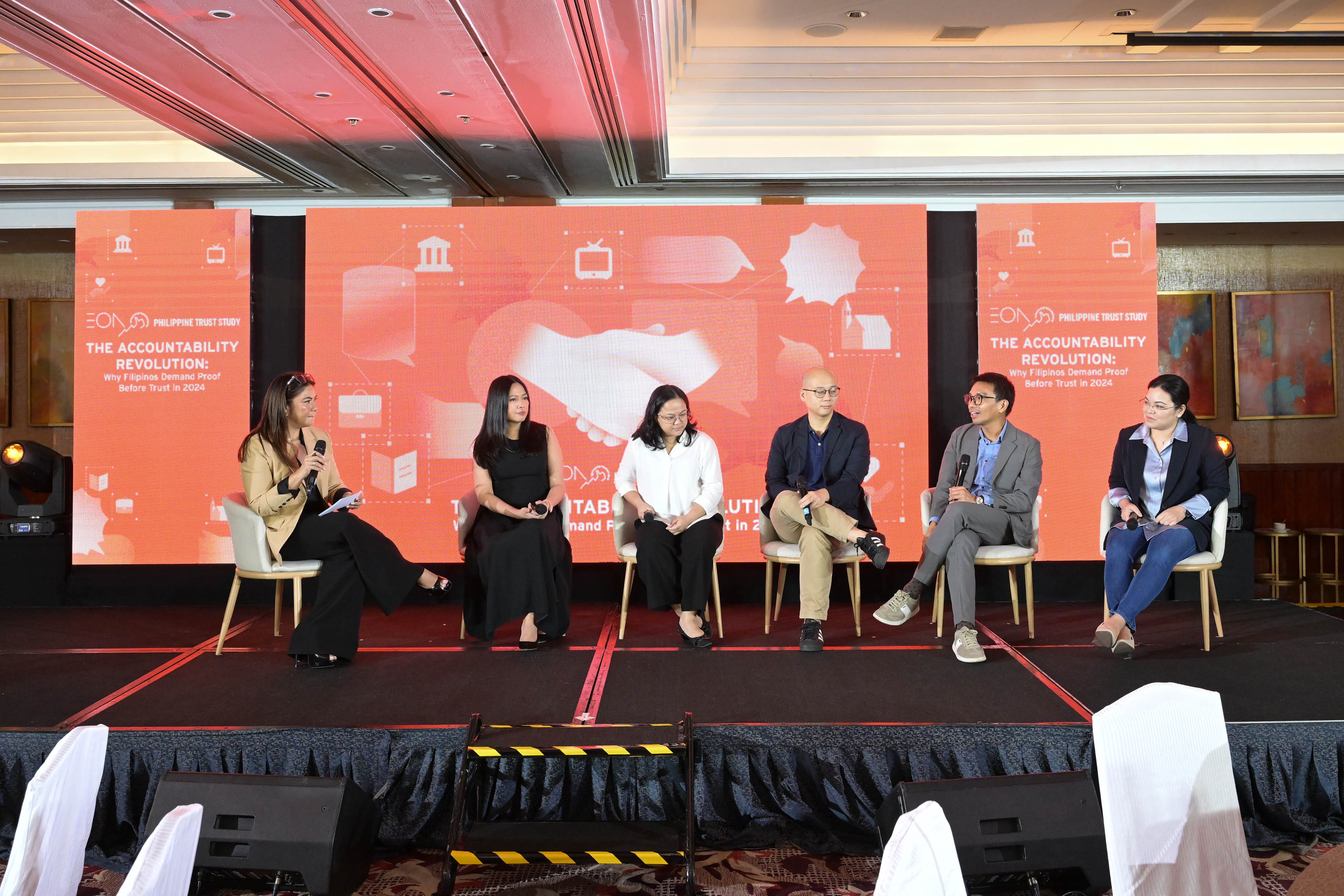
This year’s study, conducted by EON The Stakeholders Relations Group in collaboration with the Department of Development Studies at Ateneo de Manila University, is titled “The Accountability Revolution—Why Filipinos Demand Proof Before Full Trust.” The study highlights public expectations across six sectors: government, business, media, religious institutions, NGOs, and the academe.
Based on a nationwide survey of 1,800 Filipinos and focus group discussions, the study establishes that trust, once given, can quickly erode when expectations are not met.
Trust insights across key sectors
Local and National Government
Local government units enjoy a high trust rating of 95.4%. In contrast, national government institutions show slightly lower trust levels, with the Office of the President 82.3% and Congress 81.6%. The data suggests that while trust in local government is strong, trust in national government reflects more caution and is influenced by public perceptions of transparency, competence, and consistency in governance.
Trust in government is driven by critical factors, with 38.4% of respondents valuing good intentions, 36.9% emphasizing competence, and 34.9% prioritizing consistent behavior. These elements shape how Filipinos perceive governmental reliability and performance.
Business
Trust in the business sector shows notable variation. Drug and Medicine Manufacturers lead with a trust rating of 93.9%, the highest among industries surveyed. In comparison, Real Estate Developers have a trust rating of 79.6%. The study highlights that Filipinos consider ethical practices, product/service quality, and sustainability important when forming a business trust.
Media
Traditional media continues to command high trust, with Television rated at 93.6%, the highest among media platforms surveyed. Filipinos value media outlets that feature journalists who speak truth to power and report reliably during difficult circumstances. Trust is also built on media that ensures headlines are supported by evidence, presents unbiased news, and amplifies the voices of the underdogs. These qualities contribute to a reputation of dependability and ethical reporting.
In contrast, social media platforms face significant distrust. Concerns around misinformation and the lack of content regulation remain prevalent, highlighting the public’s demand for more rigorous fact-checking and accountability. Trust in media is deeply rooted in a history of ethical standards and the ability to deliver unbiased, transparent information, especially when it matters most.
Religious Institutions
Trust in religious institutions remains substantial, with ratings ranging from 60% to over 90%. These ratings reflect these organizations’ profound cultural and spiritual influence in the Philippines. The Roman Catholic Church holds a combined trust level of 92.4%, indicating its longstanding presence and role in shaping community values.
However, when asked about the likelihood that their religious institution will act in their interest, perspectives become more nuanced. For instance, 80.4% of respondents who identify with Islam and 69.8% of those affiliated with Iglesia ni Cristo believe their religion will act in their interest. Meanwhile, 49.7% of Roman Catholics and 45.9% of Born Again Christians share this sentiment. These figures highlight how trust is influenced not only by faith but also by the perceived active engagement of religious groups in addressing the needs and welfare of their members.
Non-Governmental Organizations (NGOs)
The 2024 Philippine Trust Study reveals a significant knowledge gap surrounding NGOs. Many Filipinos need help distinguishing these organizations from government programs. Many respondents also needed help defining what constitutes an NGO, highlighting a broader identity crisis within the sector.
However, among those who recognize and understand NGOs, the primary reason for trust is apparent: perceived helpfulness. The data shows that General Assistance and Financial Aid are top trust drivers, followed closely by Education, Medical Assistance, and Youth Welfare support. This highlights that when NGOs are visibly active in delivering tangible aid, their credibility strengthens, especially in areas directly impacting community welfare.
Three pillars of accountability
The 2024 Philippine Trust Study underscores the multifaceted nature of trust among Filipinos, emphasizing that trust cannot rest solely on rhetoric or idealism. Instead, trust must be grounded in a framework of tangible and visible proof that reflects three critical drivers: being Known, Good, and Consistent.
Being Known involves an institution’s visibility and familiarity, fostering accessibility and presence in people’s lives. When institutions are transparent and actively engage with the public, they become recognizable and relatable, strengthening trust.
Equally significant is the expectation for institutions to be Good.
This means acting with genuine care and prioritizing the welfare of the community. Upholding ethical behavior and making decisions that align with the public interest help reinforce a strong sense of moral responsibility. Filipinos trust organizations that demonstrate good intentions through meaningful, community-centered actions.
Finally, trust is built through Consistency. Institutions must reliably deliver on their promises and execute their responsibilities competently. Consistency reassures the public that these organizations are capable and dependable, continually meeting the community’s needs over time.
This Accountability Revolution emphasizes that trust must be continually earned through transparent, ethically sound, and reliable actions. Filipinos now demand more than just promises; they expect proof. Only those institutions that visibly uphold these pillars will sustain the trust of the Filipino people.