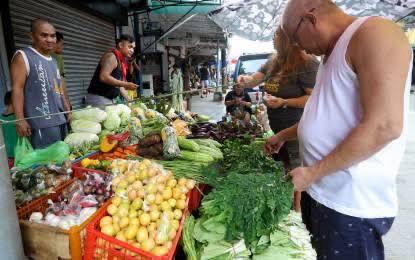

MANILA – An economist on Wednesday welcomed the Department of Trade and Industry’s (DTI) assurance that prices of basic necessities and prime commodities will remain stable through December, calling it a positive sign for the domestic economy.
Rizal Commercial Banking Corp. (RCBC) chief economist Michael Ricafort told the Philippine News Agency that risks to domestic growth persist, including the impact of the ongoing Middle East crisis on fuel prices. However, he noted that stable prices of basic and prime commodities remain a positive factor for the economy.
On Monday, Trade and Industry Secretary Ma. Cristina Roque said the 190 items included in the department’s Basic Necessities and Prime Commodities (BNPCs) list will remain stable until Dec. 31, 2026, and that supplies remain adequate nationwide.
“Seasonal increase in Christmas holiday-related spending would still be a bright spot for 4Q (fourth quarter of) 2026,” Ricafort said.
Economic officials expect better domestic output in the last quarter of the year due to seasonal holiday spending as well as catch-up government spending.
The domestic economy grew by 2.3 percent in the second quarter of this year, as measured by gross domestic product (GDP), slowing from 2.8 percent in the previous quarter amid rising global oil prices.
Meanwhile, Ricacafort forecasts domestic inflation to remain elevated, with a full-year projection of around 6-6.5 percent.
He projects inflation to reach 7.6 percent in October 2026, up from 7.2 percent in September, with the rate of price increases expected to approach 8 percent in the fourth quarter.
The Bangko Sentral ng Pilipinas (BSP) projects average inflation this year at 6.1 percent, higher than the 2-4 percent target band of the central bank, largely due to the impact of elevated fuel prices.
Ricafort said inflation will likely remain high because of increases in global crude oil prices, a stronger US dollar leading to higher importation costs, and higher minimum wages.
He, however, said these factors may be countered “by the series of rollbacks in local fuel pump prices, (and) better weather conditions compared to previous months that could help stabilize food/agricultural prices.”