
(Photo courtesy of PNA)
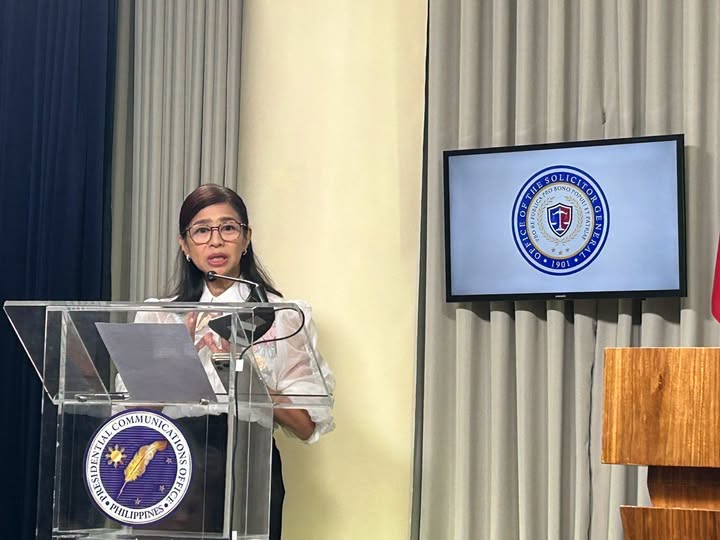
MANILA, Philippines – Solicitor General Darlene Marie Berberabe on Thursday, October 22, advised the government to temporarily refrain from using funds covered by disputed provisions of the 2026 General Appropriations Act (GAA) while awaiting a final ruling from the Supreme Court (SC).
During a Palace press briefing, Berberabe said the Office of the Solicitor General (OSG) would recommend that the Department of Budget and Management (DBM) and the executive branch exercise caution in implementing the affected budget provisions.
“Sa amin po, ang ipapayo po namin sa DBM at sa Ehekutibo ay pumorma na tayo na parang huwag muna tutal aasahan natin na ma-desisyunan ito kaagad,” Berberabe said.
She expressed confidence that the Supreme Court would prioritize the case to prevent disruptions in government spending during the remaining months of 2026.
The advice followed the Supreme Court’s October 20 decision declaring Special Provisions 1(a) and 1(b) of Chapter XLIII of the 2026 GAA unconstitutional.
The provisions govern unprogrammed appropriations, which the Court clarified are not inherently unconstitutional but must be subject to clear limitations and safeguards.
According to the ruling, the contested provisions were overly broad, lacked standards for prioritizing expenditures, and partly operated as prohibited lump-sum appropriations.
The Court also found that the provisions undermined fiscal discipline and conflicted with constitutional budget requirements and its earlier ruling in Araullo v. Aquino III.
Berberabe acknowledged that the decision could affect the implementation of the 2026 national budget if the Supreme Court rejects the government’s planned motion for reconsideration.
The OSG intends to seek a review of the ruling, arguing that Congress has constitutional authority to determine the form, content, and preparation of the national budget through legislation.
Berberabe also pointed out that Congress and the executive had already introduced changes to address concerns involving lump-sum appropriations and presidential discretion over the prioritization of unprogrammed funds.
She emphasized that budget provisions not covered by the Supreme Court ruling could still be implemented, subject to legal guidance from the OSG.
“Kung hindi naman iyan sakop, tutulungan po namin ang executive para makapag-determine, para may legal advice din naman sila,” she said.
Meanwhile, Berberabe disclosed that unprogrammed appropriations had been significantly reduced in the proposed 2027 national budget.
She explained that programmed appropriations fund identified government priorities, while unprogrammed appropriations serve as standby spending authority that may be used only when additional revenues become available and specific conditions are satisfied.
Berberabe stressed that government budgeting involves cash management policies and fiscal planning, making it impractical to classify all expenditures as programmed appropriations.
She added that the government’s economic team carefully evaluates these funding mechanisms to maintain fiscal discipline and manage the country’s deficit.